
10 Hidden Gems in Verona Most Visitors Miss
I love Verona. Compared to many of Italy’s heavily touristed cities, it already feels like a hidden gem. Outside of Juliet’s house and the Verona Arena, you can actually breathe here.
But if you want to go even deeper, you can.
Verona’s most famous sights sit within a tight loop around the historic center. Most visitors rarely step beyond it. Yet the moment you cross the river or wander a few streets farther, something changes. The city stops performing and starts living.
When I crossed into Veronetta, it felt like entering a preserved corner of Italy. The houses weren’t polished or perfectly restored. Some were worn. Some were imperfect. And that is exactly what made them beautiful. It reminded me of the warmth of my grandmother’s home—unrefined, layered with time, and quietly welcoming.
If you’ve ever felt rushed through the Arena crowds or squeezed into Juliet’s courtyard just for a photo, you know the difference between seeing a place and feeling it.
If you are searching for hidden gems in Verona, these are not secret underground spots or places you need a password to find. They are simply quieter corners of the city—the kind that reward you for slowing down. They are for travelers who prefer atmosphere over checklists.
One small request before you go: these places remain peaceful for a reason. If you visit, be mindful and respectful so they do not become the next crowded Instagram stop everyone eventually avoids.
This site uses affiliate links. If you purchase through them, I may earn a commission at no extra cost to you. Thank you for your support!
Ancient Verona, Without the Crowds
1. Roman Theatre of Verona
If there’s one small regret from my time in Verona, it’s arriving at the Roman Theatre just as it was closing. We didn’t make it inside, but even from the outside, it felt different from the Arena.
Smaller. Quieter. More connected to the hillside than to the crowds.
Built in the 1st century BC, the Roman Theatre of Verona sits across the Adige River in Veronetta, away from the tight tourist loop around Piazza Bra. Unlike the Arena, which dominates the city center, this theater feels woven into the landscape. The stone tiers rise with the slope of the hill, giving you the sense that performances here once unfolded as part of the surrounding village rather than as a grand spectacle.
While the Arena buzzes with activity, the Roman Theatre sees far fewer visitors. Crossing the river already filters out much of the foot traffic, and many travelers simply don’t venture this far. The result is a site that feels archaeological rather than performative—a clearer glimpse into Roman urban planning and daily life.
Entry is paid, and it is included with the Verona Card (which I break down in detail in my Is the Verona Card Worth It? guide). Even if you arrive after hours like I did, the exterior views are still worth the walk. From here, you also gain a slightly different perspective of the river and the city’s layered history.
If you’re mapping out your trip, this belongs on your quieter side of the itinerary—especially if you’re already exploring Veronetta. You can see how it fits into a full route in my Things to Do in Verona guide.
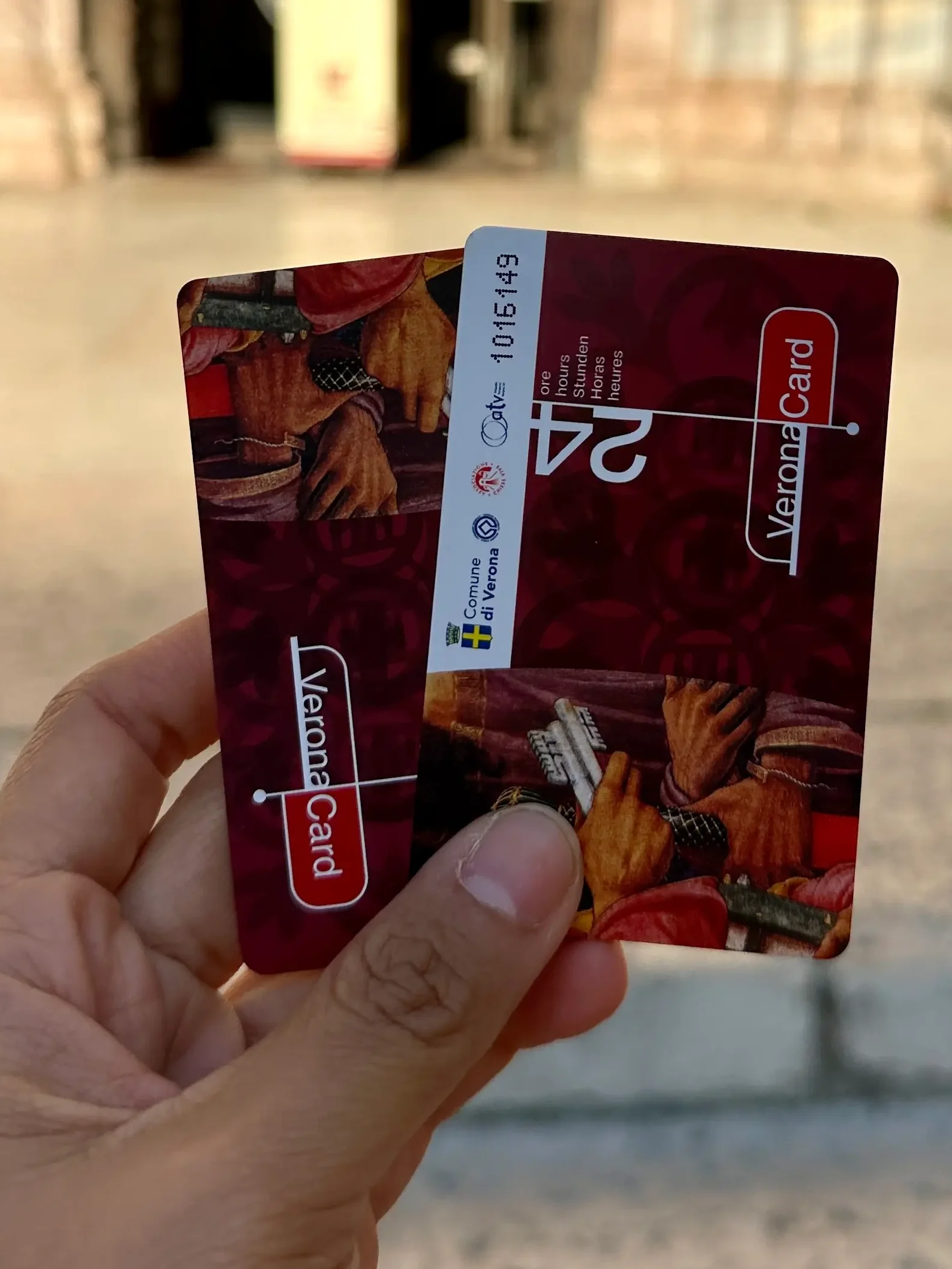
verona card
If you’re planning to visit multiple attractions, I highly recommend getting the Verona Card.
It gives you free or priority access to major sites like the Arena di Verona and Juliet’s House, and it can save you both time and money.
I saved $20 during my visit to Verona just on the attractions I really wanted to see!
2. Church of San Lorenzo
San Lorenzo is where Verona shifts into medieval calm.
Just a short walk from the river, this Romanesque church is easy to miss—and that is exactly why it remains peaceful. It sits outside the main sightseeing flow, so most visitors pass by on their way between bigger attractions without stepping inside.
The moment you enter, the noise fades.
Thick stone walls hold the air cool and still. The symmetry of Romanesque arches creates a grounded, balanced feeling. There are no dramatic frescoes pulling your attention in every direction—just quiet geometry and centuries of worn stone.
This is the kind of place you step into when you want silence instead of spectacle.
While many churches in Italy compete for attention, San Lorenzo feels content simply existing. It’s usually free to enter or requires only a small donation, making it an easy pause between busier stops.
If you’ve just navigated Arena crowds, this is where you recalibrate.
3. Santa Maria in Organo
Santa Maria in Organo rewards curiosity.
Tucked into Veronetta’s residential streets, this Renaissance church is known for its extraordinary wooden intarsia choir stalls—and they are worth slowing down for. The craftsmanship is precise and detailed, with illusionistic scenes carved into wood so delicately they almost resemble paintings.
It’s one of those spaces where you naturally lower your voice.
Beyond the choir stalls, Renaissance details appear everywhere you look—carved elements, layered textures, and small artistic touches that reveal the care behind the space. Step into the cloister, and the atmosphere becomes even quieter. It feels removed from the city’s pace, as if time decided to linger here.
This is not a landmark you stumble into by accident. You find it because you’re willing to wander a little farther—and that willingness is usually rewarded in Verona.
Entry is typically free or by small donation, and pairing it with a slow walk through Veronetta makes for one of the most atmospheric stretches of the city.
Panoramic Views
4. Castel San Pietro Viewpoint
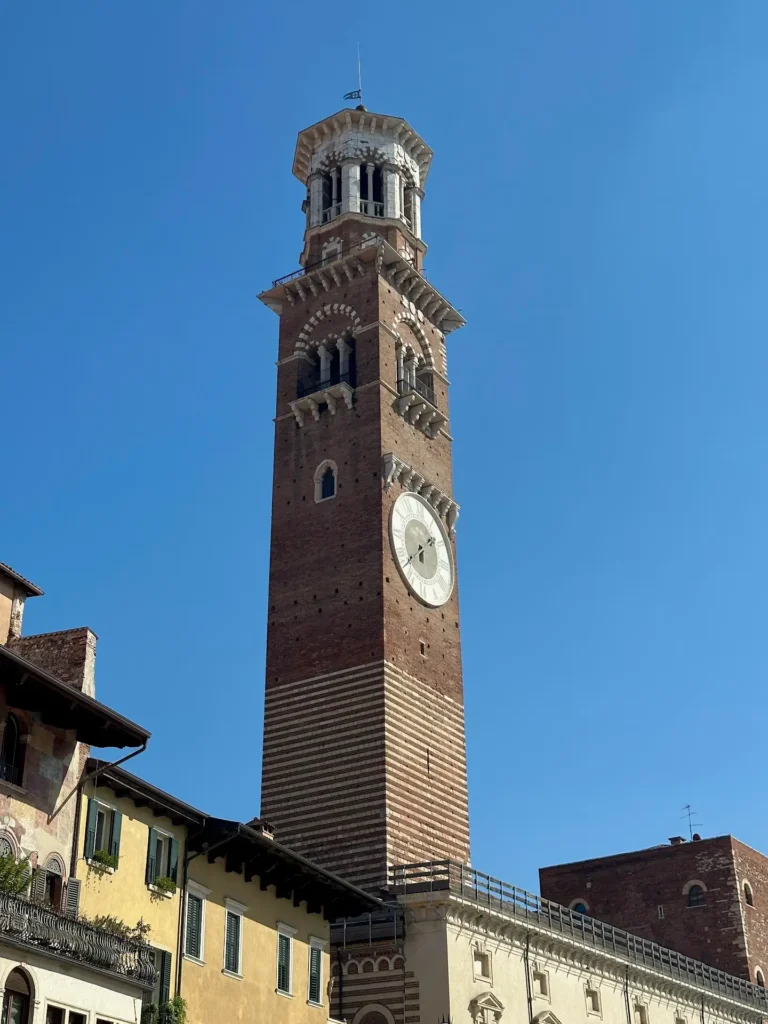
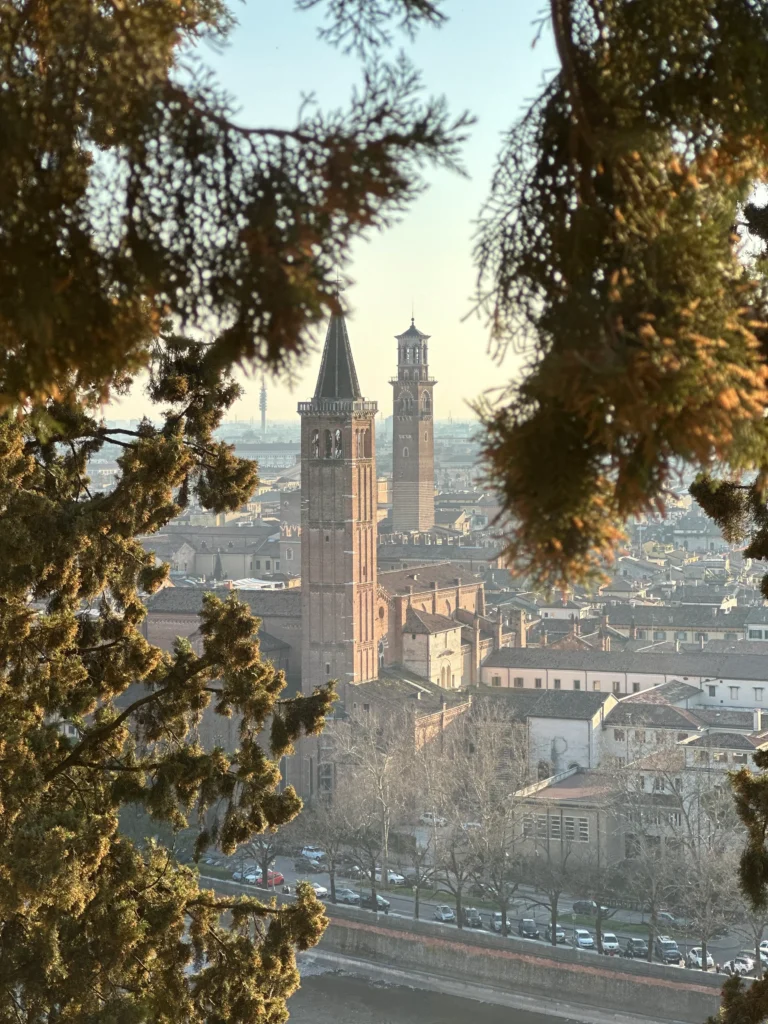
If you only choose one viewpoint in Verona, make it Castel San Pietro.
For me, this is the best sunset spot in the city. I would skip Torre dei Lamberti unless you already have the Verona Card and extra time—the perspective from up there simply doesn’t compare.
Many visitors walk as far as Ponte Pietra, take a few photos, and turn back. But if you continue climbing, the city slowly unfolds beneath you.
The higher you go, the quieter it becomes.
We walked all the way to the top, found a quiet stretch along the old brick walls, and just sat there. No rush. No performance. Just rooftops glowing in the fading light and the Adige bending through the city below. It felt like the perfect, slow ending to a full day of walking.
From here, you see Verona in layers—terracotta roofs, church towers, narrow streets, and the river weaving through it all. It’s the kind of view that makes you understand the city’s geography in a way no map can.
The climb is free and manageable on foot, though a little steep. If you’re following my One Day in Verona itinerary, this is exactly where I’d recommend ending your evening.
5. Santuario Nostra Signora di Lourdes
Even quieter than Castel San Pietro, the Santuario Nostra Signora di Lourdes feels removed from the city entirely.
Perched higher above Verona, this hilltop sanctuary offers wide, uninterrupted views across the rooftops and countryside beyond. Fewer visitors make the climb this far, which gives the space a different atmosphere—less scenic stop, more reflective pause.
The setting is simple but powerful. White stone against open sky. Soft light stretching over the valley. A sense of stillness that isn’t staged or curated.
Standing there, the city feels distant—not geographically, but emotionally. It’s the kind of place where you stop thinking about photos and simply look.
Access is free, though the uphill walk is longer than the route to Castel San Pietro. The reward is solitude.
If Castel San Pietro is the popular sunset choice, this is the alternative for travelers who want something quieter and more contemplative.
6. Forte Sofia
Forte Sofia has a completely different energy.
Built as part of Verona’s 19th-century Austrian fortifications, it feels more exploratory than scenic. You’re not coming here for polished viewpoints or postcard angles. You’re coming for open space, greenery, and the sense that you’ve stepped slightly beyond the edges of the typical itinerary.
The surroundings are less manicured and more natural. Paths invite wandering. Stone structures emerge between trees. The atmosphere feels adventurous rather than romantic.
This is for travelers who enjoy discovering layers of history that aren’t packaged for tourism.
It doesn’t see the steady flow of visitors that the Arena or even Castel San Pietro receives. Instead, it offers something subtler—perspective from a defensive past and a glimpse of Verona beyond its Renaissance facades.
Access is free, and pairing it with a slower morning walk makes it feel like a small expedition just outside the city center.
Quiet Streets and Local Neighborhoods
7. Veronetta District
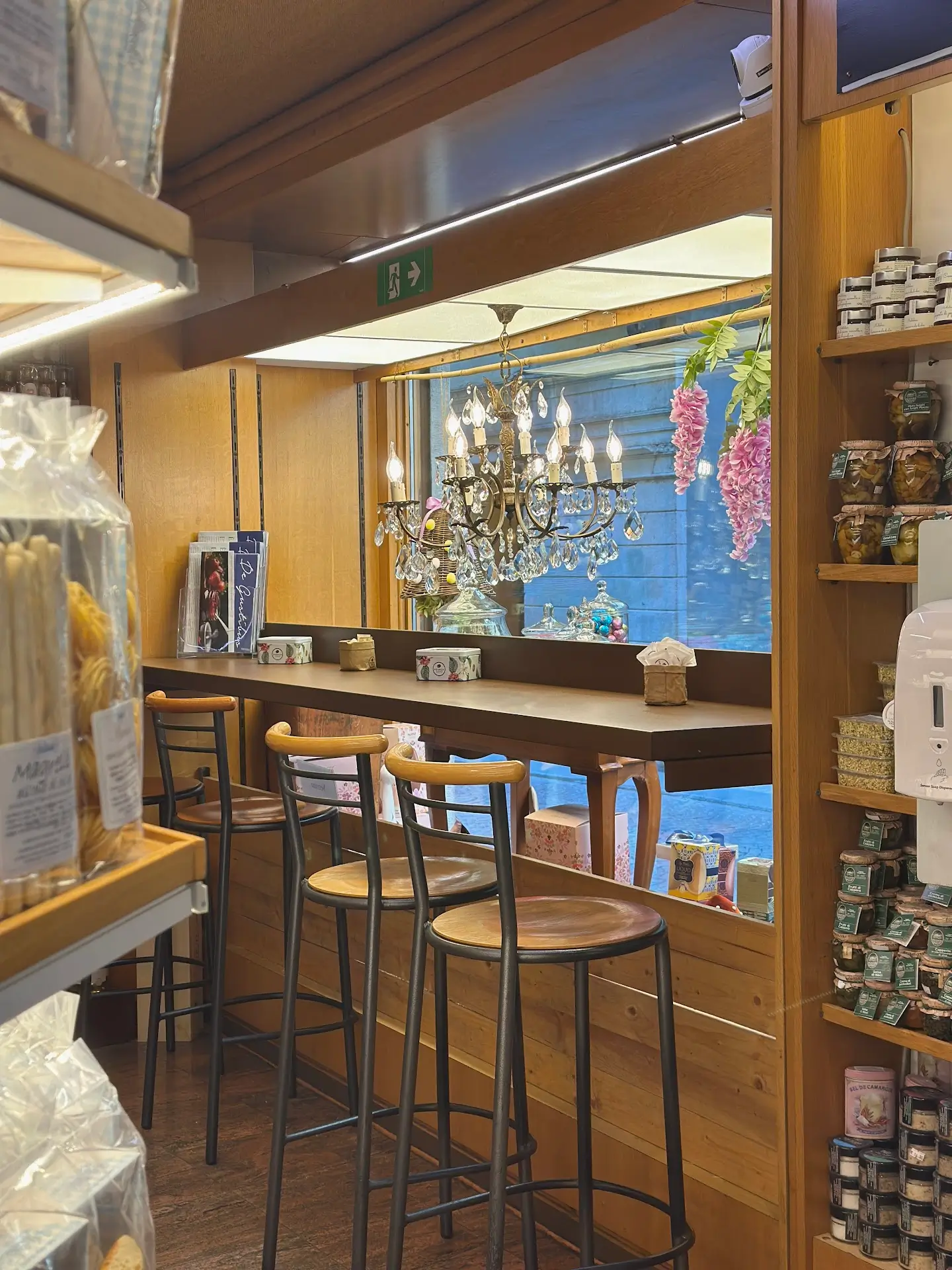
If you only explore one neighborhood beyond the historic center, make it Veronetta.
Crossing the river into Veronetta feels like stepping into a quieter, more lived-in version of the city. It’s sometimes referred to as “Little Verona,” and once you walk its streets, you understand why. The facades aren’t polished. The paint is slightly faded. Balconies hold everyday laundry instead of curated flower boxes. And somehow, that imperfection makes it more beautiful.
When I walked here, I finally felt like I was in Verona rather than simply sightseeing. The small architectural details, the worn doorways, the muted tones of the buildings — it felt layered with time rather than designed for photos.
Veronetta is home to the university and a creative community, which gives it energy without the tourist pressure of the Arena area. Cafés feel local. Courtyards open quietly behind heavy doors.
There’s no entry fee here. No opening hours. Just space to slow down and experience a slice of Verona that still feels authentic.
8. Via Sottoriva
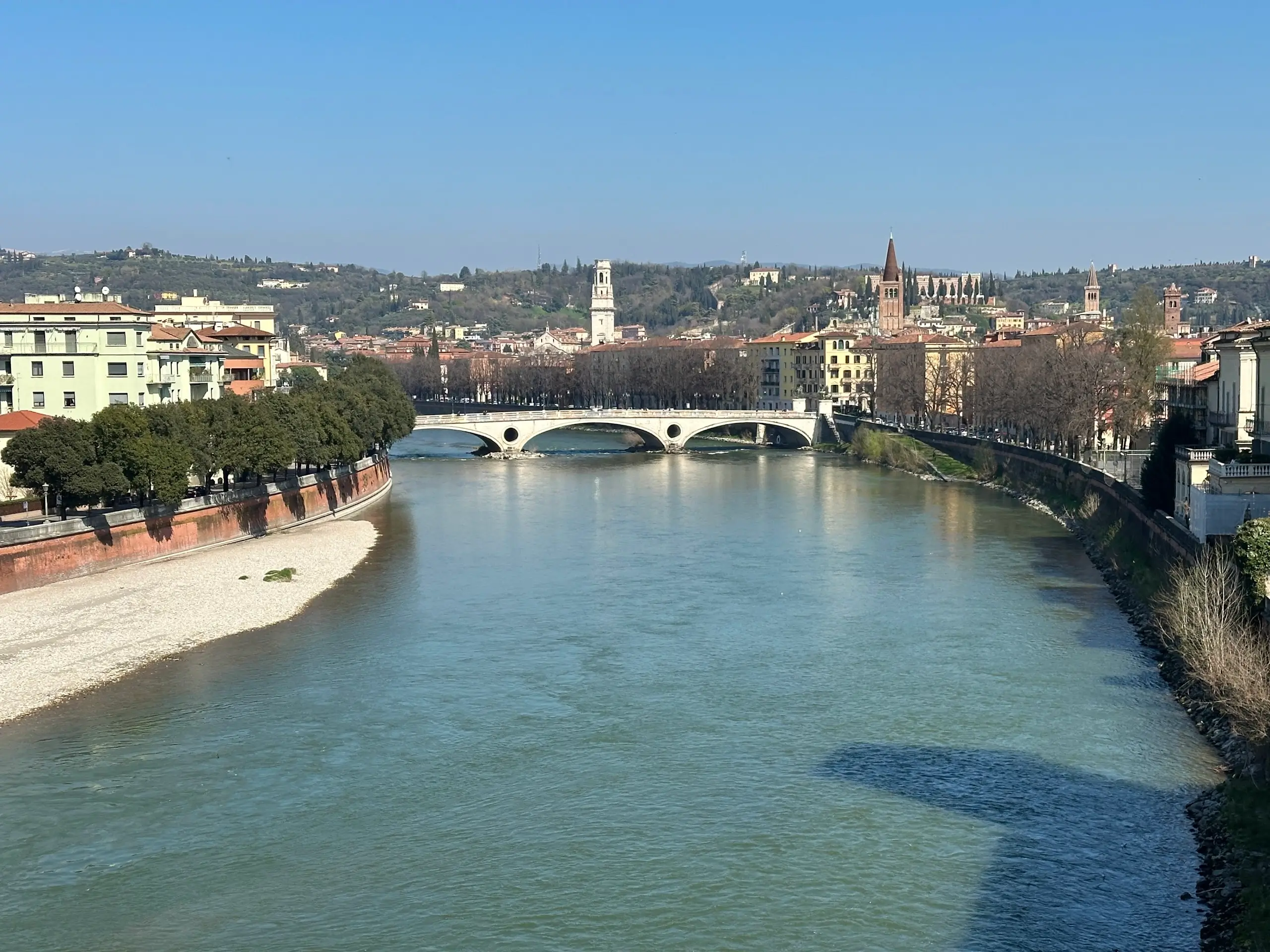
I first caught a glimpse of Via Sottoriva while walking toward Castel San Pietro and immediately wondered what this shaded stretch along the river was.
With its arched walkways and cobblestones, it almost resembles a village street you might find around Lake Como — but without the crowds. The covered porticoes create a cooler corridor even in summer, and the rhythm of footsteps echoes softly beneath the arches.
It feels residential, slightly removed, and refreshingly understated.
Next time I visit Verona, I’d consider staying nearby. The area has a relaxed, hostel-friendly culture and a slower pace that feels different from the tightly packed historic center.
Via Sottoriva isn’t dramatic. It doesn’t try to impress. It simply exists — and that’s exactly why it’s worth walking.
9. Lungadige San Giorgio
Lungadige San Giorgio is on my list for next time — and it’s the kind of place you notice only after crossing into Veronetta.
The residential buildings line the river in soft, warm tones. Light reflects off the water in the late afternoon, and the sound of footsteps feels more noticeable here because there are fewer voices competing with it.
It’s not a landmark. It’s not a viewpoint. It’s simply a stretch of river where the city slows down.
When I crossed into Veronetta for the first time, I remember how the atmosphere shifted almost immediately. The noise softened. The pace changed. Lungadige San Giorgio captures that same feeling — not a place you rush to, but one you pass through and absorb.
If you enjoy walking without a fixed destination, this is where you do it.
10. San Zeno Neighborhood and Verona Antiquaria

Most visitors come to San Zeno for the basilica — and then they leave.
That’s the mistake.
Beyond the church lies one of Verona’s most residential and grounded neighborhoods. Streets extend quietly in every direction, lined with local cafés and everyday life. It feels separate from the intensity of the Arena district, even though it’s not far away.
If you’re visiting on the right weekend, you might catch Verona Antiquaria, the monthly antique market that fills the area with stalls and small discoveries. It’s not flashy, but it adds character and reinforces that this part of the city is still lived in rather than staged.
There’s no ticket required to explore San Zeno. Just time.
Plan Your Verona Itinerary the Right Way
Verona is easy to enjoy. The main sights sit close together, and you can see a lot in a short amount of time. But the city feels different once you step beyond the usual route around the Arena and Juliet’s House.
Walk a little farther. Cross the river. Climb for a view. Spend time in a neighborhood where people actually live. That is where Verona starts to feel personal.
These hidden gems in Verona are not meant to replace the highlights. They are meant to balance them. See the Arena. Wander Piazza delle Erbe. Then slow down and explore the quieter corners most visitors overlook.
If you are still planning your trip, start with my Things to Do in Verona guide to map out the essentials. If you only have limited time, follow my One Day in Verona itinerary so you can combine must-see landmarks with a few calmer stops.
Verona does not need to be rushed. Give it space, and it will give you something real in return.