Best Churches in Verona (And the One You Shouldn’t Miss)
You walk into another church, glance up at the ceiling, and realize you’ve stopped paying attention.
That’s the problem with visiting churches in Verona.
One issue when planning to see the best churches in Verona is that many people assume visiting the four famous churches in one go is manageable. While that can be true, slowing down makes a big difference.
There are over 80 churches across the city. Once you’re on your trip, you’ll realize that by the third or fourth church, everything starts to blur. Then you start to ask yourself, am I here for the experience or just for the photos?
That’s exactly the dilemma we experienced.
We visited Sant’Anastasia and the Cathedral Complex. The cathedral alone includes multiple buildings, and by the end, it felt exhausting. On our walk back to the city center, we passed by San Fermo. At that point, I knew we were done.
You won’t go wrong with any of these churches. But trying to see all four in one day will drain your energy fast.
This guide is for you if you enjoy beautiful spaces but don’t want to turn your trip into a checklist. You want to choose well, not just see more.
I’ll also show you a simple way to decide how many churches to visit, when the audio guide is worth using, and whether the combo ticket or Verona Card actually makes sense for your trip.
This site uses affiliate links. If you purchase through them, I may earn a commission at no extra cost to you. Thank you for your support!
How to Visit the Churches in Verona (Tickets, Passes, and What to Know First)
Before choosing which churches to visit, you need to understand how tickets work. This will shape your entire plan.
There are three ways to enter the main churches in Verona:
- Individual ticket: €4 per church
- Combo ticket: €8 for all four churches
- Verona Card: FREE ENTRY to all four churches
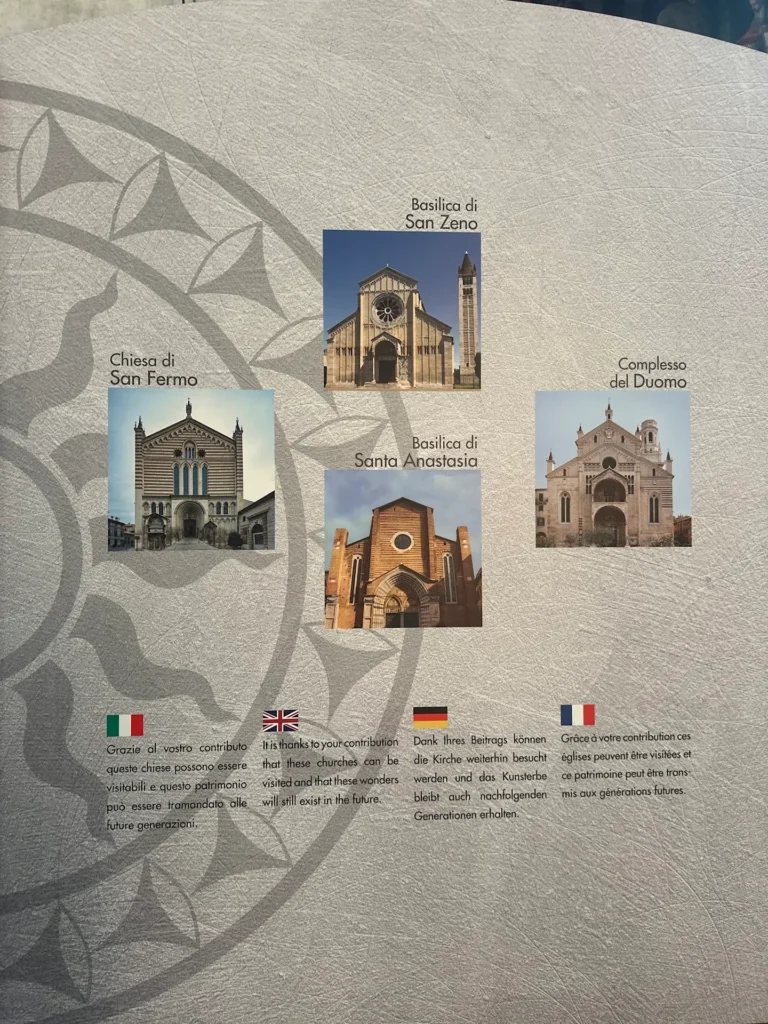
The four best churches in Verona included in the official “Chiese Vive” circuit are:
- Sant’Anastasia
- Verona Cathedral Complex (Duomo, Baptistery, Sant’Elena)
- San Zeno Maggiore
- San Fermo Maggiore
Source: VisitVerona.it: Biglietto di visita alle quattro chiese storiche, experience
Here’s the simplest way to decide
- If you are visiting only ONE church, just pay €4 at the entrance.
- If you are visiting two or more, the €8 combo ticket already pays off. You can buy it at the first church you enter. No reservation needed. It also includes the audio guide.
- If you plan to visit other major attractions like the Arena, Juliet’s House, or Torre dei Lamberti, the Verona Card becomes the better option. It includes all four churches and priority access to top sights. In most cases, it pays for itself after two paid attractions. If you want a full breakdown, read the Verona Card guide before your trip.
A few practical details will help you avoid common mistakes
- Audio guides are included with all ticket types. They are worth using at your first church. After that, they start to feel repetitive, so you can skip or shorten them.
- The Cathedral Complex has shorter hours than the others. It usually opens later in the morning and closes earlier on Saturdays. Plan this one first or check the timing before you go.
- On Sundays, churches open later for tourists, usually around 1 PM, because of morning services.
- Entry is always free if you are attending for prayer or worship. Tickets apply only to tourist visits.
- Accessibility varies. San Fermo has steep stairs and is not wheelchair accessible. The other three churches have at least partial access.
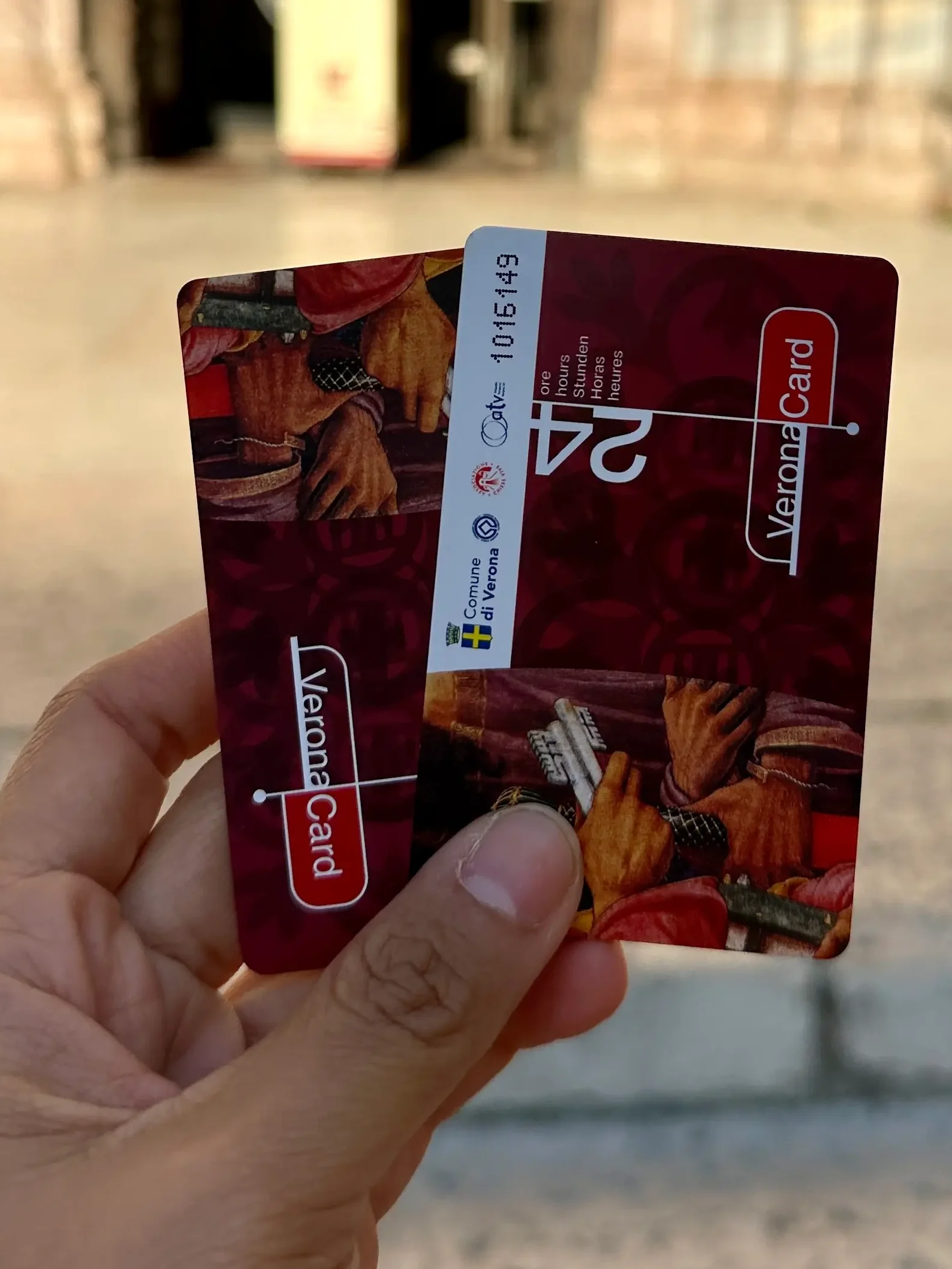
verona card
If you’re planning to visit multiple attractions, I highly recommend getting the Verona Card.
It gives you free or priority access to major sites like the Arena di Verona and Juliet’s House, and it can save you both time and money.
I saved $20 during my visit to Verona just on the attractions I really wanted to see!
Basilica di Sant’Anastasia—The One You Shouldn’t Miss
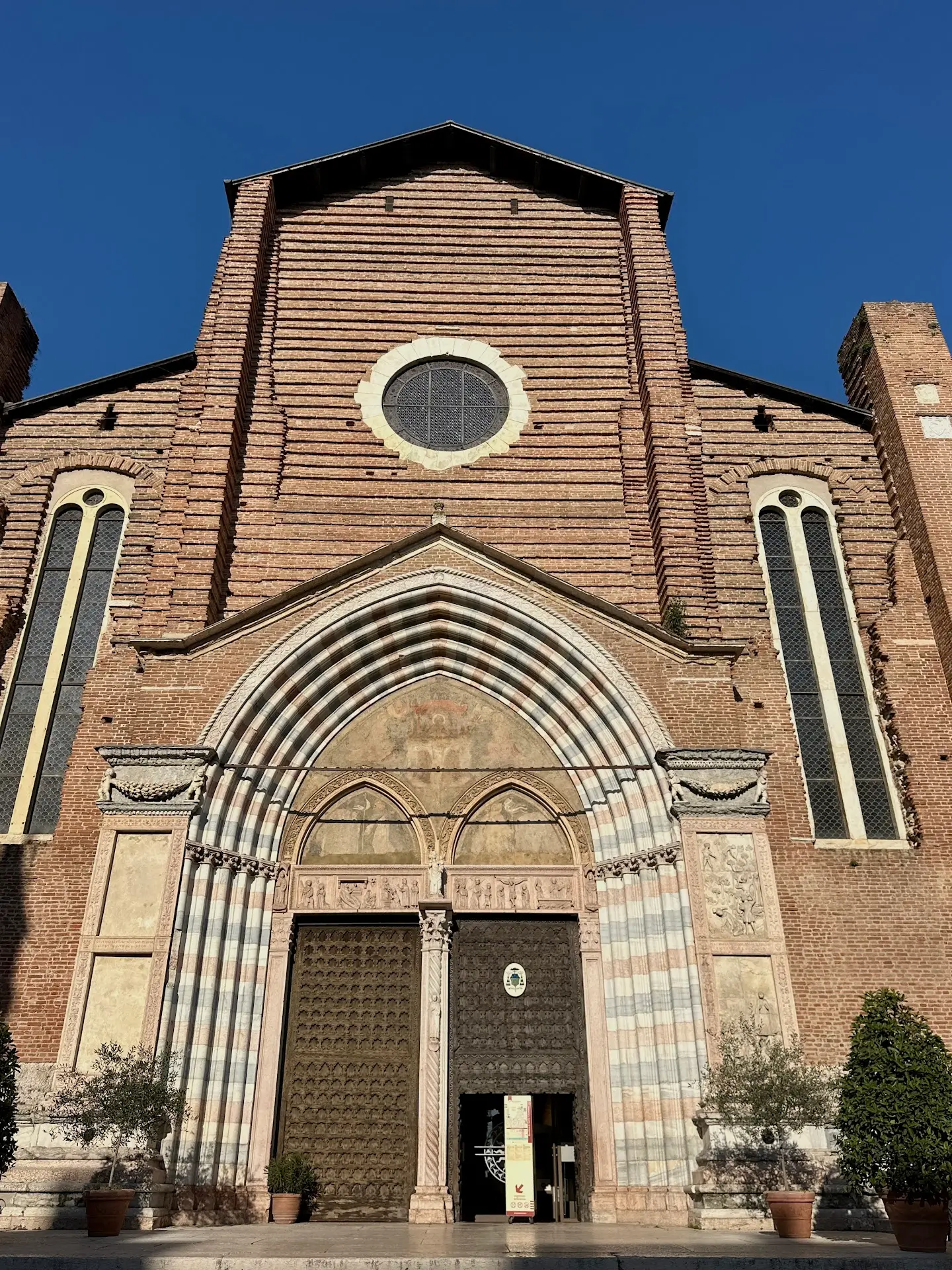
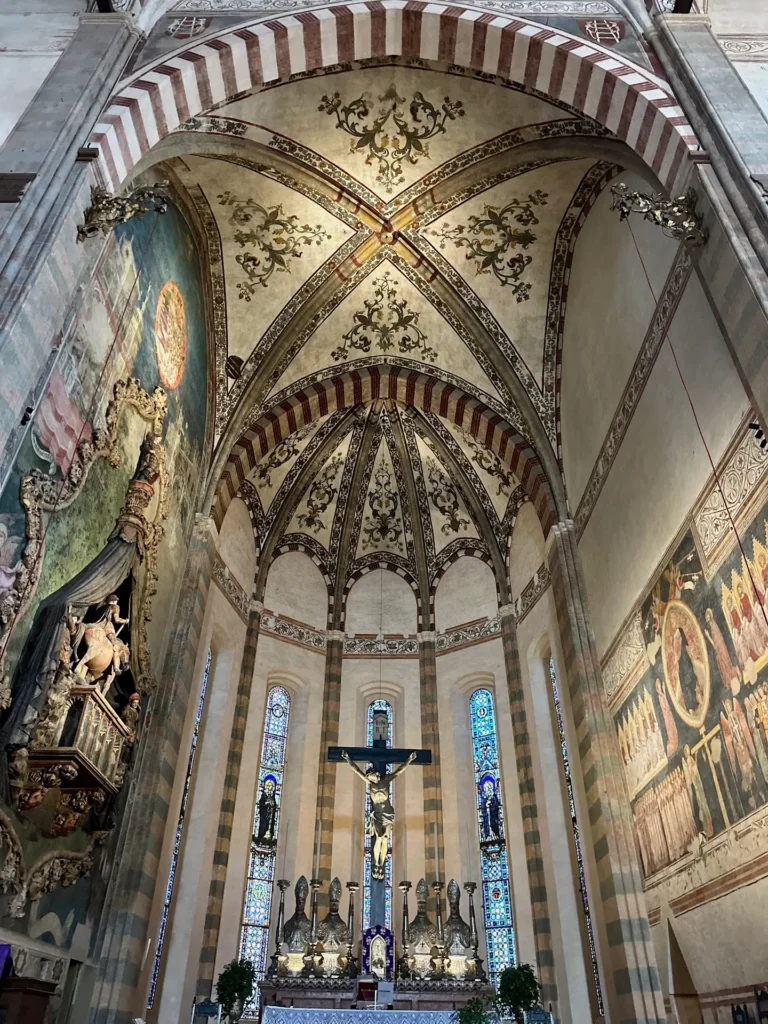
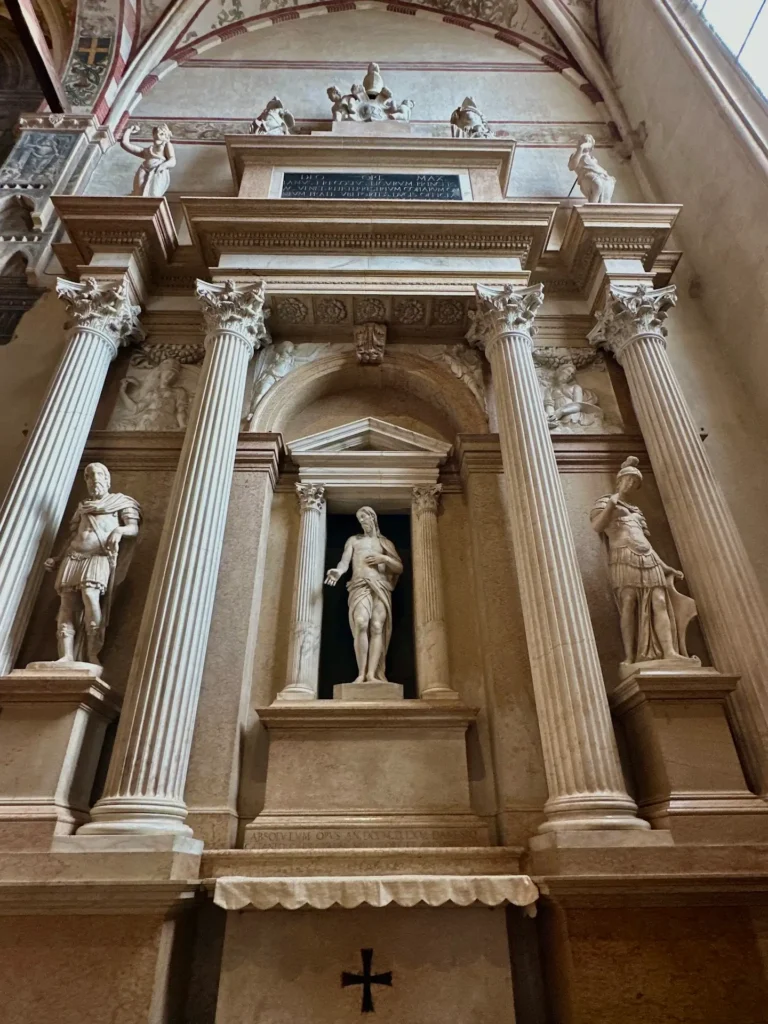
If you only visit one church in Verona, make it Sant’Anastasia.
It fits your day without effort. It sits in the historic center, a short walk from Piazza delle Erbe and Ponte Pietra. You will likely pass near it anyway. You don’t need to detour; there’s no tradeoff.
I felt completely satisfied with what I saw here. When you walk inside, everything is already in one place. Other churches offer different details, but if you ask what you’re missing by choosing this one, the honest answer is nothing.
The space is wide and tall. Columns rise up to a painted ribbed ceiling. Light spreads across the nave. You feel the scale right away. This is the largest church in Verona, even larger than the Duomo, and that size creates an immediate impact.
When we go here, I have taken note of some important details to look out for:
- Pisanello’s fresco of St. George
- The hunchback holy water fonts near the entrance, said to bring good luck
- The Gothic nave and painted ceiling
- Side chapels filled with frescoes
A fresco is painted directly onto wet plaster. The pigment bonds with the wall as it dries, which is why these artworks have lasted for centuries. Once you understand that, you start to see more than just decoration.
The exterior is plain and unfinished. That contrast makes the interior even more striking.
The audio guide made a real difference here. It helped me understand what I was seeing instead of just walking through. If you use it anywhere, use it here.
We visited this and the Cathedral Complex, and by the end, we were already feeling tired. But this was the one that stayed with me. Plan around 30 to 45 minutes, go on a weekday morning, and expect to pay €4 or use the combo ticket or Verona Card.
If you want the most beautiful church in Verona with the highest impact per minute, this is it.
The Cathedral Complex (Duomo)—Worth It for the Layers
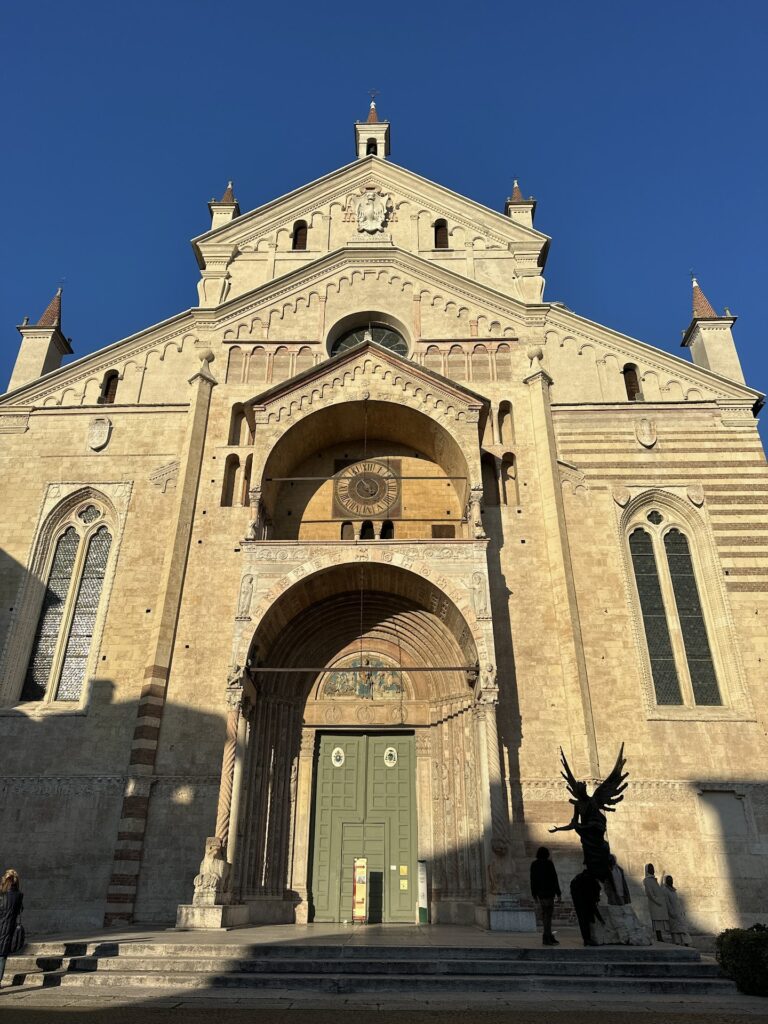
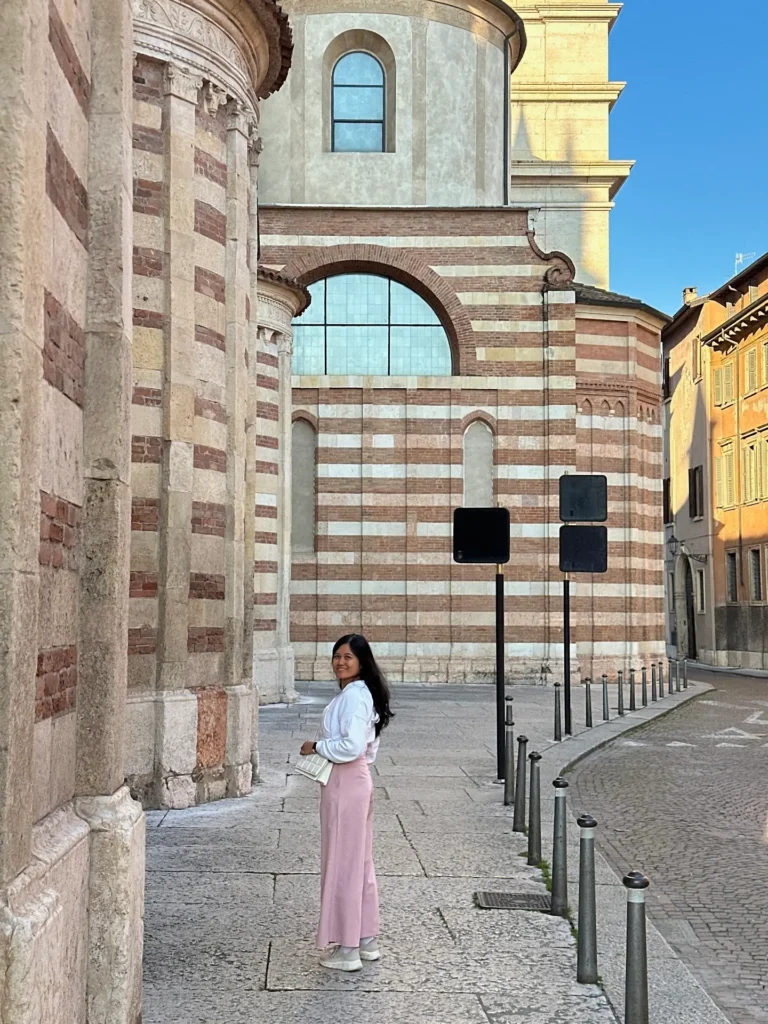
If Sant’Anastasia gives you one powerful space, the Cathedral Complex gives you variety.
This is not a single church. It’s a group of buildings you explore one after another:
- The Duomo (Santa Maria Matricolare)
- The Baptistery of San Giovanni in Fonte
- The Church of Sant’Elena, with archaeological remains beneath
You move between different spaces, styles, and time periods in one visit. That’s what makes it interesting.
The Baptistery stands out the most. The carved baptismal font shows eight detailed biblical scenes in one piece. It’s easy to spend time here just looking closely at the details.
Inside the Duomo, you’ll also find major works like Titian’s Assumption, along with chapels and sculptures that feel more spread out compared to Sant’Anastasia.
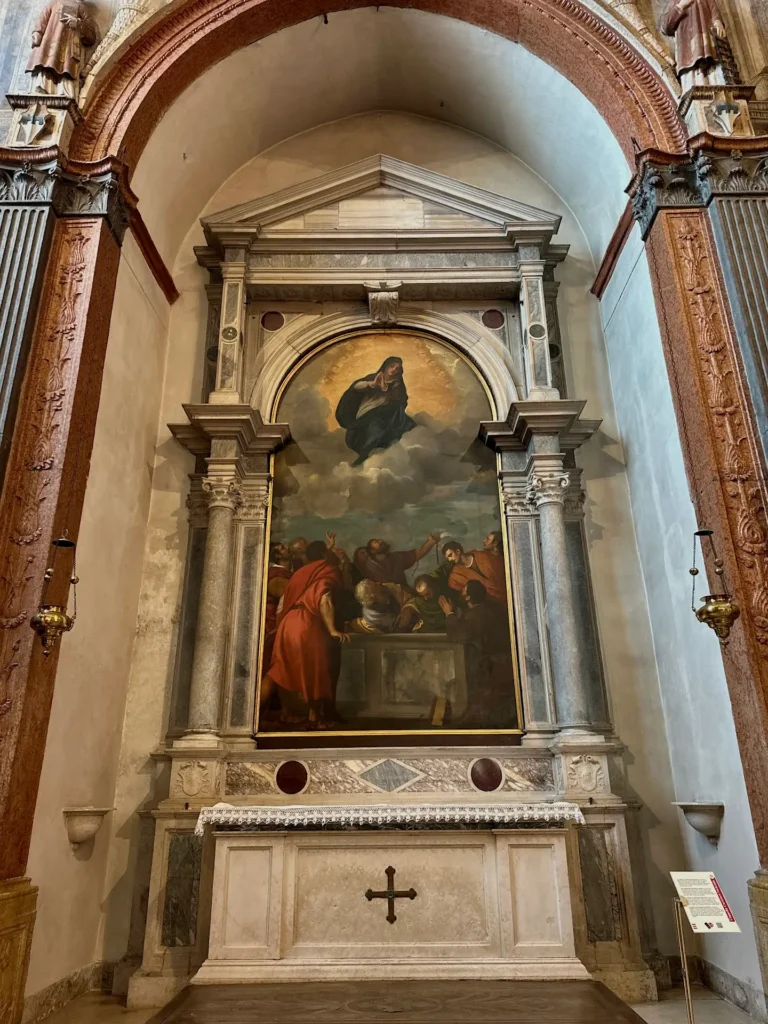
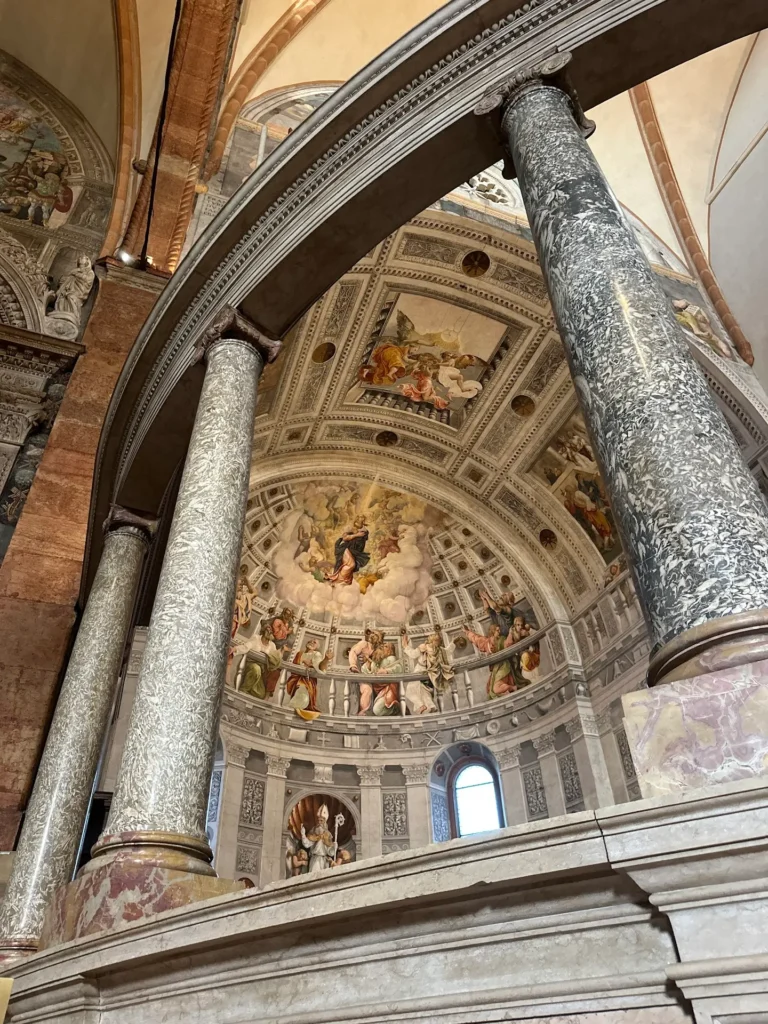
Sant’Elena adds another layer. You can see early Christian remains, which gives context to how the site developed over time. The Canonici cloister nearby adds a quieter moment in between.
After visiting Sant’Anastasia, this felt less overwhelming. The scale is more contained, but the variety keeps it engaging.
For me, the audio guide is still helpful, but this is where it starts to feel long. I suggest focusing on key areas like the Baptistery instead of listening to everything.
Plan your timing carefully. The Cathedral Complex opens later, usually around 11:00, and closes earlier on Saturdays, often by 15:30.
Pro Tip: don’t rush out after your visit. I personally enjoyed walking around Piazza Duomo. The streets feel quieter, with muted pastel buildings and very few cars. It’s a calmer side of Verona, and taking it slow here made the whole experience more enjoyable.
Basilica di San Zeno Maggiore—Verona’s Most Famous Church
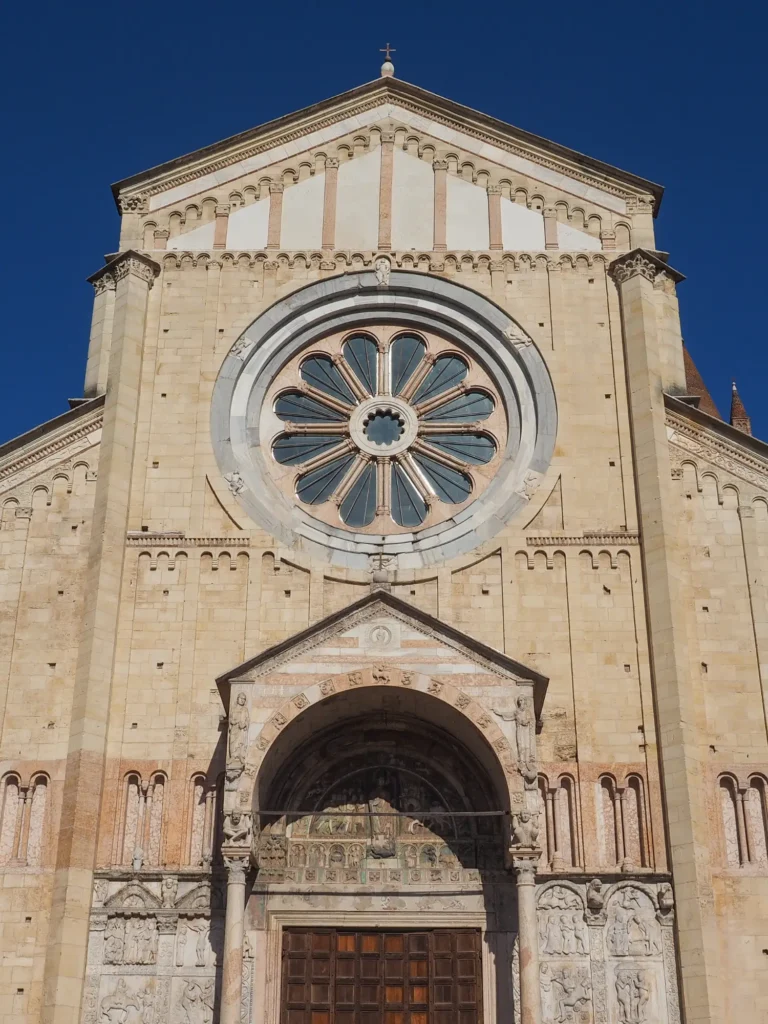
Basilica di San Zeno Maggiore is often ranked as the most famous church in Verona and one of the finest examples of Romanesque architecture in Italy.
It’s dedicated to San Zeno, the city’s patron saint, whose remains are kept in the crypt below. The church is known for several standout features that make it different from the others in the center.
Inside, several details make San Zeno stand out. The bronze doors feature 48 panels from the 11th to 13th centuries, each telling its own story. The rose window, known as the “Wheel of Fortune,” draws your attention from the facade. Above the altar, the Mantegna triptych is one of the church’s most important artworks. Just outside, the Romanesque cloister offers a quieter space where you can slow down and take a break from the main interior.
There’s also a connection to Romeo and Juliet. Tradition says their marriage took place in the crypt, which adds another layer for visitors interested in the story.
The church sits about a 15-minute walk west of the historic center, past Castelvecchio and along the Adige River. The walk itself is part of the experience, and many visitors pair this with a visit to Castelvecchio and the Scaliger Bridge.
Piazza San Zeno, right in front of the church, is often described as one of the most peaceful squares in Verona. It feels more local and less crowded compared to the center.
Quick Tip: Plan to spend around 30 to 45 minutes here. Accessibility is partial, as some areas like the crypt may be harder to reach.
Most guides place San Zeno at the top of their list. If you’re interested in Romanesque architecture or the Romeo and Juliet connection, it’s worth the walk. If your time is limited and you prefer to stay within the historic center, the other churches may be a better fit.
Chiesa di San Fermo Maggiore—Two Churches in One
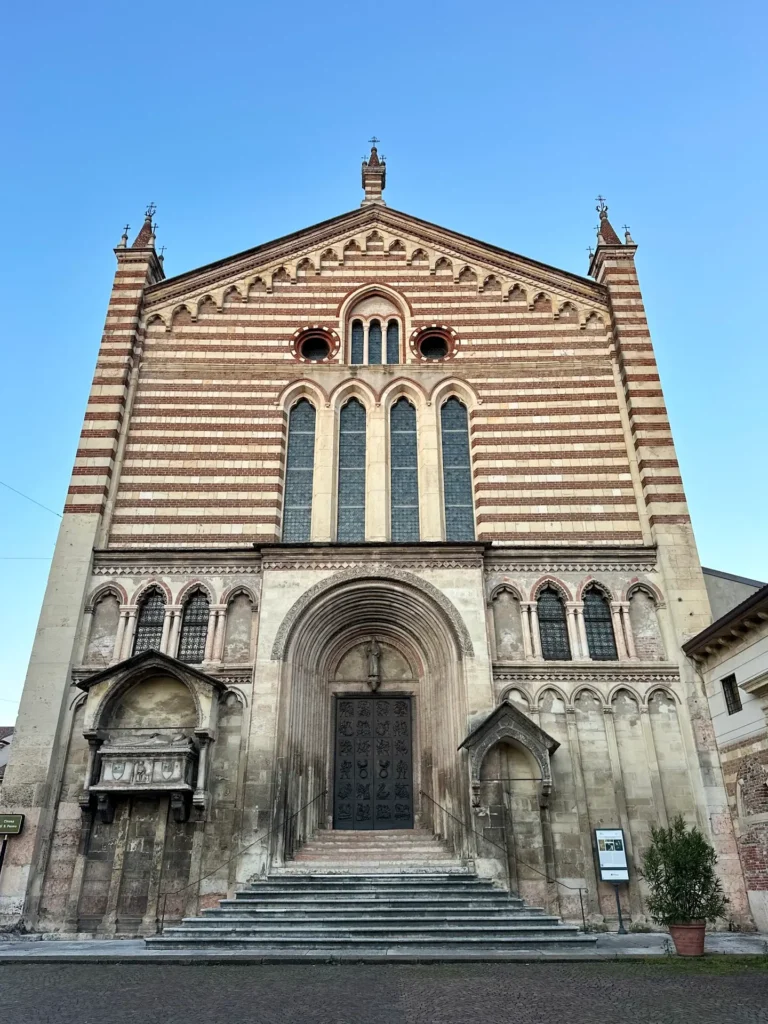
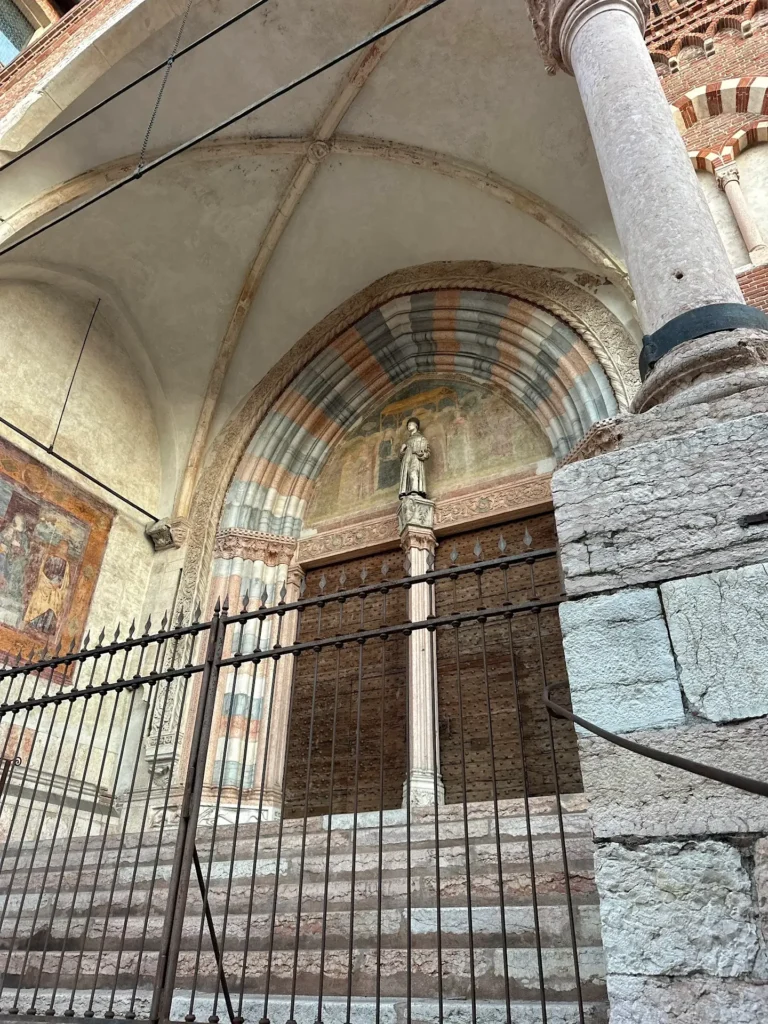
Chiesa di San Fermo Maggiore stands out because it’s not just one church. It’s two stacked on top of each other.
The lower level is Romanesque. It feels older, quieter, and more atmospheric. Stone walls, dim light, and early frescoes create a more intimate space.
Then you go upstairs, and everything changes.
The upper church is Gothic, with a large wooden ceiling shaped like an upside-down ship hull. It stretches around 53 meters and features the faces of hundreds of saints. It’s one of the most unusual interiors in Verona, and many visitors say this ceiling is what makes the church memorable.
The church is dedicated to Saints Firmus and Rusticus, early Christian martyrs from the 3rd century.
Location is one of its strengths. It sits near the Arena and close to the Adige River, right between the historic center and other major sights. It’s easy to pass by without going out of your way.
We actually walked past San Fermo on our way back to the city center. Even from the outside, it stands out with its mix of styles and structure.
Plan around 20 to 30 minutes if you go inside. Keep in mind that access involves steep stairs, so it’s not wheelchair accessible.
If you still have energy after visiting one or two churches, this is a fascinating addition. If you’re already feeling tired, it’s also one of the easiest to skip without regret.
For updated hours, ticket details, and official information, check the Verona churches website before your visit.
The Audio Guide: When to Use It and When to Skip It
Audio guides are included with every ticket type, and they do add value.
For me, the audio guide made the first church much more meaningful. It helped me understand what I was seeing instead of just walking through and looking at details without context.
That said, it starts to feel long after a while.
By the second church, the explanations can feel repetitive. Not because they’re bad, but because your attention drops. If you’re not deeply into art or religious history, it becomes harder to stay engaged.
Pro Tip: use the audio guide strategically, listen fully at the first church, focus on key sections at the second, and perhaps skip it by the third.
If you’re only visiting one church, use the audio guide. It will improve your experience. This is not a criticism. The guides are well made. It’s just the reality of visiting multiple churches in one day.
How Many Churches Should You Visit in Verona?
I think this is the most important question.
Start asking yourself: how much time and energy you have, not how many churches are available.
If you’re visiting one church, go to Sant’Anastasia. It’s in the historic center, easy to reach, and everything is in one space. You don’t need to move around or commit extra time.
If you have time for two, add the Cathedral Complex. It gives you a different experience with multiple buildings and more variety, all within walking distance.
If you still have energy, you can add a third. San Fermo is the easiest option because of its location and unique structure. San Zeno is also worth it if you’re already heading toward Castelvecchio.
Seeing all four is possible, but it turns into a half-day focused only on churches. Start with San Zeno, then move back toward the center. The combo ticket makes sense here.
I personally think one or two churches are enough. You won’t miss out by stopping early. You’ll enjoy the experience more and remember it better.
That’s what matters most. More than the pictures, it’s the feeling that stays with your soul, whether you’re religious or not.
FAQS: About the Best Churches in Verona
Are the churches in Verona free to visit?
Entry is free for prayer or worship. Tourist visits require a ticket. It’s €4 per church, €8 for the combo ticket covering all four, or free with the Verona Card. The combo ticket includes the audio guide.
Is the Verona Card worth it just for the churches?
Not really. The €8 combo ticket is cheaper if you’re only visiting churches. The Verona Card makes more sense if you also plan to visit places like the Arena, Juliet’s House, or Torre dei Lamberti.
Which church in Verona has the best art?
Each one stands out in a different way. Sant’Anastasia is known for its Gothic frescoes, especially Pisanello’s work. San Zeno features the Mantegna triptych and bronze doors. The Duomo has Titian’s Assumption. San Fermo stands out for its wooden ship-hull ceiling.
Can you visit the churches on Sunday?
Yes, but tourist visiting hours usually start around 13:00 due to morning services. Visiting in the afternoon works best.
How long does it take to visit all four churches?
Plan around 3 to 4 hours, including walking time. San Zeno is the furthest, about a 15-minute walk from the center. The other three are close to each other
Plan Your Day in Verona
Now that you know which churches are worth your time, the next step is putting them into a simple route that fits your day without rushing. Keep it light, give yourself space to pause, and let the experience sink in as you move through the city.
If you want a clear plan, read the one day Verona itinerary to map your stops step by step, or explore more options in this guide to things to do in Verona.
READ MORE
- One Day in Verona: A Perfect Itinerary for First-Timers
- 14 Best Things to Do in Verona for First-Timers
- 11 Free Things to Do in Verona on Foot
- 10 Hidden Gems in Verona Most Visitors Miss
- 12 Easy Day Trips from Verona First-Time Visitors Will Love
- Juliet’s House, Verona: Worth It or Tourist Trap?
- Torre dei Lamberti Review: Nice Views, But Here’s the Catch
- Is the Arena di Verona Worth Visiting? An Honest Experience
- Castel San Pietro: Is It Worth the Climb?
- I Ranked the Best Views in Verona