What to Eat in Verona: The Dishes Worth Slowing Down For
You arrive in Verona hungry, with one day to explore, and suddenly every place looks like it could be good.
There are osterias, pizza counters, tourist menus, and gelato shops on every corner. You could eat almost anywhere. But I think that’s the problem. Because there are a lot of choices presented, you don’t actually know what’s worth the try and what you’ll forget the second you leave.
Honestly, I didn’t think much about it before going. I expected a quick stop, a decent meal, and then moving on. I’m not even someone who goes out of their way for pizza. But then I had a slice that made me stop talking mid-sentence, a gelato I still think about now, and I left realizing I’d made one clear mistake. I never sat down for a proper osteria meal.
This guide is for first-time visitors and anyone passing through who wants to eat well without overplanning every detail.
I’ll walk you through what to eat in Verona based on what actually matters when your time is limited. The dishes that are worth prioritizing, the quick stops that fit into a day of sightseeing, what I would do differently if I had the same amount of time again, and the one thing I would not skip next time.
This site uses affiliate links. If you purchase through them, I may earn a commission at no extra cost to you. Thank you for your support!
The Food Culture in Verona (What Makes It Different)
Verona food is shaped by where you are, even if you don’t realize it at first.
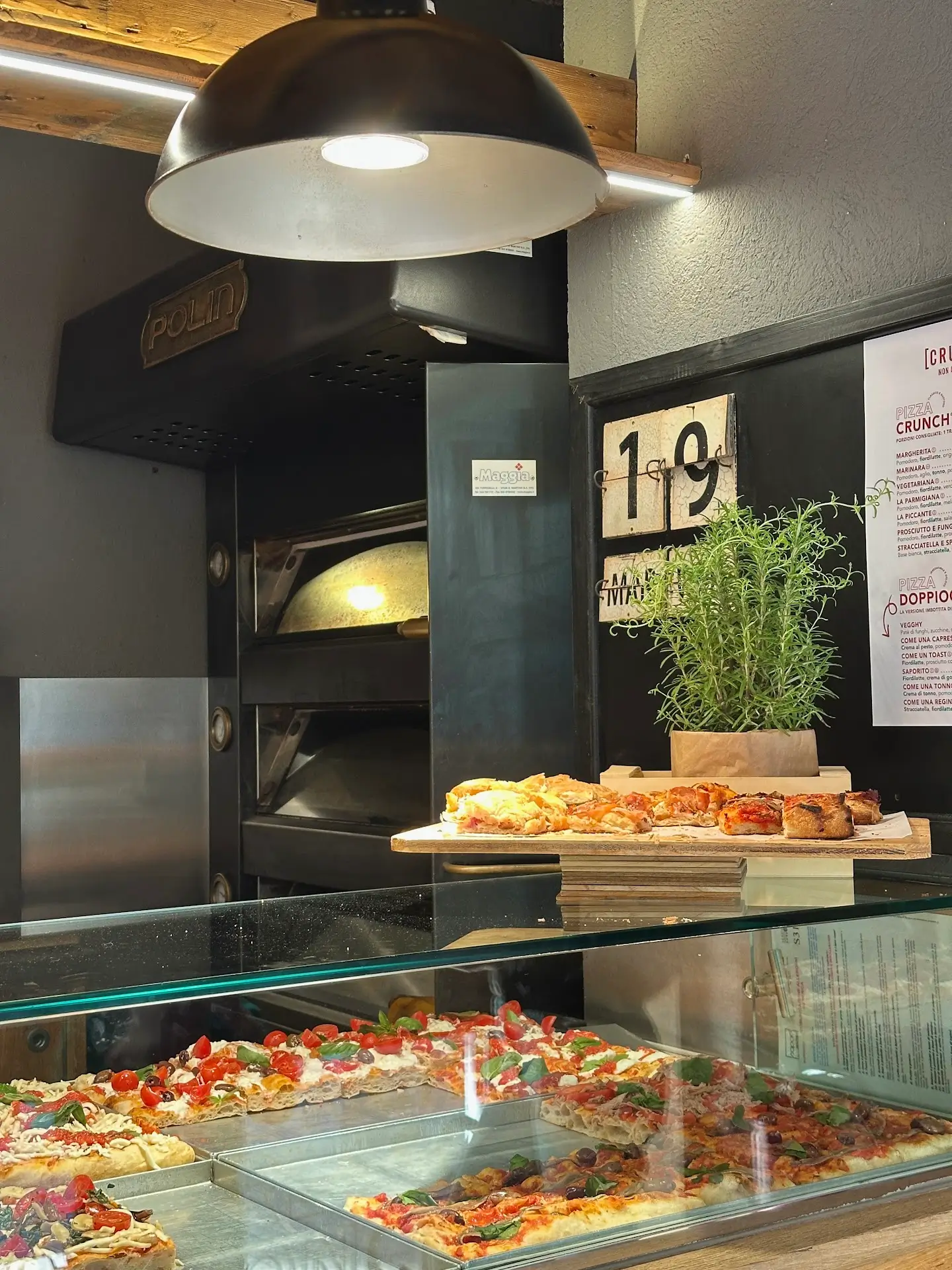
The city sits in the Veneto, surrounded by rice fields, vineyards, and the olive groves near Lake Garda. That shows up directly on your plate. You’ll see more risotto than pasta, more polenta than bread, and a lot more wine used in cooking, not just in your glass.
This isn’t the Italian food most people picture. It’s not light, tomato-heavy dishes or quick plates of pasta. It’s slower, richer, and more tied to the region. Rice like Vialone Nano is used for risotto; meats are often braised in Valpolicella wine, and Amarone shows up in dishes you wouldn’t expect. Even something simple like polenta plays a bigger role here than you might think.
Once you understand that, menus start to make more sense. Instead of defaulting to pizza or pasta, you start noticing what the region actually does well. And that’s usually where the best meals are.
The Dishes Worth Knowing Before You Go
One of the biggest challenges first-time visitors to Verona face isn’t just finding good food. I think it’s deciding what to eat and what actually matters when everything sounds so good.
With so many social media food reviews now, the real question is: what dishes are actually worth your time?
When I first looked at menus, I didn’t have a system. I was just picking what felt familiar or easy. That works, but it’s also how you miss the dishes that actually define the place.
So instead of listing everything, think of this as a filter. Some dishes are worth planning your meal around. Some are good to try if you see them. And some you can skip if they don’t sound like your thing and still feel like you ate well in Verona.
If you keep that in mind, menus get a lot easier to read. You stop guessing and start choosing with a bit more confidence.
Risotto all’Amarone
This is the one dish I’d tell you not to miss in Verona.
It’s what the city is known for. Rice is slowly cooked in Amarone della Valpolicella, one of the region’s boldest red wines, until it turns a deep red color and develops a rich, slightly bitter depth. It’s heavier than you expect, but that’s part of what makes it memorable.
You’ll usually find it in the €15 to €22 range at a mid-level spot, which feels fair for something so tied to the region.
We didn’t order it, and that’s the decision I keep thinking about. If I went back, this would be at the top of our list.
Mat makes risotto at home whenever he can get good ingredients, and that’s how I started paying attention to it in the first place. Looking back, this is exactly the kind of dish he would have stopped for. Something simple, elevated by one ingredient that changes everything.
Quick Tip: If you’re sitting down for one proper meal, this is the one to plan around—just know it’s usually for two, best in an osteria, and not something to rush.
Polenta
This is one of those dishes that’s worth trying at least once, especially if you want to understand how people actually eat in Verona.
Polenta shows up everywhere once you start noticing it. It’s a thick cornmeal base that can be served soft and creamy or cooled and grilled into slices. In Verona, it’s usually paired with slow-cooked meats, mushrooms, or cheese.
This is the carb here, not pasta. If you see something described as “served with polenta,” that’s the local way of eating, and it’s worth choosing over pasta at least once.
There are two main versions you’ll come across: soft and creamy, served immediately; and grilled or set, sliced and served alongside richer dishes.
It’s rarely the star of the plate, but it’s what makes everything else better.
Mat used to make polenta at home before we met, and I’ve already asked him to make it again after this trip. He described it as creamy and surprisingly delicate, not heavy or overly corny.
Honestly, it reminds me a bit of ginataang mais, a Filipino dessert I grew up with. Same comfort food feeling, just savory and grounded in a completely different cuisine.
Pastissada de Caval (Horse Stew)
This one is optional and might not be for everyone.
It’s one of Verona’s oldest and most traditional dishes. Horse meat is slow-braised in wine, usually Valpolicella, until it becomes tender and deeply flavored. It’s typically served with polenta and feels very similar to a rich beef stew.
You’ll see it on menus without much explanation, and that’s because it’s completely normal here.
This isn’t something created for tourists. It’s part of the local food culture, and people do order it.
Quick tip: If you’re curious but unsure, check how the restaurant presents it. If it’s listed simply without explanation, it’s likely a local spot. If it’s overly explained or marketed, it’s probably aimed at tourists.
If you’re open to trying it, this is one of the most distinctly Veronese dishes you can have.
If you’re not, that’s completely fine too. There’s more than enough to eat in Verona without going this route.
I haven’t tried horse meat, and I’m still not sure I would. But reading about it reminded me of kaldereta back home, a Filipino dish where tougher cuts are slow-cooked with wine and spices until they become tender and rich.
It’s the same idea, just a different starting point.
Gnocchi (Veneto Style)
This is worth trying, especially if you like softer, comfort-style dishes.
Gnocchi here is lighter and more delicate than what you might be used to.
They’re potato dumplings, usually served with a meat-based sauce or alongside richer dishes like stew. When done well, they feel almost weightless, which makes them a good option if you want something comforting without feeling too heavy.
In Verona, gnocchi has its own tradition tied to Carnival. There’s even a day called Venerdì Gnocolar, or Gnocchi Friday, where it’s the featured dish. If you’re visiting in late winter, this matters more than you’d expect.
I love gnocchi, and Mat makes them at home all the time. What I always notice is the texture. When they’re good, they’re soft and almost pillowy, and they hold sauce better than pasta.
If you like sauce-heavy dishes, this is an easy yes.
Monte Veronese and Sopressa Veronese
This is worth trying, especially if you want to slow down and experience a different side of Verona.
If you want to experience the city in a quieter, more local way, this is it.
Monte Veronese is a local cow’s milk cheese that ranges from mild and soft to sharper and more aged. Sopressa Veronese is a cured salami with garlic, spices, and a bit of richness from the fat.
The best way to try both is simple.
Order a small antipasto plate with cheese, salumi, and bread. Sit somewhere relaxed. Pair it with a glass of Valpolicella. And there I can say, “That’s the moment.”
Quick tip: Look for places filled with locals lingering over small plates rather than full meals. That’s usually a good sign you’re in the right spot for this kind of experience.
We stopped briefly at Piazza delle Erbe and looked through the market stalls. The smell of the cured meats stood out immediately. We didn’t buy anything since we already had plans to eat elsewhere, but it’s one of those small moments that stays with you.
If I had more time, this is exactly how I would have slowed the day down.
Street Food and Quick Bites Worth Stopping For
Not every good meal in Verona needs a table.
Some of the best food we had happened in between everything else. No reservations, no planning, just stopping when something looked worth it.
And to be honest, that ended up working better than expected.
When you’re moving between piazzas, churches, and viewpoints, sitting down for two hours every time you’re hungry doesn’t make sense. What does work is knowing where to stop without overthinking it.
These were the places that stood out.
Sheet Pizza at Cruncheria (by Renato Bosco)
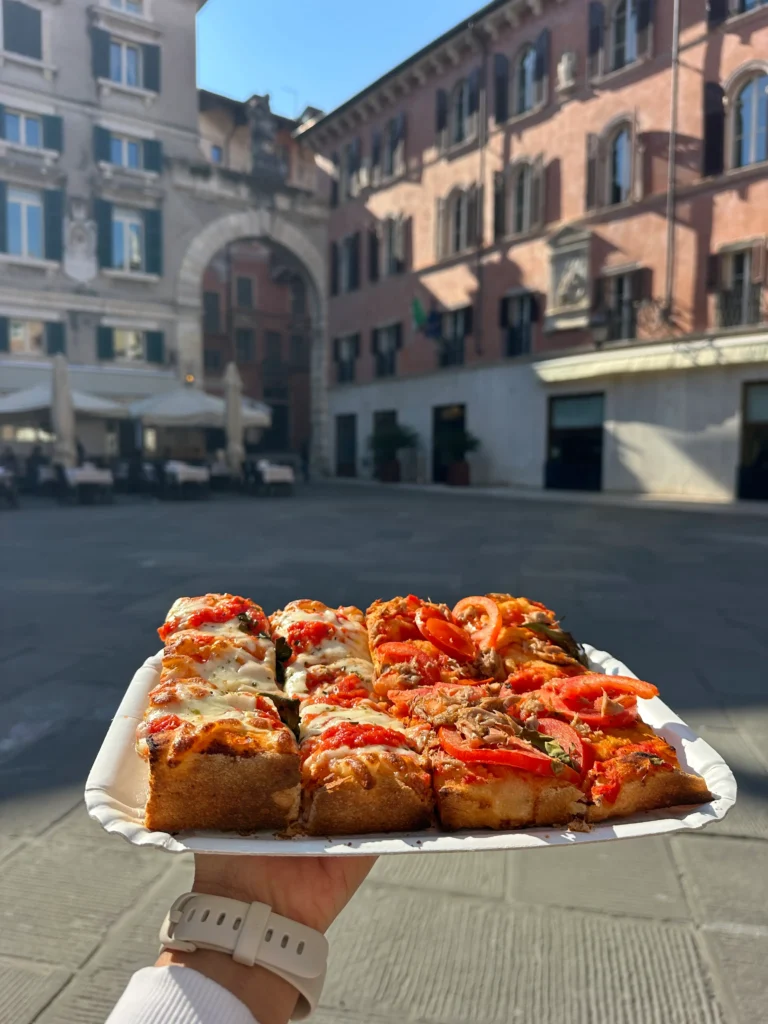
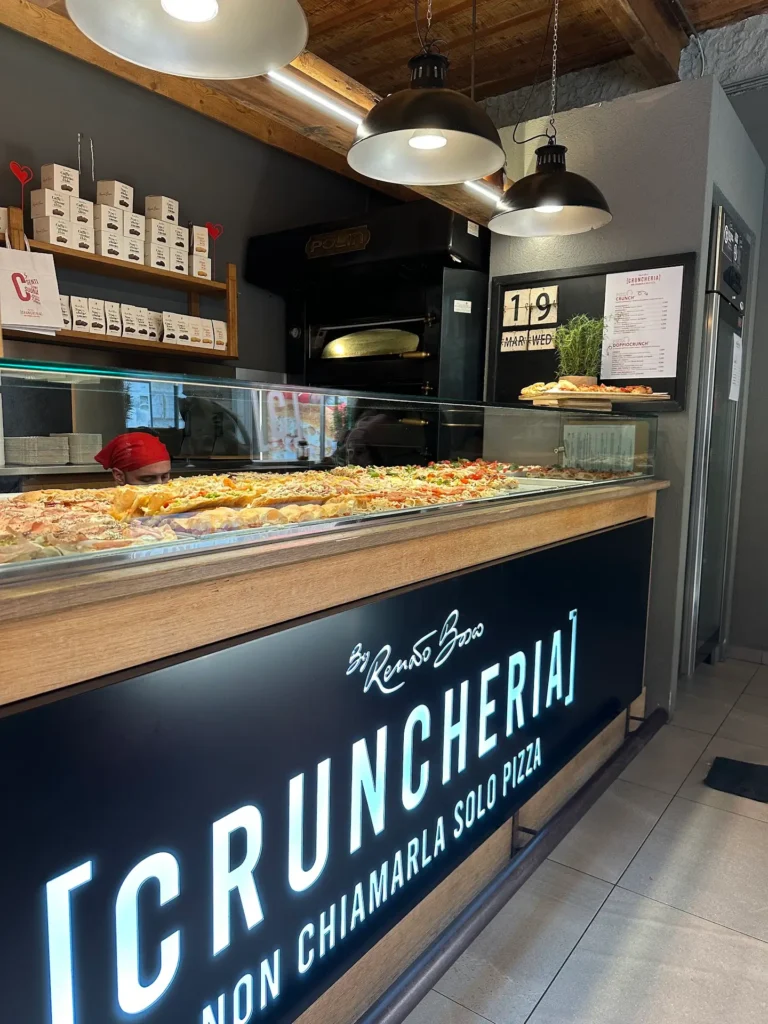
This was easily one of the best things I ate in Verona.
Cruncheria is the street food spot by Renato Bosco, one of Italy’s most well-known pizza makers. What they serve here isn’t your usual pizza. It’s something called DoppioCrunch, a double-layered slice with a crispy bottom and a soft, airy inside.
Source: Cruncheria (by Renato Bosco)
You order by the slice, and it comes out fast, which makes it perfect for a quick stop in between sightseeing. It’s right on Via della Costa, just a short walk from Piazza delle Erbe and Torre dei Lamberti, so it’s easy to fit into your day.
For me, what really stood out was the texture. The crunch is actually audible, and then the inside stays soft and light. It’s not heavy or greasy like you might expect. Even if you don’t usually care that much about pizza, you’ll notice the difference.
I’m not even the pizza person between me and Mat. He is, and he even makes pizza himself. But even he loved this. The price is around €5–8 per slice, mostly standing room, quick takeaway service, with a few craft beers available.
It might feel a bit expensive for a slice at first, but once you try it, it makes sense.
Quick tip: Go around lunch or mid-afternoon if you can. It gets busier later in the day, and it’s much easier to grab a slice without waiting earlier on.
If you only have time for one quick food stop in Verona, I’d make it this one.
Gelato at Gelateria Impero
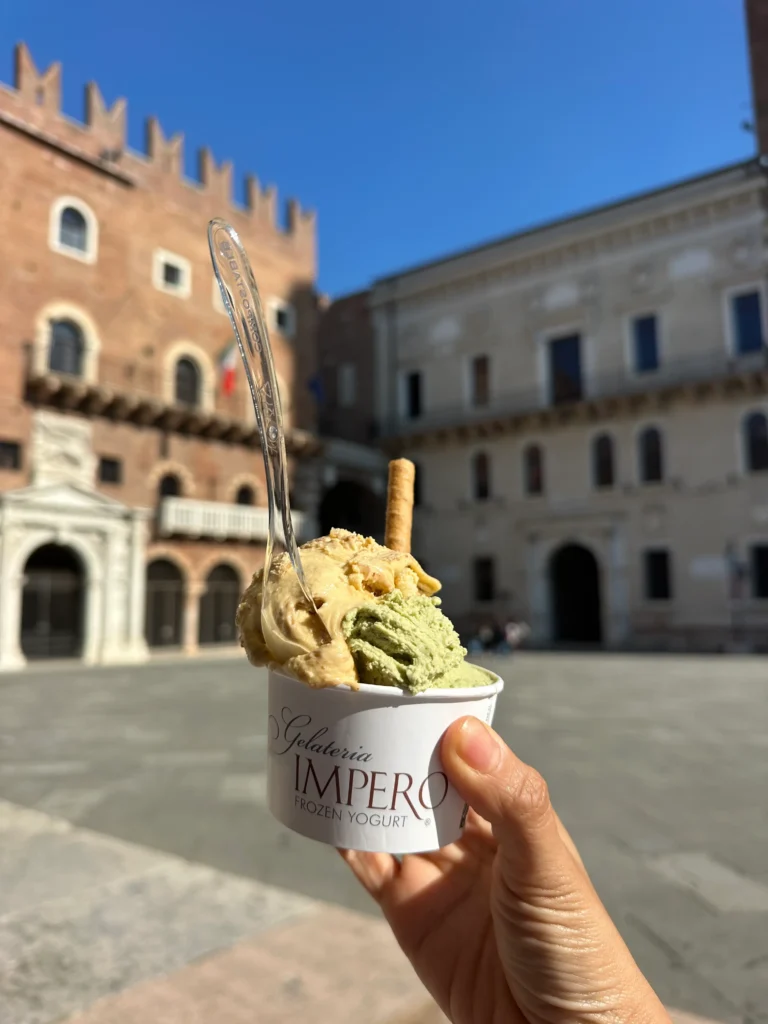
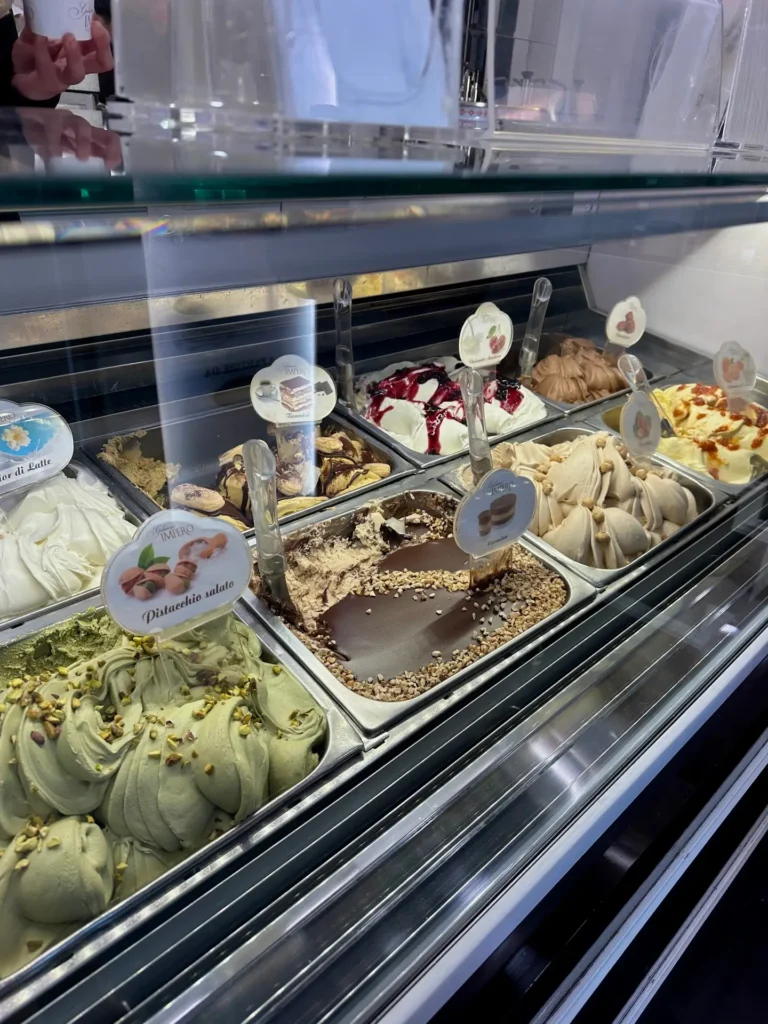
This is the one I still think about.
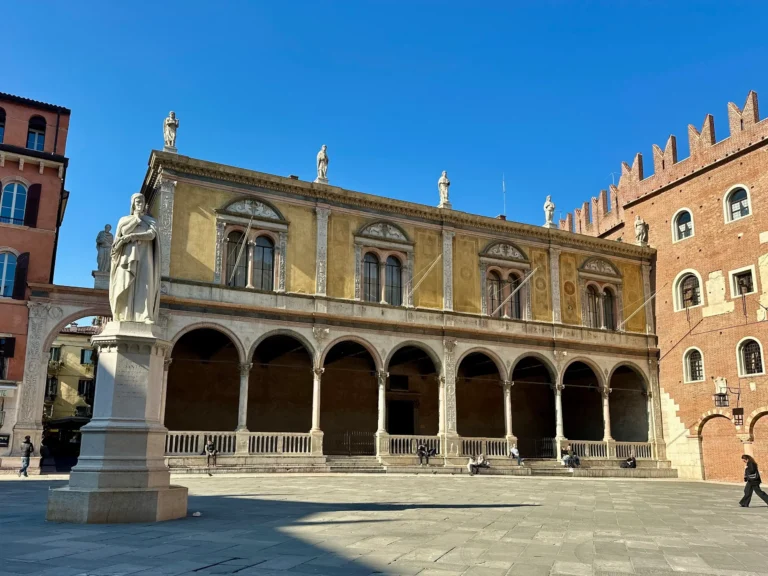
Gelateria Impero is a small artisan gelato shop tucked between Piazza delle Erbe and Piazza dei Signori, near Dante’s statue. Because of where it’s located, it’s easy to miss. There’s no big sign, nothing pulling you in, and you could easily walk past it without realizing it’s there.
We found it by accident. I had actually sat down near Dante’s statue without realizing it, while also looking around for it at the same time. That kind of sums up this place. You don’t plan it. You just end up there.
Order the salted pistachio. It’s not overly sweet. The flavor is deep and nutty, with just enough salt to balance everything out. It’s one of those rare gelatos that makes you pause after the first bite because you weren’t expecting it to be that good. Easily one of the best gelatos I had in Italy, maybe even anywhere.
This isn’t a famous, heavily marketed spot. It feels more like something a local would point you to, not something you’d find on a big list, and that’s exactly why it stands out.
Quick tip: Get your gelato and walk a few steps to Piazza dei Signori. It’s quieter, less crowded, and one of the most authentic-feeling squares in the city. It turns a quick stop into a moment you actually remember.
I share more about this moment in Piazza dei Signori in this guide, along with some easy day trips from Verona if you’re planning what to do next.
Pizza by the Slice at Zio Lele
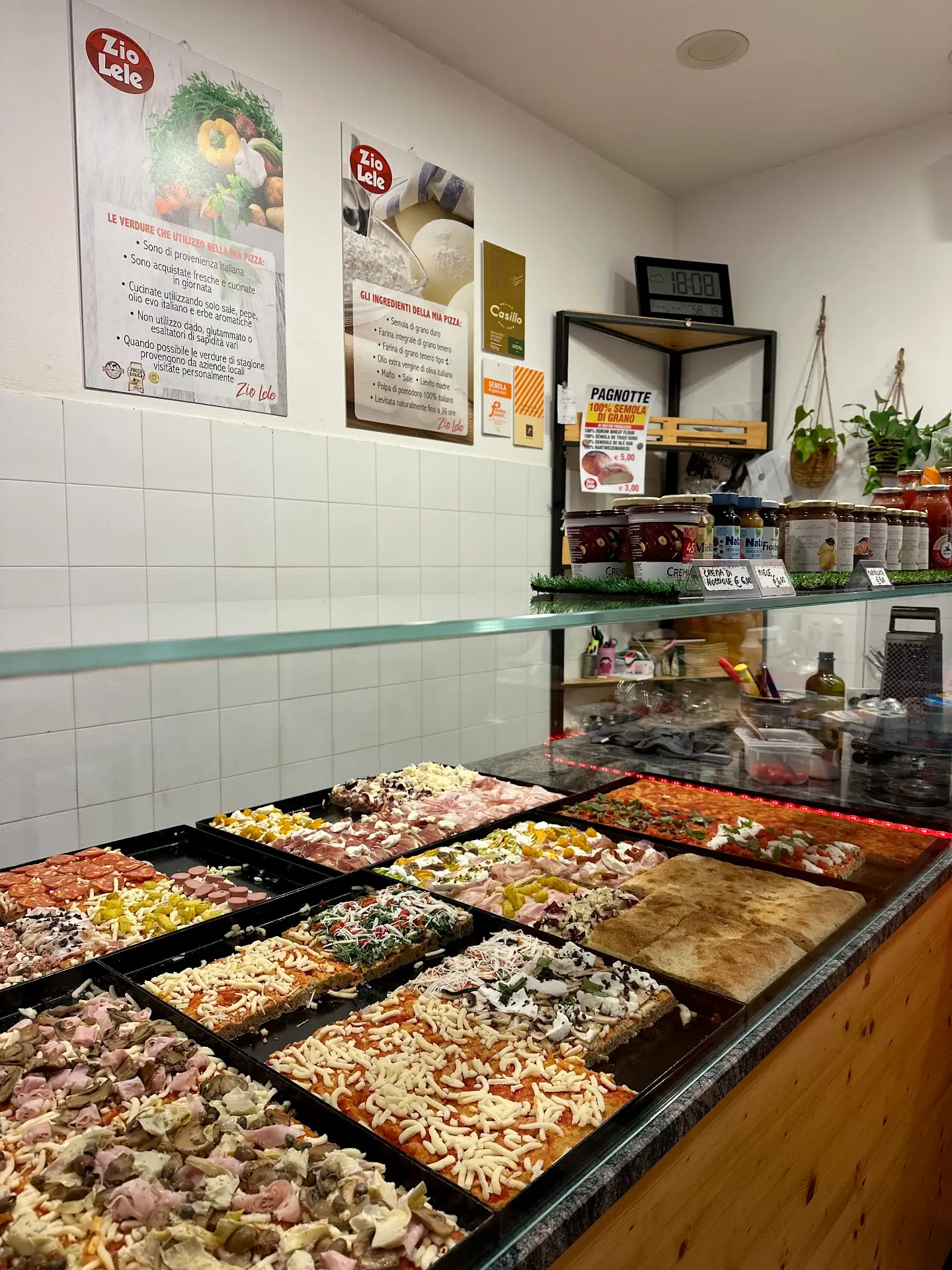
This was our end-of-day pizza stop, and it felt completely different from Cruncheria.
Zio Lele is a small neighborhood pizzeria in Città Antica that serves sheet pizza by the slice. It has that same crispy-bottom, soft-inside style, but the vibe is quieter and more local.
You can also check the official website to see what else is on their menu: Zio Lele: Italian Pizza Restaurant in Conil de la Frontera
Mat found it online as the day was winding down, and we ended up waiting near a nearby church for it to open at 6 PM. We were the first ones there. That turned out to be a good thing.
The owner chatted with Mat, asked what we liked, and recommended slices instead of just handing us a menu. It felt personal in a way that’s easy to miss when you’re moving quickly through a city.
The pizza itself was good, but what really stood out was the experience. It felt more relaxed, less rushed, and a bit more local than our earlier stops. They also have a small selection of Italian craft beer, which makes it an easy place to linger a little longer.
Quick tip: If you see locals waiting before opening, that’s usually a sign it’s worth staying. We did, and it paid off.
This isn’t a must-do if you’re short on time. But if you’re in the area in the early evening and want something simple to end the day, it’s a great option. If you only have time for one pizza stop, go to Cruncheria earlier in the day. If you have room for a second, this is where you slow things down a bit.
Drinks You Should Know About
In Verona, food and drink aren’t separate things.
Even if you’re not planning your trip around wine, you’ll notice quickly that it’s part of almost every meal, every menu, and every table around you.
It helps to know a few basics before you order, so you don’t just default to whatever looks familiar.
Amarone and Valpolicella (The Reds)
These are the two wines you’ll see everywhere in Verona.
Amarone della Valpolicella is the one people talk about. It’s made from partially dried grapes, which gives it a deeper, more concentrated flavor. It’s bold, complex, and usually more expensive. This is the kind of wine you try once, slowly, ideally when you’re sitting down with a proper meal or at a relaxed enoteca.
Valpolicella is its lighter, more everyday counterpart. It’s fresher, with bright cherry notes, and much easier to drink. You’ll see it more often by the glass, and it’s what most people are actually having with their meals.
If you’re not sure what to order, start with Valpolicella. It fits more naturally into a casual lunch or dinner.
You don’t need to order Amarone every time. It’s not meant for that. It’s something you try once and remember.
I’ve been sober for more than three years now, but I used to love wine, so I still recognize the role it plays here. Amarone is the kind of wine that slows a meal down. It makes people stay longer, talk more, and settle into the moment.
Soave (The White)
If you prefer white wine or just want something lighter, this is the one to look for.
Soave comes from just east of Verona and is typically light, dry, with a subtle almond finish. It pairs well with lighter dishes, fish, or even a simple cheese board.
It’s often overlooked because Amarone gets most of the attention, but if white wine is more your style, this is worth choosing over a generic house white.
Back when I used to drink, I leaned toward Sauvignon Blanc. Something light, easy, and not too serious. Soave isn’t the same, but it sits in that same space. Refreshing, simple, and easy to enjoy without overthinking it.
Aperitivo Hour
If there’s one moment in the day that feels built into Verona’s rhythm, it’s aperitivo.
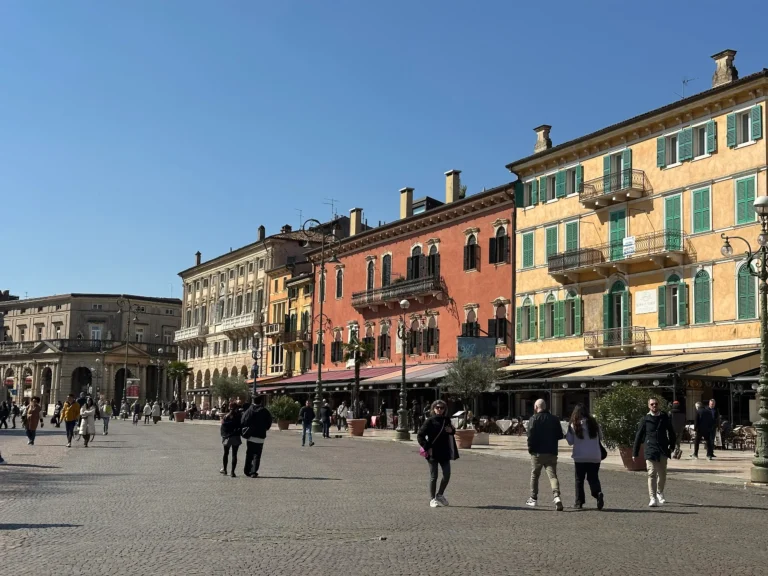
It usually happens between 6 and 8 PM, when people start gathering in bars and piazzas, ordering a drink and settling in before dinner. Around Piazza delle Erbe, you’ll see tables fill up quickly. Drinks come with small snacks like olives, chips, or simple bites, and no one seems in a hurry to leave.
The classic order is a spritz, usually Aperol or Campari mixed with prosecco and soda. It’s light, slightly bitter, and easy to drink.
But what stands out more than the drink is the pace.
Even if you don’t drink, you can still sit down with a sparkling water or a coffee and be part of it. No one is paying attention to what’s in your glass. It’s more about being there than what you order.
The aperitivo Verona scene feels like the city’s way of slowing everything down. People stay longer, conversations stretch out, and there’s no pressure to move on to the next thing.
I don’t drink anymore, but I noticed this more because of that. Sitting nearby, watching people in the early evening light, it felt like the most natural pause in the day.
If you want to experience it for yourself, look for a spot where people are already sitting and staying a while.
How to Eat Well in Verona on a Short Visit
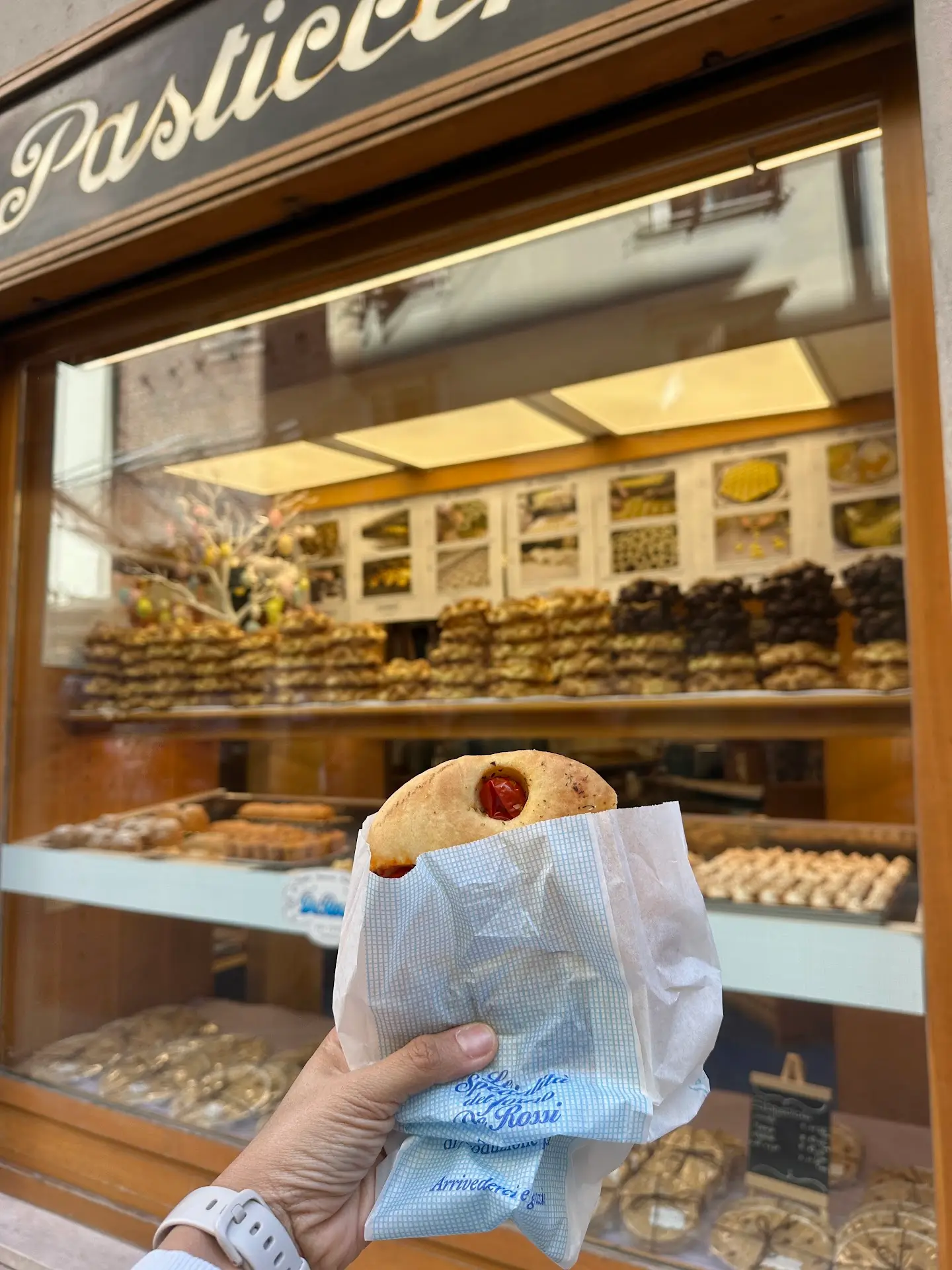
The biggest thing I learned in Verona is this: you don’t need to rush it. The best food moments weren’t planned. They happened in between. A gelato we found by accident. A pizza place we waited for outside a church. That’s how the best food in Verona shows up.
If you have one day, keep it simple. Stop at Cruncheria while sightseeing, get gelato at Gelateria Impero in the afternoon, and if you can, choose one proper osteria meal over another attraction.
If you have two days, add an aperitivo around Piazza delle Erbe, take your time with a sit-down meal, and maybe try a glass of Amarone or Valpolicella. Skip the tourist-heavy spots near the Arena and anything with multi-language menus and door hosts. Here, food isn’t separate from the experience. It is the experience.
FAQs: What to Know About Food in Verona
Is Verona good for vegetarians?
Yes, but you’ll need to choose carefully.
Dishes like risotto, polenta, and local cheeses are naturally vegetarian, and most osterias will have at least a few non-meat options. That said, traditional Verona food is quite meat-forward, so you’ll see a lot of slow-braised dishes and cured meats on menus.
Street food is easier to navigate. Pizza and gelato are simple, reliable options if you want something quick without overthinking it.
Do people eat horse meat in Verona?
Yes and it’s a genuine local tradition.
You’ll see dishes like pastissada de caval on menus, especially in traditional osterias. It’s a slow-braised dish that’s been part of the local food culture for centuries and is similar in taste and texture to a rich beef stew.
Whether you try it or not is completely personal, but it helps to know what it is before you see it on a menu.
How much does food cost in Verona?
It depends on how you eat, but overall, Verona is fairly reasonable.
Street food like pizza by the slice or gelato usually ranges from €3 to €8. A sit-down meal at a trattoria or osteria typically costs around €25 to €40 per person with wine.
Restaurants near the Arena and other major attractions tend to be more expensive for lower quality, so it’s worth walking a bit further for better value.
Where the Best Food in Verona Happens
The best food moments in Verona aren’t the ones you plan too tightly. They’re the ones you stumble into. The place you almost walk past. The gelato you didn’t mean to find. The meal you stay longer for than expected.
That’s what stayed with me.
Now that you know what to eat, the next step is deciding what to do with your time in Verona. I’ve put together this guide to help you plan your days without overthinking it.
And if you’re still mapping out your day, you can also check my one day in Verona itinerary to see how it all fits together.
Just keep it slow. Leave a little space. That’s where the best food happens.
READ MORE
- One Day in Verona: A Perfect Itinerary for First-Timers
- 14 Best Things to Do in Verona for First-Timers
- 11 Free Things to Do in Verona on Foot
- 10 Hidden Gems in Verona Most Visitors Miss
- 12 Easy Day Trips from Verona First-Time Visitors Will Love
- Juliet’s House, Verona: Worth It or Tourist Trap?
- Torre dei Lamberti Review: Nice Views, But Here’s the Catch
- Is the Arena di Verona Worth Visiting? An Honest Experience
- Castel San Pietro: Is It Worth the Climb?
- I Ranked the Best Views in Verona
- Best Churches in Verona (And the One You Shouldn’t Miss)
- Here’s What Each Verona Piazza Actually Feels Like