12 Easy Day Trips from Verona First-Time Visitors Will Love
One of the things I love about Verona is how easy it is to use as a base for northern Italy.
bIt’s calmer than Venice or Milan, but you’re close to so much. In about 30 minutes to 2 hours, you can reach Lake Garda, big cities like Venice and Milan, and even mountain towns like Trento and Bolzano.
This is my favorite way to travel. Pick one home base, settle in, and take day trips without repacking every morning.
After semi-living in Europe for four years, I learned what makes a day trip easy, fun, and actually worth the effort. So I put together the best day trips from Verona that give you the biggest payoff with the simplest logistics.
Most of these are straightforward. The only longer day is the Dolomites, and it’s best done as a guided tour. You just show up, relax, and enjoy the views.
I’ll keep each trip simple: the best way to get there, how long you need, and what’s actually worth doing once you arrive. My rule is always the same: one highlight, time to walk around, and a tasty meal.
This site uses affiliate links. If you purchase through them, I may earn a commission at no extra cost to you. Thank you for your support!
Quick Picks: The Best Easy Day Trips from Verona
If you’re short on time, these are the easiest and most rewarding day trips from Verona.
- Best overall day trip: Lake Garda (Sirmione)
- Easiest day trip by train: Venice
- Best wine and countryside: Valpolicella
- Best for food lovers: Bologna
- Best underrated city: Mantua (Mantova)
- Closest mountain scenery: Bolzano
- Most spectacular landscapes: Dolomites
If you want the easiest option with transportation included, small-group day tours from Verona can simplify the logistics and let you see more in one day.
1. Lake Garda (Sirmione vs Peschiera vs Desenzano)
Train + ferry | 30–60 minutes
Lake Garda is the easiest and most popular day trip from Verona, and one of the most beautiful places in northern Italy. In less than an hour you can leave the city behind and arrive at bright turquoise water, colorful harbor towns, and views of the Alps rising in the distance.
The southern lake towns are especially convenient because they’re easily reached by train from Verona Porta Nuova, followed by a short walk or ferry ride.
For a relaxed day trip, it’s best to pick just one town and explore it slowly. Each of the main towns near Verona has a slightly different feel, so the right choice depends on what kind of day you want.
Sirmione (iconic + scenic)

Train to Desenzano or Peschiera + ferry | about 1 hour
Sirmione is the most famous town on Lake Garda, sitting on a narrow peninsula that stretches several kilometers into the lake. The entrance is marked by the impressive Scaliger Castle, a medieval fortress surrounded by water that feels like something out of a storybook.
Once you pass through the castle gates, the streets open into a maze of small shops, cafés, and viewpoints overlooking the lake. It’s easily one of the most photogenic towns around Garda.
Plan around 4 to 6 hours in Sirmione. The highlight is Scaliger Castle and the lake views from the old town. Spend time wandering the narrow streets of the Centro Storico peninsula. For a meal, try lake fish risotto or pasta at a restaurant overlooking the water.
Quick Tip: Sirmione gets very crowded by midday in summer. If possible, arrive early in the morning to enjoy the town before tour buses arrive.
Easy experiences to book
- Lake Garda boat cruise around the peninsula
- Sirmione highlights walking tour
- Thermal spa experience at the town’s famous hot springs
Peschiera del Garda (easy base + relaxed)
Train | about 15 minutes
Peschiera del Garda is the closest Lake Garda town to Verona, which makes it one of the easiest day trips you can take. The town sits where the lake flows into canals surrounded by massive Venetian fortress walls.
Compared to Sirmione, Peschiera feels more relaxed and local. You’ll find quiet waterfront paths, small cafés, and boats drifting through the canals.
It’s a great choice if you want a simple lakeside afternoon without big crowds.
Plan around 3 to 5 hours here. The highlight is the historic Venetian fortress walls surrounding the town, and a nice way to spend time is walking the waterfront promenade along Lungolago Mazzini. For a meal, try fresh lake fish or pasta at a canal side restaurant.
Quick Tip: Peschiera is charming but smaller than most Lake Garda towns, so it works better for a relaxed stroll than a full sightseeing day.
Desenzano del Garda (livelier lakeside day)
Train | about 20 minutes
Desenzano del Garda feels more like a lively Italian lakeside city than a resort town. It has a beautiful harbor, colorful buildings, and several piazzas filled with restaurants and wine bars.
The town has a bit more energy than the others, especially in the evening when locals gather along the waterfront for aperitivo.
If you enjoy good restaurants and a vibrant atmosphere, Desenzano is often the most fun place to spend a day on the lake.
Plan around 4 to 6 hours here. The highlight is the view from Desenzano Castle overlooking the harbor, and it is nice to wander around Piazza Malvezzi and the marina area. For a meal, try seafood pasta or lake fish at a restaurant overlooking the water.
Quick Tip: Lake Garda feels a lot like Lake Como and is best enjoyed slowly. Pick one town, walk around, sit by the lake, and grab a gelato instead of trying to rush between multiple towns in one day.
2. Valpolicella (Amarone Country, Easiest Wine Escape)
Car | ~30 minutes
Tour | ~4–5 hours
If you want a countryside escape without traveling far, Valpolicella is the easiest wine region to visit from Verona. Just north of the city, the landscape quickly changes from urban streets to rolling hills covered in vineyards and small villages.
This region is famous for Amarone della Valpolicella, one of Italy’s most distinctive red wines. Amarone is made using partially dried grapes, which creates a richer, more concentrated wine with deeper flavors than most Italian reds.
Because the wineries are spread across the hills, the easiest way to visit is either by car or on a small-group wine tour from Verona.
How wine tastings usually work
Most wineries in Valpolicella offer guided tastings by reservation. A typical tasting includes:
- 3–5 wines
- a short explanation of how the wines are produced
- small plates of local cheese, bread, or cured meats
Tastings usually last 60–90 minutes, and many wineries have terraces overlooking the vineyards where you can sit outside while sampling the wines.
Even if you’re not a wine expert, the experience is relaxed and welcoming. The views alone are worth the visit.
Timing your visit
Valpolicella works best as a half-day trip.
Most visitors plan two winery stops at most, which gives you enough time to enjoy each tasting without rushing. Many small-group tours leave Verona late morning or early afternoon, making it easy to combine the trip with time in the city.
Trying to squeeze in too many wineries can quickly turn the day into a blur of tasting rooms instead of an enjoyable countryside experience.
Plan for a long lunch
One of the highlights of visiting Valpolicella is the food. Many wineries are near traditional trattorias or agriturismos, where you can stop for a relaxed lunch between tastings.
Regional specialties often include:
- Amarone risotto
- handmade pasta with rich meat sauces
- local cheeses and cured meats
If you’re visiting independently, it’s worth planning lunch at a countryside restaurant to break up the tastings.
Easiest way to visit
If you’d rather not worry about driving between wineries, a small-group Valpolicella wine tour from Verona is usually the easiest option. Most tours include transportation, visits to two wineries, and guided tastings.
It’s a simple way to experience the region without navigating narrow vineyard roads.
I’ve been sober for three years now, but when I did wine day trips, I had a simple rule: go slow, stay hydrated, and never taste on an empty stomach.
3. Soave (Castle Views + Crisp White Wine)
Car | ~40 minutes
Train + short walk | ~1 hour
If Valpolicella is known for bold red wines, Soave is famous for crisp white wine and medieval scenery.
The town sits beneath an impressive castle surrounded by intact stone walls, with vineyards stretching across the hills around it. Compared to Valpolicella’s scattered wineries, Soave feels more like a classic Italian hill town experience.
You can spend time exploring the village itself and then visit nearby wineries in the surrounding countryside.
How long you actually need
Soave works well as either a half-day or relaxed full-day trip from Verona.
- Half day: explore the village, walk the castle walls, enjoy a wine tasting
- Full day: add lunch and visit a nearby winery in the hills
Because the historic center is small, most visitors can explore it comfortably in a couple of hours.
What makes Soave different from Valpolicella
While both regions are close to Verona, the experience feels quite different.
Valpolicella is about vineyard landscapes and winery visits, while Soave feels more like a historic village with wine culture woven into it.
Instead of driving between wineries, you can spend time wandering cobblestone streets, climbing up to the castle, and enjoying views across the surrounding vineyards.
Quick Tip: Soave’s historic center is small, so it is easy to see most of the village in a couple of hours. If you want to stretch the visit into a full day, add a winery lunch in the surrounding hills.
I’m a sucker for Italian hill towns. You get the views, the vineyards, and a castle-topped skyline, then you end the day wandering quiet streets in the village below. It’s a fairytale day trip — and you’ll definitely earn your gelato.
4. Venice (Worth It If You Do It Strategically)
Train | ~1 hour 10 minutes
Venice is one of the most famous cities in the world, and luckily it’s also one of the easiest day trips from Verona.
High-speed trains run frequently between the cities, which makes visiting Venice surprisingly simple.
That said, Venice is also a place where it’s easy to over-plan your day.
Trying to see everything — St. Mark’s Square, the Rialto Bridge, gondolas, museums, and hidden neighborhoods — often leads to a rushed experience. The best Venice day trips focus on just one or two areas.
Option 1: First-timer classic loop
If it’s your first time in Venice, stick with the highlights.
Start at St. Mark’s Square, walk through the narrow streets toward the Rialto Bridge, then explore the canals around the historic center.
This route lets you see Venice’s most famous sights without trying to cover the entire city.
Option 2: Quiet Venice
If you prefer a slower experience, pick one neighborhood and explore it.
Areas like Dorsoduro or Cannaregio have beautiful canals, fewer crowds, and plenty of small wine bars serving cicchetti (Venetian tapas).
Spend time wandering along the canals, stopping for a drink or small bites as you go.
A shortcut to understanding Venice
One of the easiest ways to get context quickly is with a guided introduction walk or lagoon boat tour.
A local guide can explain how the city developed, point out hidden details you might otherwise miss, and help you navigate the maze of canals.
Venice, like most big cities I’ve visited in Europe, is easy to overpack. That’s usually why people either love it or hate it. The best way to actually love Venice is to pick one area and one main thing you’re excited about, then really enjoy it. Let the rest happen naturally.
5. Bologna (Food City Day Trip That Feels Lived-In)
Train | ~1 hour
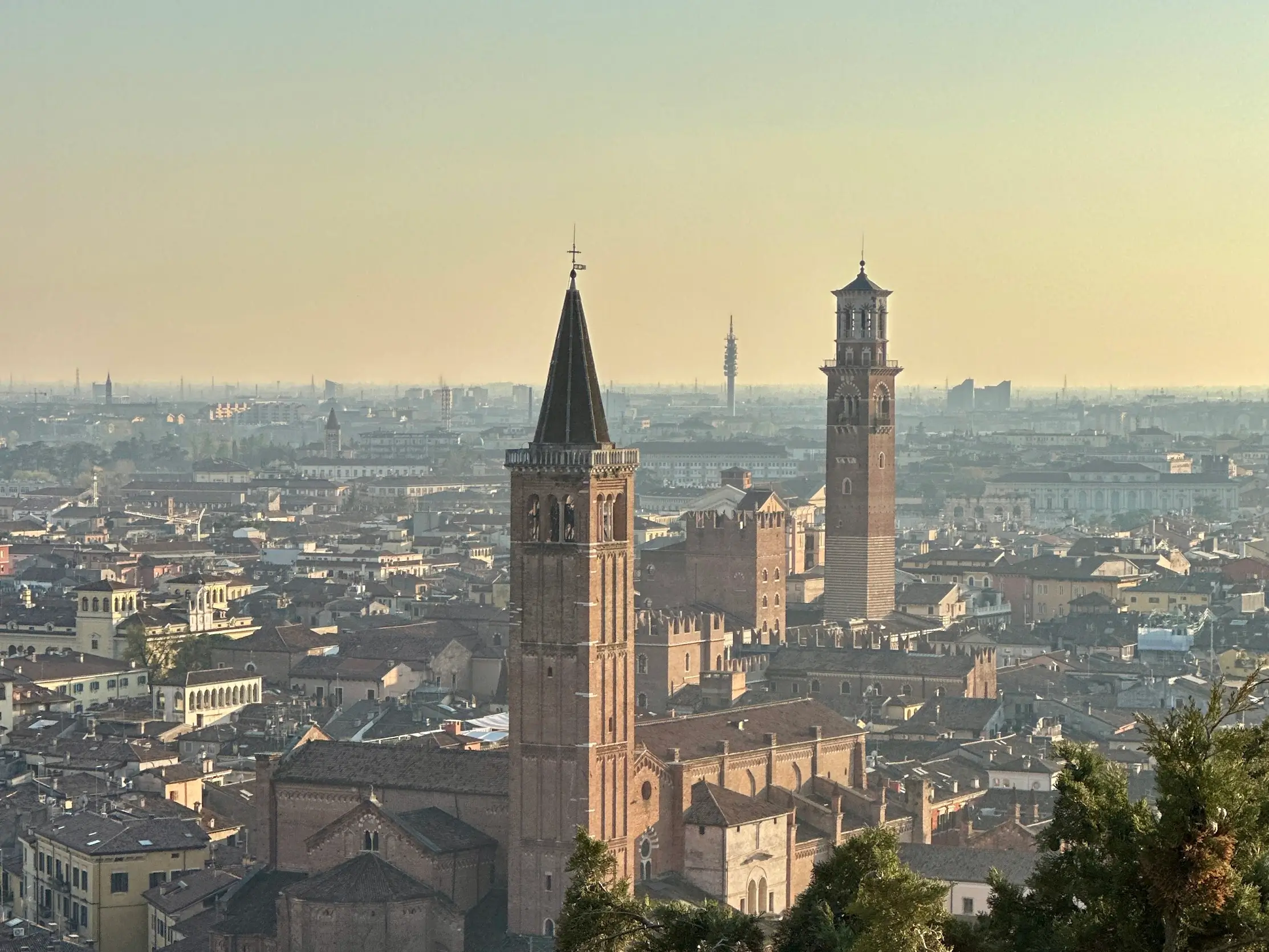
Bologna is often called Italy’s food capital, and it’s one of the easiest and most satisfying day trips from Verona. But the real magic of Bologna isn’t rushing between landmarks — it’s slowing down and enjoying the rhythm of the city.
Unlike some Italian destinations that feel built around tourism, Bologna still feels lived-in and local. Students fill the cafés, markets buzz with activity, and the long portico-covered streets make it easy to wander for hours.
Instead of trying to see everything, a perfect day here can follow a simple rhythm: one market, one iconic bite, and one great walk or viewpoint.
Start with a market
Begin at Quadrilatero Market, the historic food district just off Piazza Maggiore. The narrow streets are packed with small shops selling fresh pasta, cheeses, cured meats, and regional specialties.
Even if you’re not shopping, it’s a great place to wander and get a sense of Bologna’s food culture.
Try one iconic dish
Bologna is famous for dishes like tagliatelle al ragù, tortellini, and mortadella. Instead of hopping between restaurants, pick one spot and enjoy a proper meal.
A long lunch here — pasta, wine, maybe a dessert — is often the highlight of the day.
End with a view or walk
End the day with a walk under Bologna’s famous porticoes, the covered arcades that run for kilometers across the city. If you want a view, climb the Asinelli Tower or head toward the hills for a look over the terracotta rooftops.
Bologna is an easy day trip. You can arrive with no plan, have a great meal, then wander the streets and it still feels like a proper break. If you want a deeper look at the food scene, a small group food tour is a great way to visit markets, bakeries, and traditional spots while learning about the dishes.
Pro Tip: Book the Asinelli Tower climb earlier in the day. Time slots often sell out by afternoon, especially in peak season.
6. Mantua (Mantova): The Underrated Culture Win
Train | ~45 minutes
Mantua is one of those places many travelers overlook — which is exactly why it’s such a great day trip.
Surrounded by lakes and filled with Renaissance architecture, the city feels elegant but surprisingly quiet compared to more famous destinations. You can walk across its historic squares, explore palaces, and enjoy the atmosphere without fighting through crowds.
If you enjoy art, history, and slower-paced cities, Mantua is one of the most rewarding day trips near Verona.
Who this trip is perfect for
Mantua is ideal for travelers who want:
- fewer crowds
- beautiful historic architecture
- a relaxed cultural day trip
The city’s historic center is compact and easy to explore on foot, making it perfect for a slow afternoon of wandering.
After 13+ years of travel, I’ve learned the best day trips aren’t always the most famous ones. They’re the places where you can actually enjoy the city — and Mantua is perfect for that.
Simple way to explore
Start in Piazza Sordello, the grand square surrounded by historic buildings, then walk toward Palazzo Ducale, one of the largest palace complexes in Italy. From there, continue through the streets toward Piazza delle Erbe, where cafés and small shops line the square.
If you enjoy learning about the history behind the architecture, a guided highlights walk can be a great way to understand Mantua’s Renaissance past. Otherwise, the city is easy to explore on your own using a simple walking route.
Simple way to explore
Start in Piazza Sordello, the grand square surrounded by historic buildings, then walk toward Palazzo Ducale, one of the largest palace complexes in Italy. From there, continue through the streets toward Piazza delle Erbe, where cafés and small shops line the square.
If you enjoy learning about the history behind the architecture, a guided highlights walk can be a great way to understand Mantua’s Renaissance past. Otherwise, the city is easy to explore on your own using a simple walking route.
Pro Tip: Book Palazzo Ducale tickets in advance if you want to go inside. It is huge and lines can build up later in the day.
7. Vicenza (Architecture + Calm Italian City Vibes)
Train | ~45 minutes
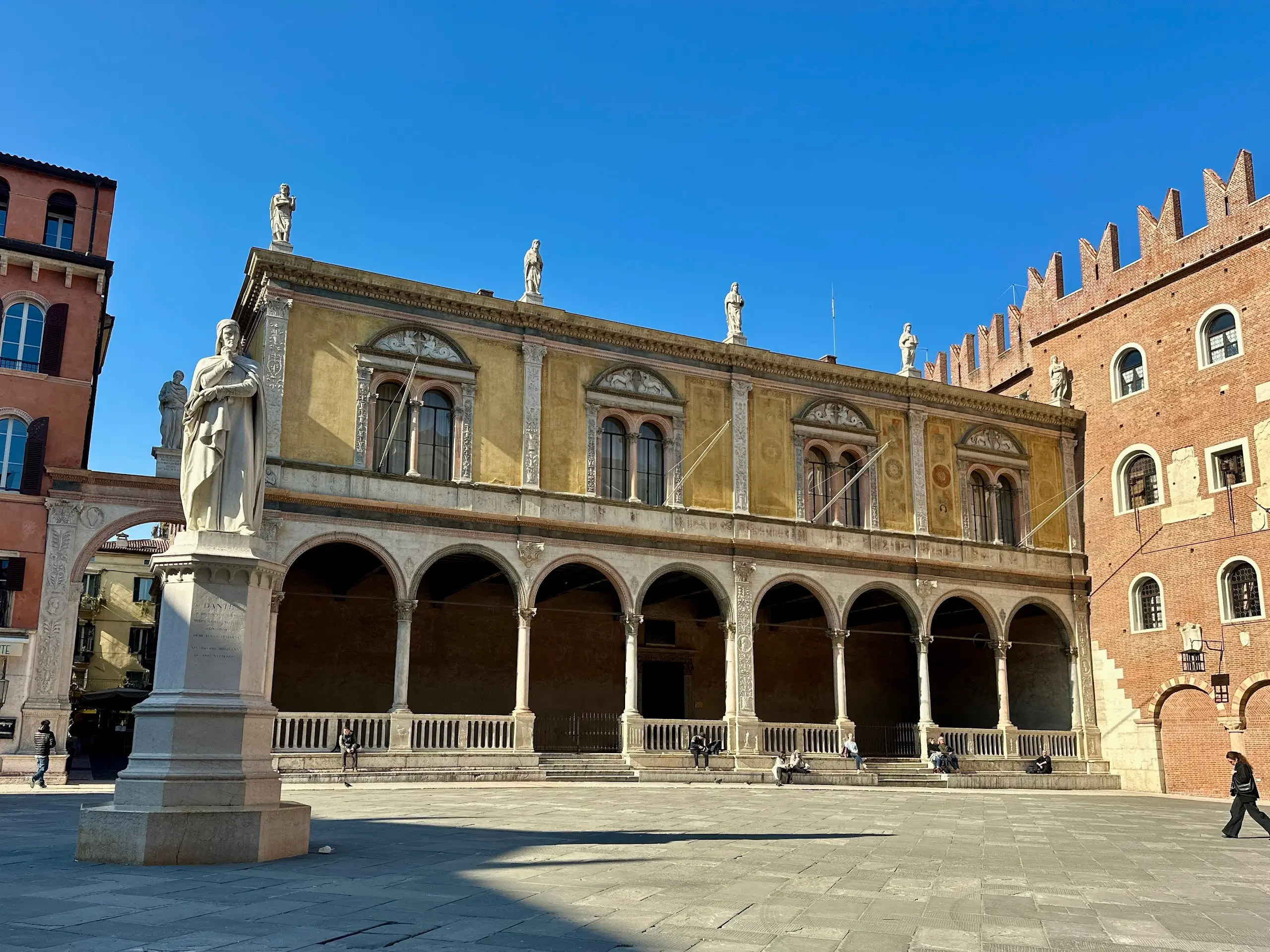
Vicenza is one of those Italian cities that feels effortlessly beautiful. It’s known for the architecture of Andrea Palladio, the Renaissance architect whose elegant buildings influenced architecture across Europe and the United States.
But you don’t need to be an architecture expert to enjoy it.
The charm of Vicenza comes from how easy it is to explore: elegant piazzas, quiet streets, and impressive buildings appearing around every corner.
A simple walkable route
A relaxed day in Vicenza can follow a simple path:
Arrive at the train station and walk toward the historic center. Within minutes you’ll reach Piazza dei Signori, the city’s main square.
Here you’ll see the Basilica Palladiana, one of Vicenza’s most famous landmarks, with Palladio’s distinctive loggia wrapping around the building.
From there you can:
- wander through the historic streets
- visit a museum or church
- stop for a long Italian lunch in one of the piazzas
After lunch, continue walking through the old town or climb up toward viewpoints overlooking the city.
I’m not an architecture expert, but one of the things I love about Italy is how you can appreciate beautiful buildings without knowing all the details. Vicenza is perfect for that. It’s the kind of place where you just walk around and your eyes do the work.
8. Padua (Padova): History + Easy Wander Day
Train | ~50 minutes
Padua is one of the most historically important cities in northern Italy, but it still feels relaxed and approachable as a day trip. Compared to nearby cities like Vicenza, Padua has a deeper academic and artistic history, thanks to its centuries-old university and remarkable Renaissance art.
Where Vicenza feels elegant and architectural, Padua feels scholarly, historic, and full of quiet surprises. You’ll find lively piazzas, long arcaded streets, and some of Italy’s most impressive frescoes hidden behind fairly simple façades.
What makes Padua special
The biggest highlight in Padua is the Scrovegni Chapel, famous for Giotto’s fresco cycle from the early 1300s. It’s widely considered one of the most important works of Western art.
Because visits are strictly controlled, you’ll need to reserve a timed ticket in advance. Same-day bookings usually aren’t available.
Beyond that one must-see sight, Padua is best experienced slowly. Wander through Prato della Valle, one of the largest squares in Europe, then explore the historic center’s arcaded streets and cafés.
I’d make sure I reserved a timed ticket for the Scrovegni Chapel in advance, because you can’t book it the same day. Then I’d keep the rest of the day open on purpose. Let Padua surprise you.
9. Milan (Big-City Energy, Best for Shopping or Art)
Train | ~1 hour 10 minutes (high-speed)
Milan feels completely different from most other cities on this list. Instead of medieval streets and quiet piazzas, Milan offers big-city energy, fashion, design, and world-class museums.
It’s one of Italy’s most modern cities, but it still has some iconic historic sights — most famously the Duomo di Milano, the massive Gothic cathedral covered in intricate white marble carvings.
What to focus on in one day
A good Milan day trip works best when you focus on one or two major experiences, such as:
- visiting the Duomo and its rooftop terraces
- seeing The Last Supper by Leonardo da Vinci
- exploring the Brera district’s art galleries and cafés
- shopping in the elegant Galleria Vittorio Emanuele II
I skipped Milan on my last northern Italy trip because I’m not really into fashion. But if you love fashion, design, or art museums, you’re going to have a great time there. It’s one of the easiest day trips from Verona.
Pro Tip: Some attractions in Milan require advance planning. For example, skip-the-line tickets or guided visits are often the easiest way to see popular sites like the Duomo terraces or The Last Supper without spending half your day waiting.
10. Trento (Small City, Mountain Air, Clean & Easy)
Train | ~1 hour 30 minutes
Trento sits at the edge of the Alps and feels noticeably different from cities farther south. The air feels fresher, the mountains rise dramatically around the valley, and the historic center has a neat, tidy atmosphere that almost feels alpine.
While the Dolomites get most of the attention, Trento offers a much easier mountain-style day trip from Verona.
Why Trento is a great alternative
The Dolomites are spectacular but can require long travel times and careful planning. Trento gives you a taste of the alpine environment without turning the day into a logistical challenge.
You can walk through the colorful historic center, visit Buonconsiglio Castle, and enjoy views of the surrounding mountains — all within a compact, walkable area.
Trento is my easier alternative to the Dolomites. You still get that mountain feeling, just with way less effort.
11. Bolzano (Bozen): The Gateway Mountain-City Day
Train | ~1 hour 30 minutes
Bolzano sits at the meeting point of Italian and Austrian culture, and the blend is immediately noticeable. Street signs appear in both Italian and German, cafés serve both espresso and alpine pastries, and the architecture reflects influences from both cultures.
The city itself is compact and charming, with colorful buildings and lively markets.
What you can realistically do in a day
A simple Bolzano day trip might include:
- exploring Piazza Walther, the city’s central square
- visiting the South Tyrol Archaeology Museum (home of Ötzi the Iceman)
- wandering the medieval arcades along Via dei Portici
- enjoying lunch with mountain views nearby
Quick Tip: If you want a bit of nature without complex travel, the Ritten cable car just outside the city offers spectacular alpine views within minutes.
I love places in Europe where you get a mix of two cultures, and Bolzano is exactly that. It feels Italian and Austrian at the same time — especially in the food, the language, and the overall vibe. It’s like visiting one place and getting a little taste of both.
12. Dolomites Day Tour (The “Wow” Day with the Least Planning)
Tour | ~10–12 hours
The Dolomites are easily one of the most spectacular landscapes in Europe. Jagged limestone peaks rise above alpine meadows, creating scenery that feels almost unreal.
They’re farther from Verona than the other destinations on this list, which means a Dolomites trip is a long but unforgettable day.
A quick reality check
Because the mountains are farther away, a Dolomites day trip usually involves:
- an early start
- several hours of travel
- weather that can change quickly
- seasonal accessibility (especially in winter)
But the payoff is huge: dramatic alpine scenery that looks completely different from the lakes and cities of northern Italy.
Why a guided tour works best
This is one trip where a guided day tour from Verona often makes the most sense. Instead of planning routes, driving mountain roads, or figuring out viewpoints, the logistics are handled for you.
Most tours include stops at scenic viewpoints, alpine villages, and iconic locations throughout the Dolomites.
The Dolomites might be the longest day trip here, but it’s worth it. I’d do it as a guided tour so you don’t have to think. The views, the stops, the timing — it’s all planned. You get to enjoy the day instead of managing it.
FAQs: Planning Day Trips from Verona
What are the easiest day trips from Verona without a car?
The easiest day trips from Verona without a car are Venice, Bologna, Mantua, Vicenza, and Padua, all reachable by train in about 45–70 minutes.
Can you do Venice as a day trip from Verona and still enjoy it?
Yes. Venice is only about 1 hour to 1 hour 15 minutes by train, making it one of the easiest day trips from Verona.
Is Lake Garda or Venice better for a first day trip from Verona?
Both are great choices, but they offer very different experiences.
Lake Garda: relaxing lakeside towns and scenic views
Venice: iconic canals and historic landmarks
If it’s your first trip to Italy, Venice is usually the top choice. If you prefer a slower day, Lake Garda can be more relaxing.
What’s the best day trip from Verona in winter?
In winter, some of the best day trips include Bolzano and Trento, which have alpine scenery and festive Christmas markets.
What’s the best day trip from Verona in summer?
What’s the best day trip from Verona in summer?
Lake Garda is one of the best summer day trips because the lake breeze keeps temperatures comfortable.
Are guided day tours from Verona worth it?
Guided tours are especially helpful for destinations where transportation is more complicated.
They work best for: Dolomites day trips, Valpolicella wine tours, and Lake Garda tours that visit multiple towns
For cities like Venice or Bologna, traveling independently by train is usually easy.
How early should you leave Verona for a day trip?
Most day trips work best if you leave between 8:00 and 9:30 AM. This gives you enough time to explore before the busiest hours.
How many day trips should you plan if you’re based in Verona for 3–5 days?
A good balance is one day trip if you’re staying in Verona for 3 days, and two day trips if you’re staying for 4–5 days.
Many travelers combine Lake Garda with either Venice or Valpolicella for a well-rounded itinerary.
Choose Your Perfect Day Trip
Verona is the kind of base that makes day trips feel easy. You can keep things simple with Lake Garda, go big with Venice, plan a relaxed food day in Bologna, or head to the Dolomites for the most dramatic scenery.
If you want the least amount of planning, I’d recommend booking a tour for Valpolicella or the Dolomites. Those are the two trips where having the logistics handled actually makes the day better.
With so many great options nearby, Verona makes it easy to mix city time with unforgettable day trips across northern Italy.