Is the Arena di Verona Worth Visiting? an Honest Experience
I still remember the moment I sat on the stone steps inside the Arena di Verona. The place is almost 2,000 years old, yet people still gather here for concerts and opera.
It is fascinating to think this place has stood here for so long. It gave me chills to imagine how many generations have watched events or walked through the same space. It is hard to imagine how many people have come here and how many different experiences have happened inside these walls
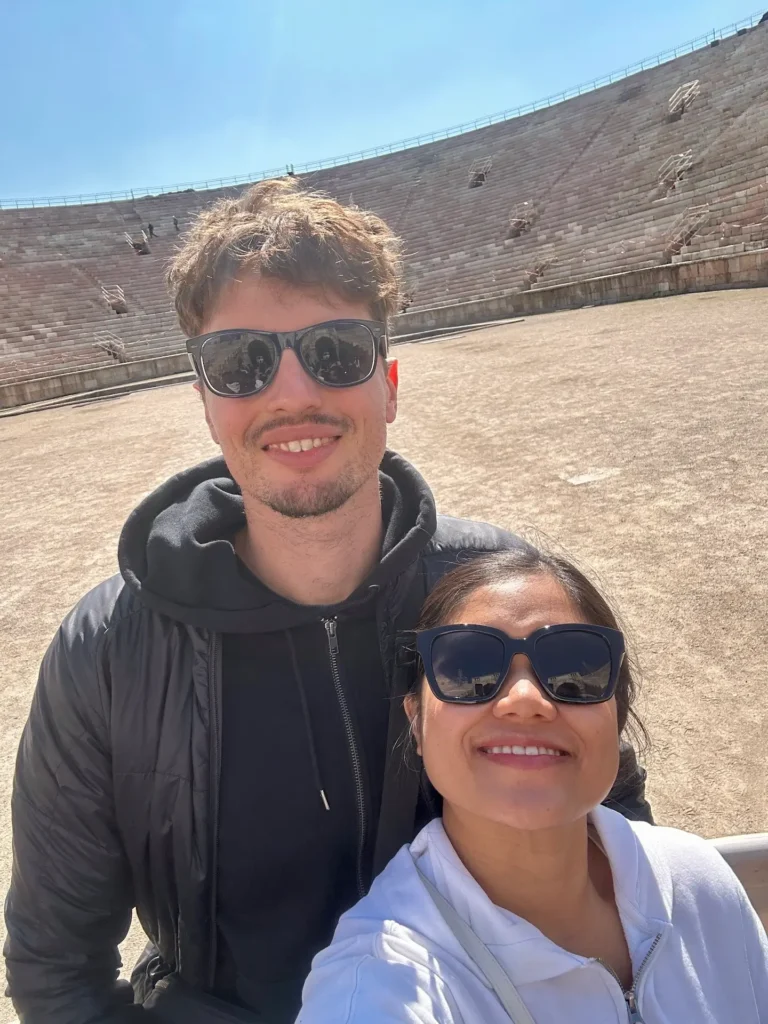
I visited in March 2025 with my partner Mat during active renovations. Parts of the arena were fenced off near the entrance, which meant we could not walk freely through some sections. To be completely honest, it felt limiting and a bit disappointing.
So the real question is: Is the Arena di Verona worth your time and money?
In this review, I will show you what visiting the Arena di Verona is actually like. I will share what the experience felt like visiting during the renovations and the real difference between visiting during the day and watching opera here.
And whether the Verona Card actually pays off and the one moment inside that made the visit feel worth every euro despite the limitations.
This site uses affiliate links. If you purchase through them, I may earn a commission at no extra cost to you. Thank you for your support!
What Is the Arena di Verona?

The Arena di Verona is a Roman amphitheater built around 30 AD. That means it is older than the Colosseum in Rome. It is also huge. This Verona amphitheater is the third largest Roman amphitheater still standing today.
When you sit inside, the scale becomes clear. Rows of stone rise high above the arena floor. It feels strange to realize people have gathered here for nearly two thousand years.
The structure you see today is not exactly how it originally looked. A massive earthquake in 1117 destroyed most of the outer ring. Only four arches from the original outer facade survived. Locals call this section the “ala.”
Because of that damage, the arena looks different from the Colosseum. The inner rings are exposed instead of hidden behind a complete outer wall.
What makes the arena remarkable is that it never stopped hosting events. It began with Roman games and gladiator fights. Medieval tournaments followed.
In 1913, a production of Aida started the opera tradition that still runs today. The arena sits in the historic center of Verona, which is listed as a World Heritage Site by UNESCO.
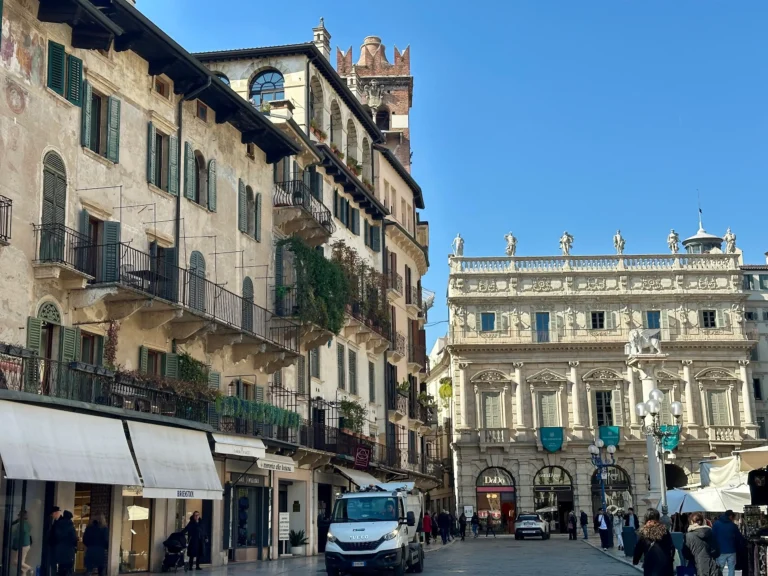
The venue still hosts major events today, including the closing ceremony of the 2026 Winter Olympics. The stone itself also shapes the city’s look. Builders used pink and white Valpolicella limestone, the same warm tones that give Verona its soft pink color when you first arrive.
My Visit to the Arena di Verona During Renovation
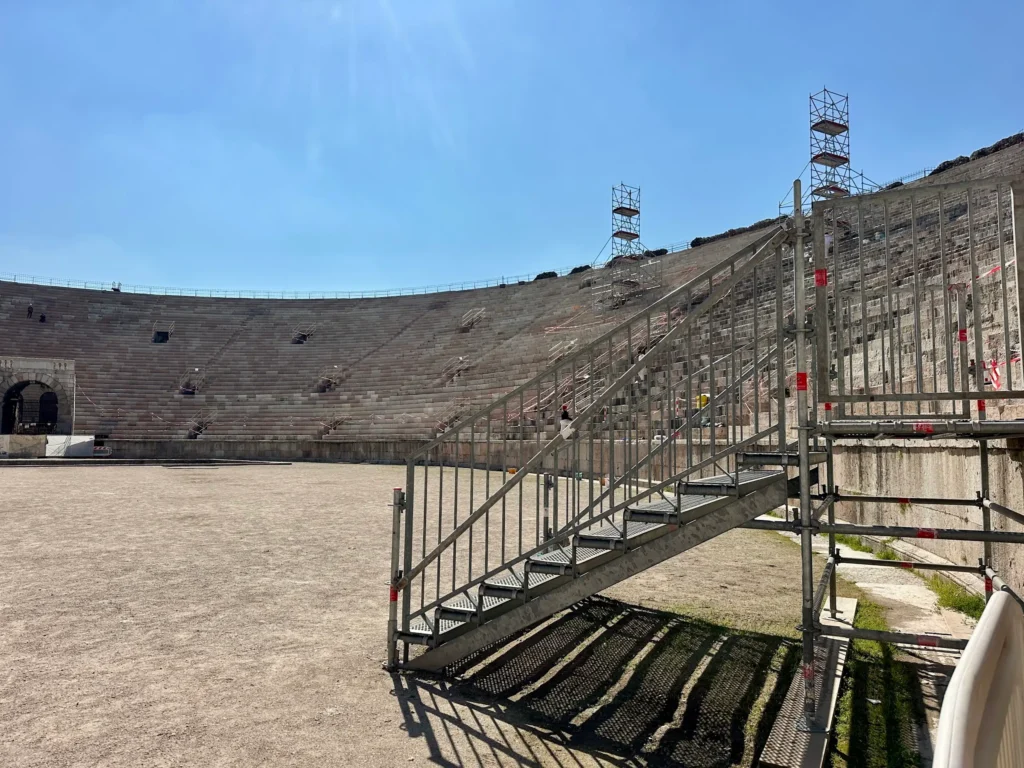
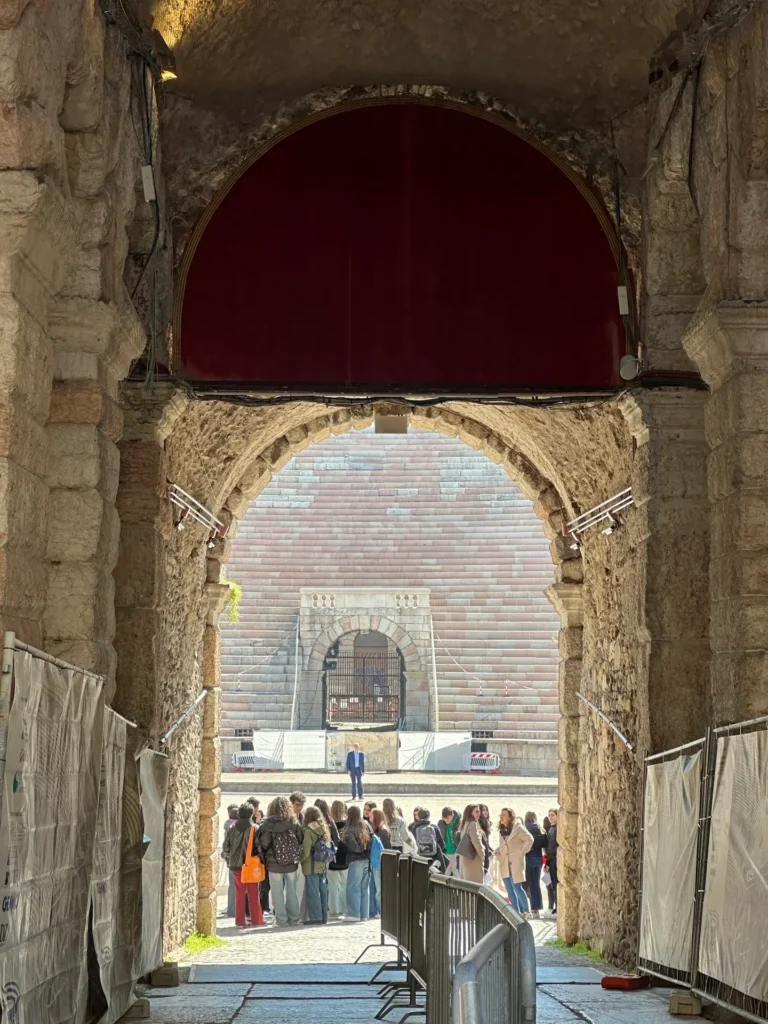
I visited the Arena di Verona in March 2025 with my partner Mat while renovations were still underway. We were able to enter and see the arena, but a fence near the entrance restricted how far visitors could go.
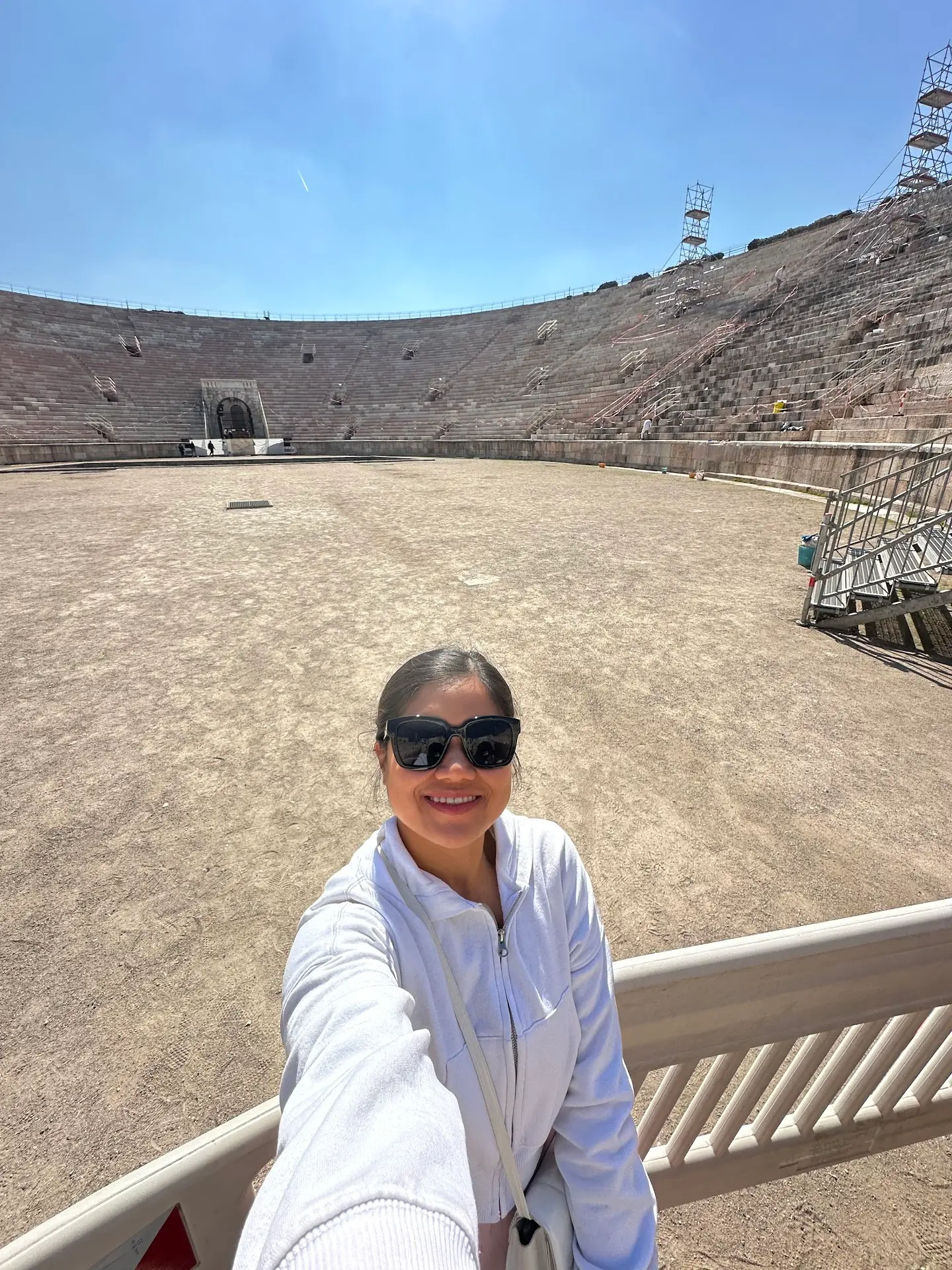
We could look out over the arena floor and sit in parts of the seating, but we could not walk freely across the interior space. To be honest, that felt a bit limiting. The arena was the main reason we bought the Verona Card, so I did feel disappointed.
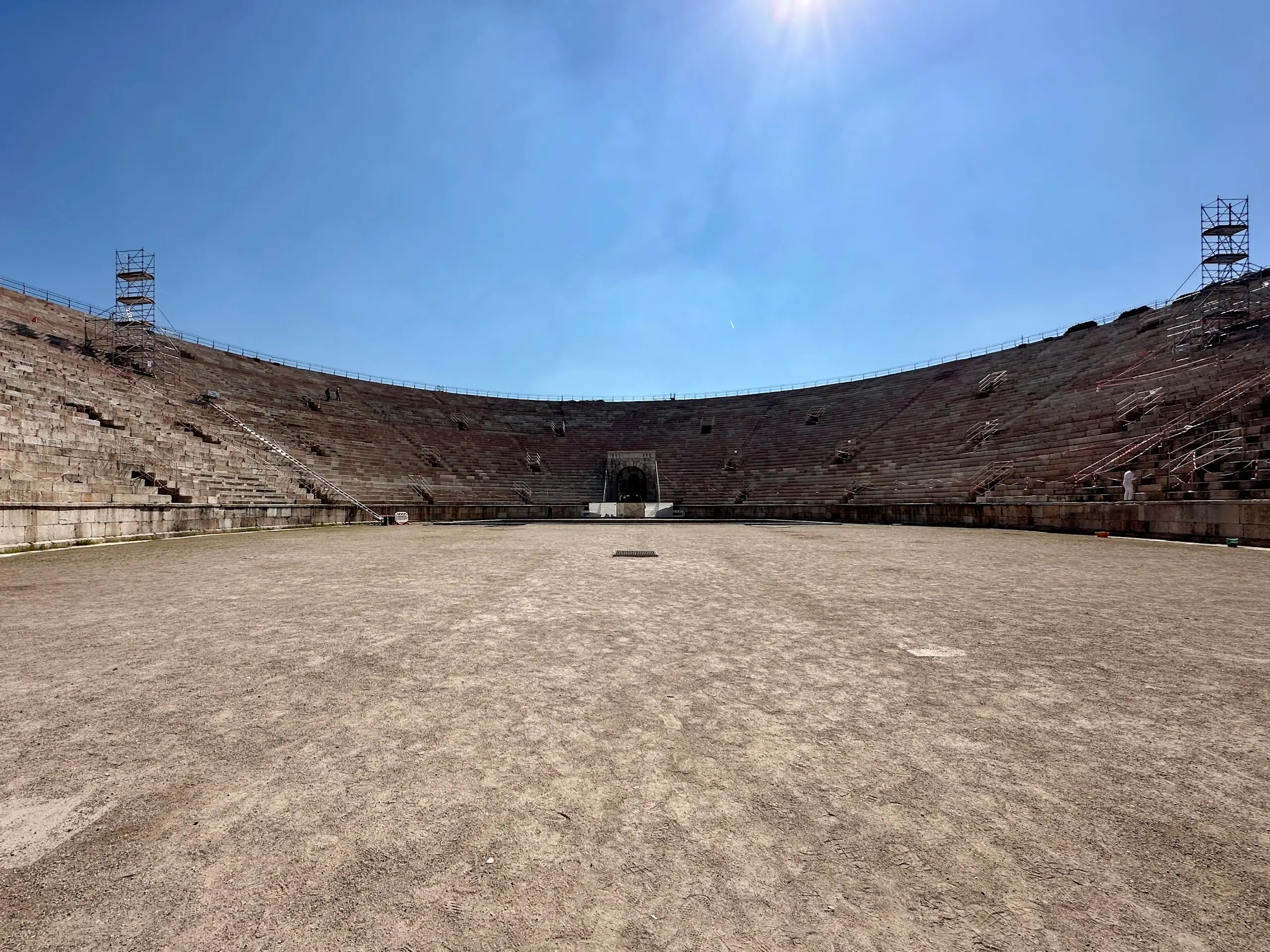
At the same time, the moment still felt powerful. Even with the renovation barriers, the scale of the arena was striking. Sitting on the stone steps and looking across the amphitheater gave me chills. There is something special about being inside a Roman amphitheater that is still used today.
The place felt alive. The scale also surprised me. The arena is massive. When you sit on the stone steps and look across the entire amphitheater, it feels slightly intimidating in a good way.
So even with the limitations we experienced, I still think it is worth going inside the Arena di Verona. The history and atmosphere are hard to appreciate from the outside alone. But the renovation conditions did shape the experience, which is important to know if you are deciding whether the visit is worth it.
What the Arena Looks Like Now After Renovation
The renovations I saw during my visit have now been completed.
The renovation added accessibility upgrades such as wheelchair ramps, improved pathways, and safety improvements to help the arena host major global events.
Read more about the upgrades here: Verona’s ancient Roman arena gets modern facelift for 2026 Games
The renovation focused on accessibility while preserving the historic structure. These changes were designed to make the arena easier to navigate for everyone while keeping the historic architecture intact.
Because the renovation is now complete, visitors today should see the Arena in its finished state rather than the partially restricted version I experienced in 2025. The upgrades were designed as a long term improvement for both events and daily tourism.
In other words, when you visit now, you are seeing the same amphitheater that recently hosted a Winter Olympics ceremony. That alone says a lot about how alive and relevant this ancient place still is today. Honestly, this gives me more confidence in saying that going here would be worth every penny.
The Daytime Visit vs. Watching Opera: Two Very Different Experiences
Visiting the Arena di Verona during the day and watching a performance there at night are two completely different experiences.
One misconception I noticed from other reviews I read before visiting is that these two experiences are often treated as the same thing, which is not the case. Knowing the difference helps you decide which experience actually fits your goal.
A daytime visit is the standard experience. You enter with a regular ticket or the Verona Card. Most visitors spend around 30 to 60 minutes here. You walk along the interior corridors, climb the stone tiers, and sit high above the arena floor to take in the scale of the amphitheater.
The value of the visit is the atmosphere. There are no large exhibits or museum style displays. The experience is about absorbing the history and the space itself. If you arrive expecting a traditional museum, the visit can feel short for the ticket price. If you come to experience the scale and history, it feels much more meaningful.
On the other hand, the nighttime experience is something else entirely. During the Arena di Verona Opera Festival, the arena transforms into one of the most famous open-air opera venues in the world. Thousands of people fill the stone seats.
The stage rises from the arena floor under the open sky. The candlelit opening moment is one of the most memorable parts. As thousands of small candles light up across the amphitheater, the entire arena slowly glows. It feels almost cinematic because the setting is so beautiful.
I did not attend an opera during my visit, but it immediately became a bucket list experience for me. If I ever return in summer, I would love to watch an opera there.
The honest verdict is this. A daytime visit lets you appreciate the history and scale of the amphitheater. But the full emotional experience people talk about often comes from seeing a performance there.
If you want to experience the Arena at its most memorable, I would recommend going during the opera festival.
Is the Verona Card Worth It for the Arena?
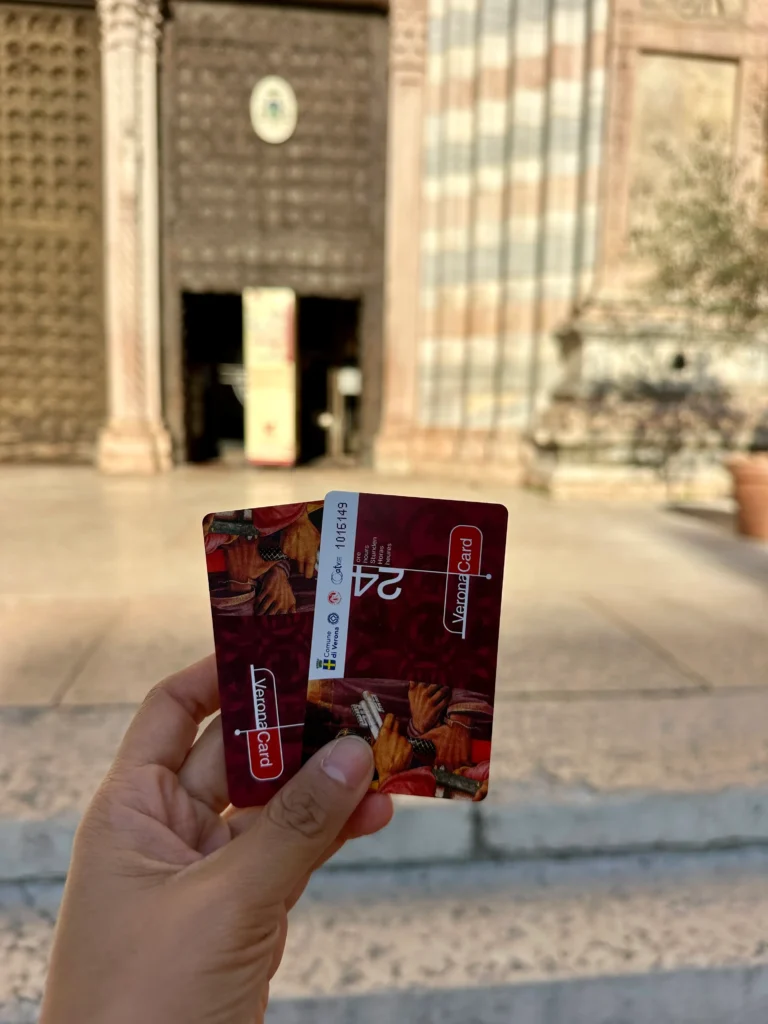
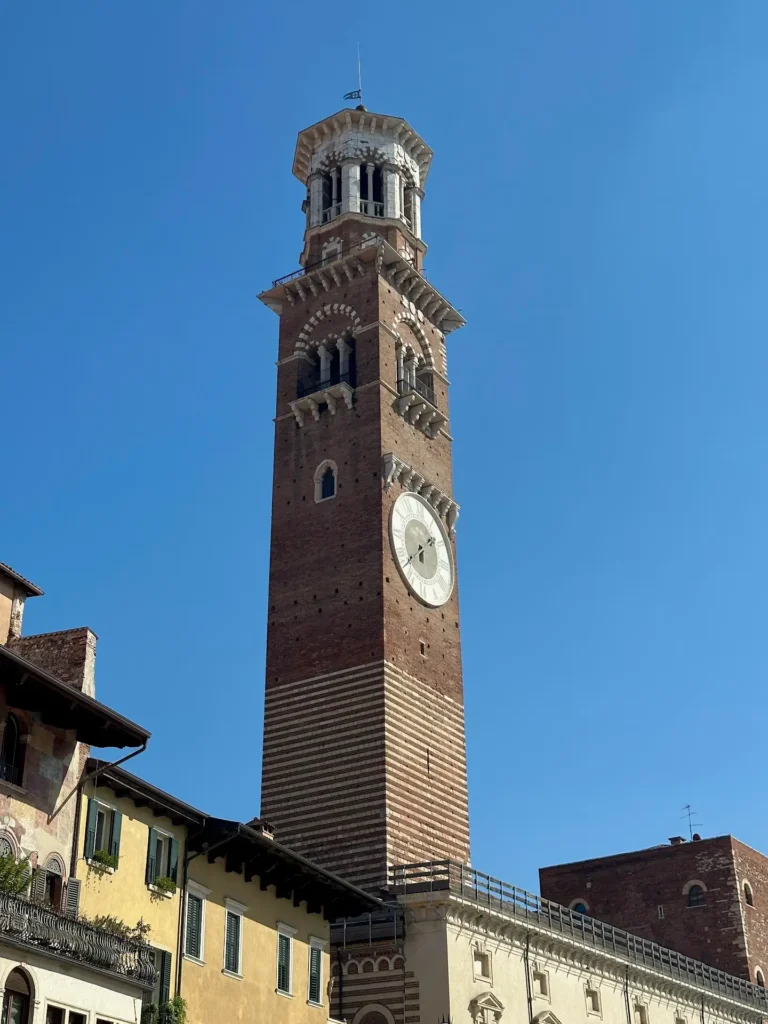
The Verona Card includes entry to many of the main attractions in Verona. This includes the Arena di Verona with priority skip the line access at Gate 5, plus sites like Castelvecchio Museum, Juliet’s House, Torre dei Lamberti, and Sant’Anastasia.
The card currently costs about €27 for 24 hours and €32 for 48 hours. In general, the Verona Card Arena access alone already covers a large portion of the price, so the card starts to make financial sense if you plan to visit three or more paid attractions in the city.
To be honest, the Arena was the main reason we bought the card. Because of that, I did feel a small disappointment during our visit. We could still see the amphitheater, but the restricted access made the experience feel slightly less complete than I expected.
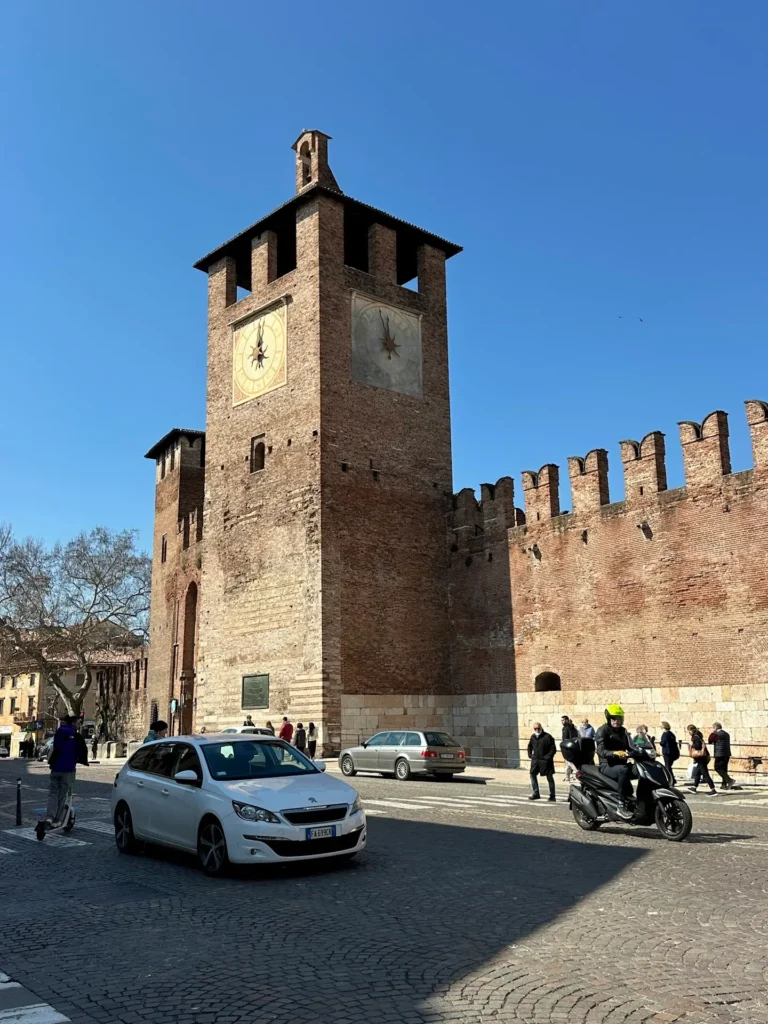
Interestingly, another attraction ended up making the card worth it for us. The visit to Castelvecchio Museum was excellent and easily became one of the highlights of our day in Verona. That stop alone helped justify the cost of the card.
With the Arena now fully reopened after renovation, it may once again become the main highlight for many visitors using the Verona Card.
Arena di Verona vs the Colosseum
The comparison between the Arena di Verona and the Colosseum is almost unavoidable. Both are Roman amphitheaters. Both are iconic landmarks in Italy. But the comparison can also be slightly misleading because the experience at each site is very different.
One key difference is how the sites function today. The Colosseum in Rome is presented primarily as a historical monument and archaeological site. Visitors explore exhibits, learn about gladiators, and see reconstructed areas that explain how the arena worked in ancient times. It is designed as a historical attraction with a strong educational focus.
The Arena di Verona offers a different type of experience. It is still used as a performance venue today, most famously during the Arena di Verona Opera Festival. Because of that, the arena feels less like a museum and more like a living space. When you sit on the stone steps, you can easily imagine the arena filled with people watching a performance. There is something special about sitting inside a Roman amphitheater that still feels alive.
So Is the Arena di Verona Worth Visiting?
Yes — but the value depends on how you experience it.
The Arena di Verona is absolutely worth visiting. During the day, go for the scale and atmosphere. Sit on the stone steps and take it in. Thirty to forty five minutes is enough. When I visited during renovation, parts were fenced off, yet the place still gave me chills.
The real magic is an opera night. If you visit in summer, try to see a show. That is the bucket list version. History lovers, couples, and slow travelers will appreciate it most.
If you are planning a summer visit and want to book ahead, you can check opera tickets here.
FaqS: the Arena di Verona
What is the Arena di Verona?
The Arena di Verona is a Roman amphitheater built around 30 AD. It is one of the best preserved ancient arenas in the world and is still used today for concerts and the Arena di Verona Opera Festival.
How much is the ticket for the Arena di Verona?
General admission usually costs around €10 to €12. Reduced tickets are about €9 for seniors, students, and certain groups. Children under 8 enter for free. Residents of Verona can enter free on the first Sunday of the month.
Does the Verona Card include the Arena di Verona?
Yes. The Verona Card includes entry to the Arena and gives priority access through Gate 5. It can be worth it if you plan to visit three or more paid attractions in Verona.
Do you need to book Arena di Verona tickets in advance?
For daytime visits, you can usually buy tickets at the entrance. For opera or concerts, it is best to book in advance, especially during the summer opera season from June to September.
How long does it take to visit the Arena di Verona?
It really depends on you and how you would like to do your visit. but personally, for a daytime visit 30 to 45 minutes will be enough. If you attend an opera or concert, expect to spend at least three hours at the venue.
What is the best time to visit the Arena di Verona?
The best window is around 9:00 am to 10:30 am. During this time there are fewer visitors and the temperature is cooler.
If you want to watch an opera, visit in the evening during the summer season because that is when the performances take place. The Arena di Verona Opera Festival usually runs from June to September.
Is the Arena di Verona accessible for people with disabilities?
Yes. Renovations completed before the 2026 Winter Olympics added wheelchair ramps, improved pathways, and accessible restrooms.
Can you see the Arena di Verona without going inside?
Yes. You can see the entire exterior from Piazza Bra. Many cafés line the square, so you can sit with a coffee and enjoy the view of the arena without buying a ticket.
Planning Your Day in Verona
The Arena di Verona sits at the heart of the historic center, which makes it a natural starting point for exploring the city.
If you are already planning to visit the Arena di Verona, take the chance to explore the rest of Verona. The city is compact. Most major sights sit within walking distance. With a simple plan, you can see a lot in a day.
If you want more ideas, read my guide to the best things to do in Verona. The city may look small on the map, but if you plan your visit well, you will leave feeling like you experienced far more than just the Arena.
READ MORE
- One Day in Verona: A Perfect Itinerary for First-Timers
- 14 Best Things to Do in Verona for First-Timers
- 11 Free Things to Do in Verona on Foot
- 10 Hidden Gems in Verona Most Visitors Miss
- 12 Easy Day Trips from Verona First-Time Visitors Will Love
- Juliet’s House, Verona: Worth It or Tourist Trap?
- Torre dei Lamberti Review: Nice Views, But Here’s the Catch