Castel San Pietro: Is It Worth the Climb?
You see Castel San Pietro, Verona, on the map, and you hesitate for a second.
It is across the river. It is uphill. Your day already feels full. You start wondering if it is worth the effort or if you should just skip it.
I almost did. Then we walked up.
We crossed into Veronetta, and everything slowed down. Fewer people. Quieter streets. The city didn’t hit all at once, it revealed itself little by little as we climbed. By the time we reached the top, it already felt different.
We skipped the main terrace and found a spot on the old brick walls beside the restaurant. That is where we stayed. No rush. Just sitting there, looking out. Rooftops, the river, soft light settling over the city.
If I think of Verona now, this is one of the first images that comes back.
Castel San Pietro ended up being the best view in Verona for me. Better than Torre dei Lamberti, not just for the view, but for how you get there and how it feels once you arrive.
If you are planning your day and trying to decide what is actually worth your time, this will help you figure it out. You will know what to expect, how to get there, where to go once you reach the top, and whether it fits into your day.
This site uses affiliate links. If you purchase through them, I may earn a commission at no extra cost to you. Thank you for your support!
What Is Castel San Pietro (And What to Expect)

I almost got this wrong myself. You think you’re visiting a castle, but you’re not. Castel San Pietro is really just a viewpoint. The building at the top looks like a castle, but it’s actually an old Austrian barracks from the 1800s, and it’s closed; you can’t go inside.
What you are really going to is the Piazzale Castel San Pietro. That is the open space around the building where you get the view. So set it right before you go. This is not a museum stop. You come here to sit, look out over the city, and stay for a while.
The hill itself has been important for a long time. It was already settled before the Romans. A Roman temple stood here. Later came medieval defenses and a castle built in 1398. Napoleon destroyed it in 1801. The Austrians rebuilt the site as barracks in the mid-1800s. The city owns it now, but the structure is still closed.
For me, what mattered most was this: the terrace is free, it is open all day, and there is a cafe and toilets at the top.
When we went, we did exactly what most people end up doing. We stayed outside. Sat on the walls. Took in the view. That is the whole point of coming up here.
Practical info:
- Location: above Ponte Pietra
- Entry: free
- Hours: open 24/7. The funicular has fixed hours
- Time needed: 30 to 60 minutes
- Best time: late afternoon to sunset
How to Get to Castel San Pietro
You have three ways to get up. Pick based on your energy and time.
Option 1: Walk up (what we did, and what I recommend)
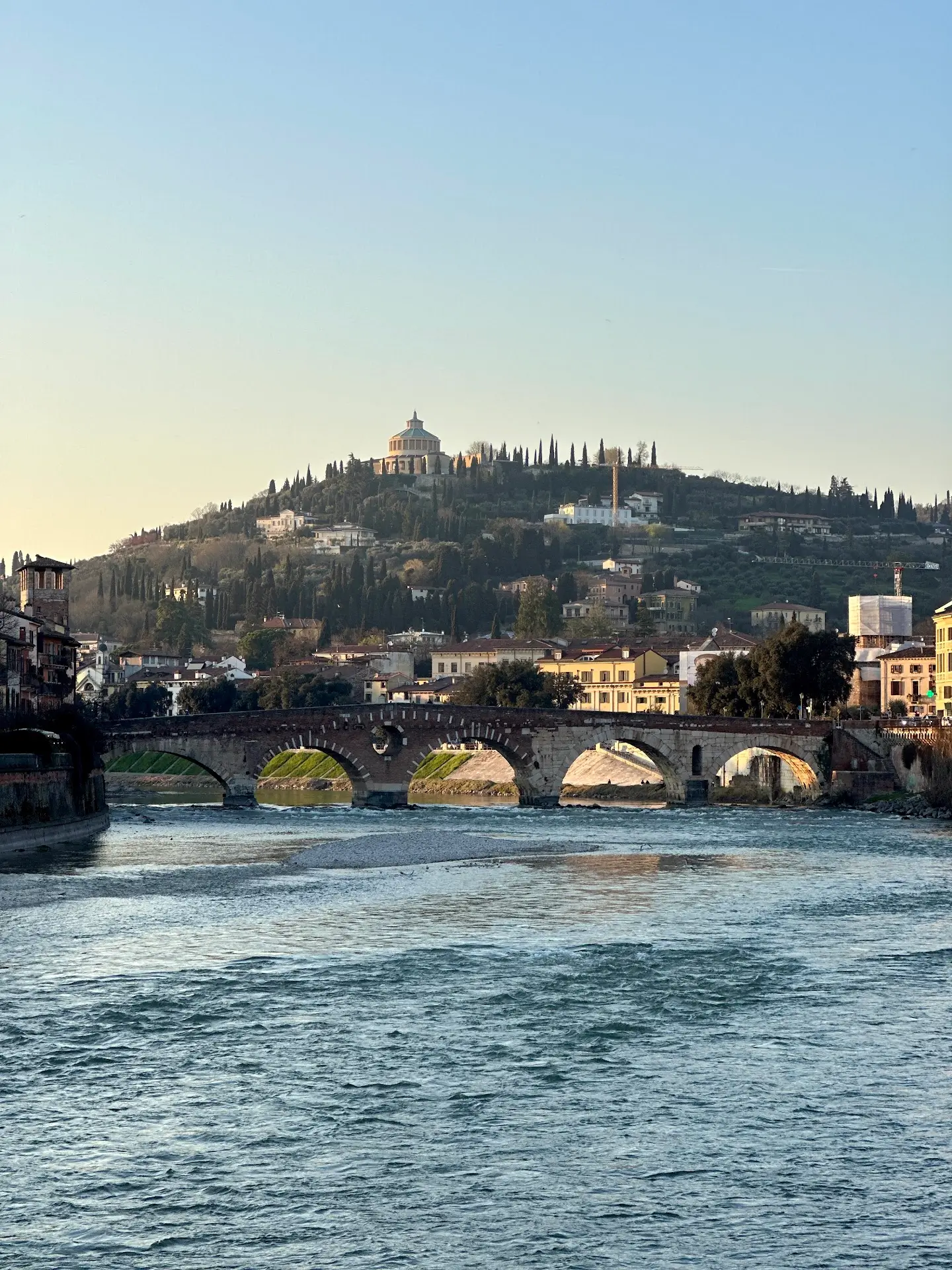
Start at Ponte Pietra. Walk past the Roman Theatre, then take the Scalone di Castel San Pietro stairs.
- 15 to 20 minutes
- Steep, but manageable
- Views improve as you go
We walked up, and it never felt crowded. Mostly just people heading to the same place.
Option 2: Castel San Pietro funicular
If you want something quick and easy, take the funicular.
- Entrance on Via Fontanelle Santo Stefano, near Ponte Pietra
- The ride takes about 1 minute
- €3 round trip, €2 one way
- Wheelchair accessible
- Runs 10:00 to 21:00 in summer, shorter hours in winter
Source: Funicular ticket office and hours
Option 3: Hybrid (best balance for many)
Take the funicular up, then walk down through Veronetta.
- Saves energy
- Lets you experience the neighborhood on the way down
Quick Tip: If you have the time and energy, walk up. It does not feel like just a climb. You pass through Veronetta, see old houses, and the view slowly opens up. That part alone makes it worth it.
The Walk Through Veronetta to Castel San Pietro
The moment you cross Ponte Pietra, everything shifts.
The moment we leave the busy historic center, it feels quieter and more local.
Veronetta does not feel polished. That is what makes it stand out. You see faded walls, small details on windows, and even old furniture left outside. Some of it looks worn. Some of it feels like it has been there for years. But it works. It feels lived in.
Walking here felt different. Not like checking off sites. It felt like being inside the city. At one point, it even reminded me of the warmth of my grandmother’s home. Familiar. Unpolished but definitely something real.
Mat and I talked about it while walking. In other places, you would not see things left out like this. Here, it feels like part of the character. Like the age of the place is not hidden but part of what makes it beautiful.
There are barely any crowds. Mostly just people heading up the same hill.
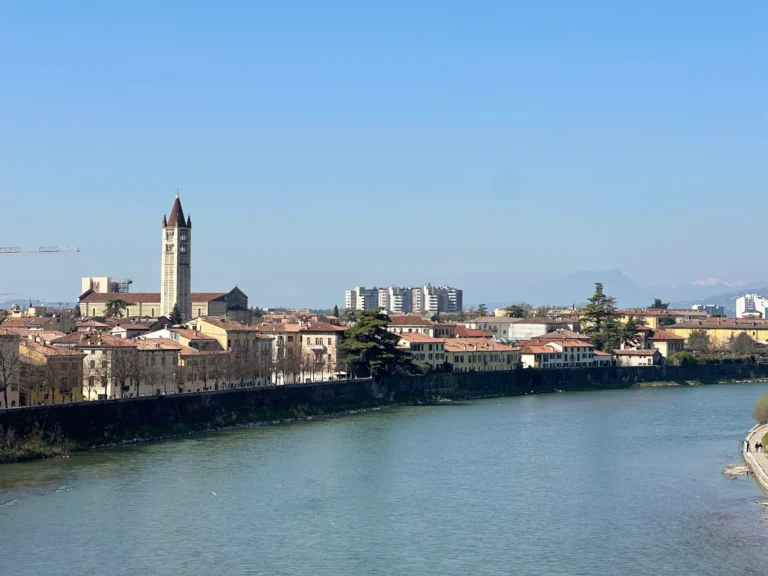
As you climb, you start seeing more of Verona. The rooftops slowly appear. The river curves below. From across the water, you can even spot streets like Via Sottoriva with that shaded, village feel.
If you are deciding between walking or taking the funicular, this is the reason to walk. This part is not just the way up. It is part of the experience.
The View from the Top (And Where to Find the Best Spot)
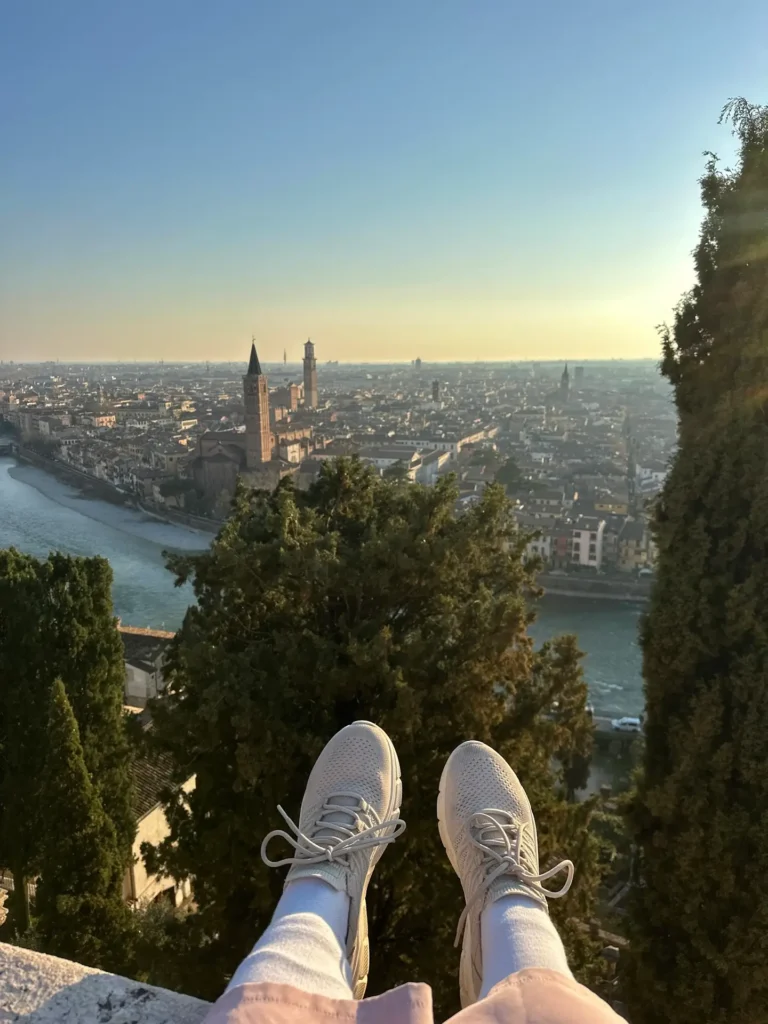
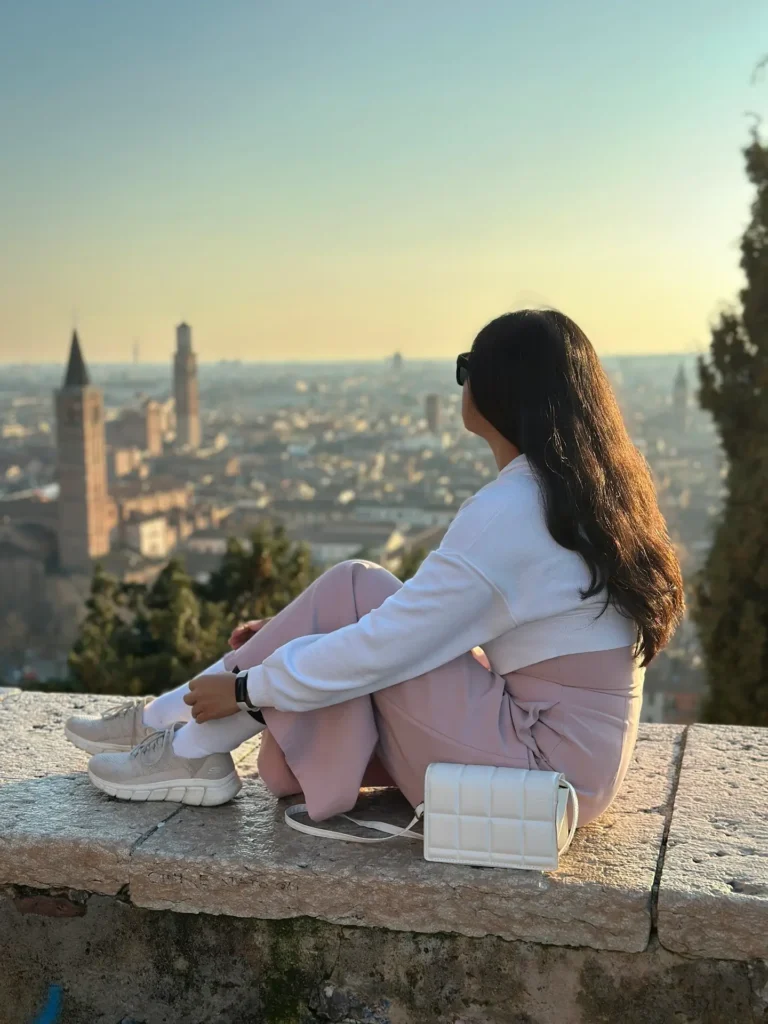
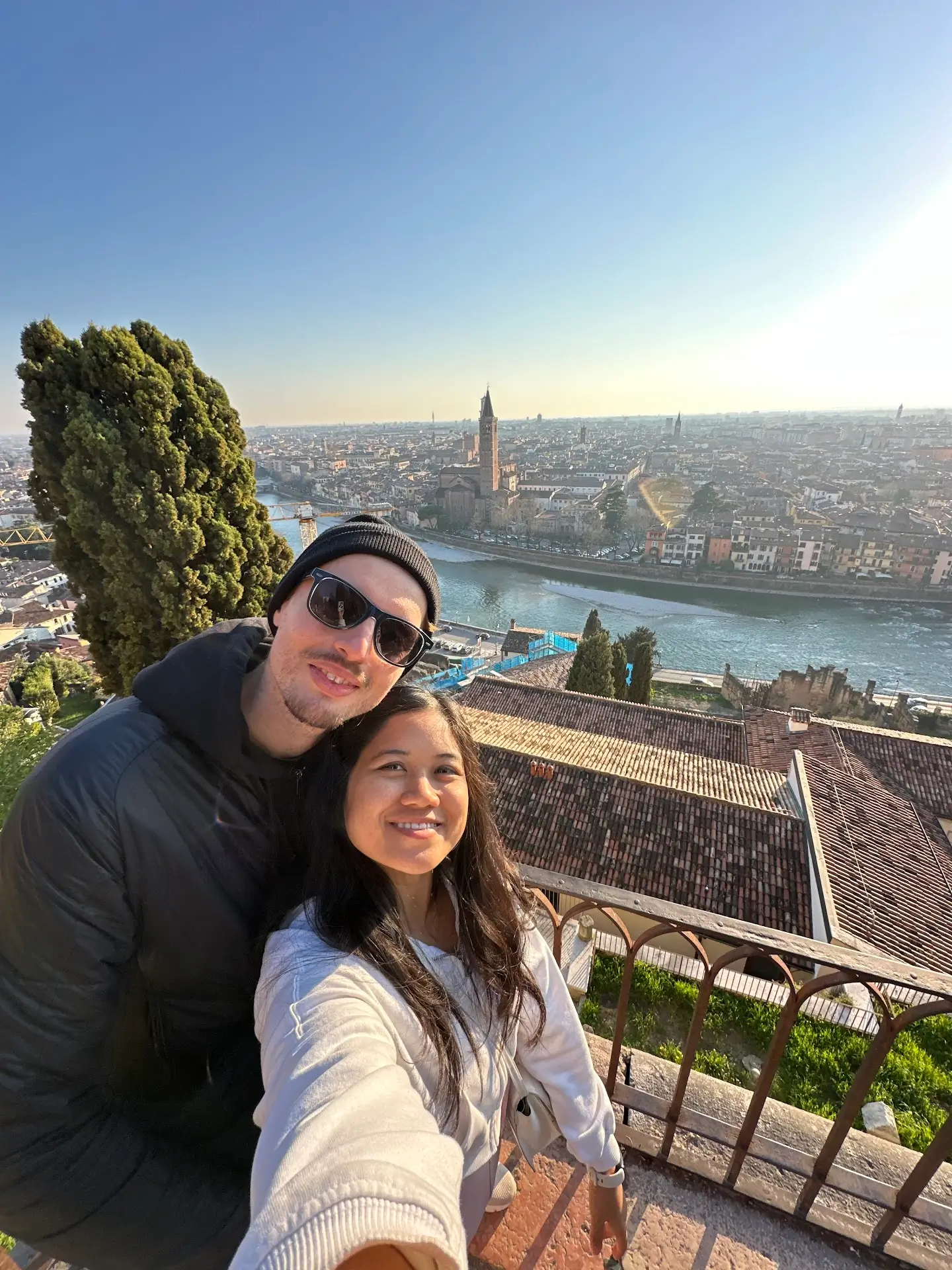
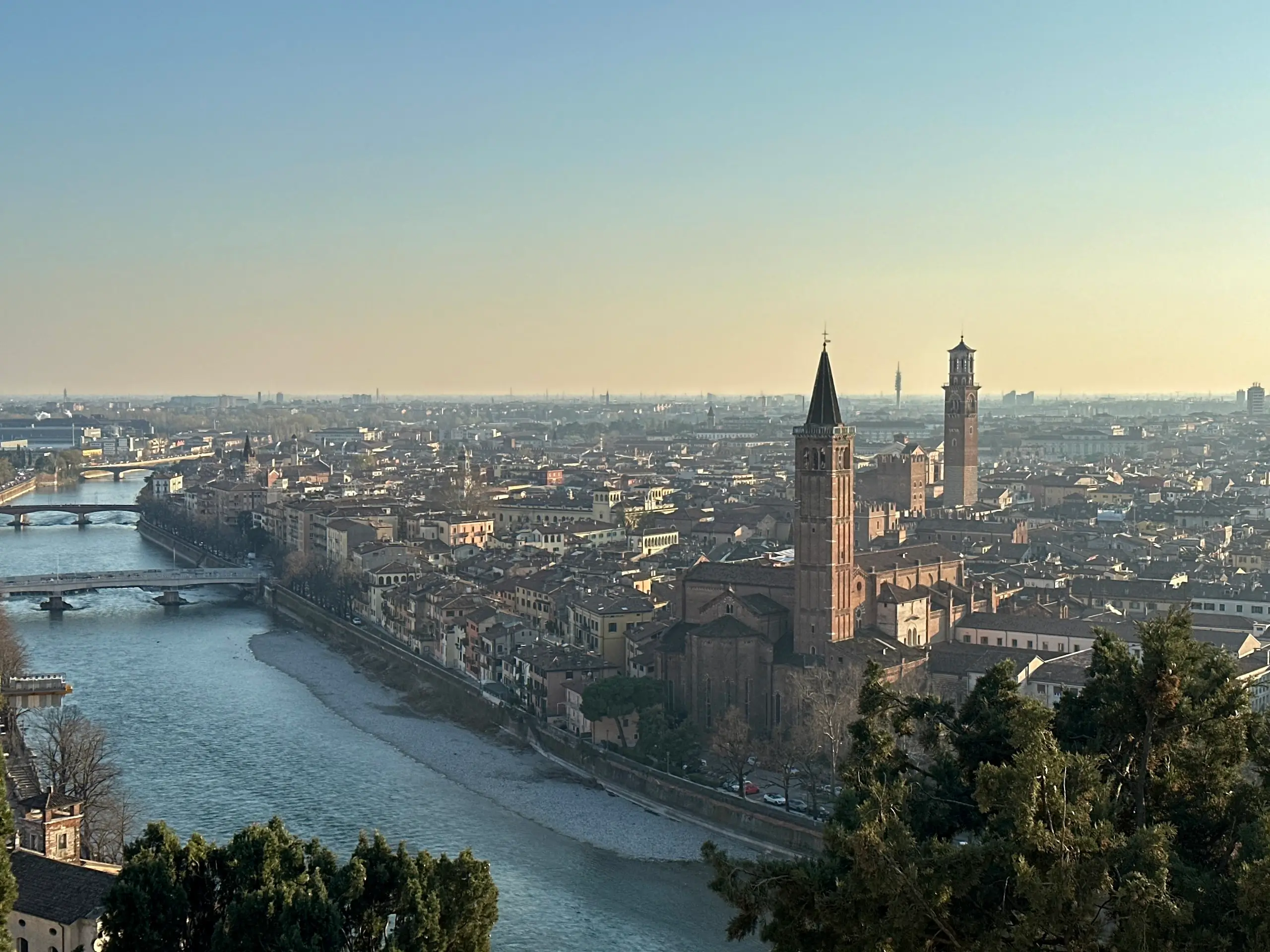
When we reached the top, I remember stopping for a second. The whole city just opened up. Verona spread out in front of us, rooftops packed together, the river cutting through, and church towers rising above everything. Ponte Pietra is right below. Hills in the distance.
We stepped onto the main terrace first, like everyone else. It was nice, but it felt a bit crowded. People taking quick photos and moving on.
So we kept walking.
We went up toward the restaurant and found those old brick walls on the top level. That is where we ended up staying. It was quieter there. Fewer people. Slightly higher. It felt more like a place to sit than just pass through.
We sat down and didn’t rush. Just looked out over the city.
The rooftops, the river, the soft light. It felt like the right way to end the day. If I think of Verona, this is one of the first images that comes back to me.
At some point, I noticed a spot where the trees frame the view. You get Verona right in the middle, with leaves around it. I took a photo there, and that ended up being my favorite shot from the whole trip.
If you go up, don’t just stop at the first viewpoint. Seriously, keep walking a bit.
The main terrace is nice for that wide, straight-on view, but it gets busy fast. Head over to the brick walls if you want somewhere quieter to sit and actually take it in. And if you keep moving toward the restaurant, you’ll get slightly different angles that feel less crowded and more relaxed.
Quick Tip: Give yourself time. We got there before sunset, which made a big difference. It gave us space to find a spot and settle in before more people arrived. As the light softened, the whole city changed.
That slow shift, sitting there without rushing—that is what stayed with me.
Castel San Pietro vs Torre dei Lamberti
I went up both, and the difference was clear right away.
Castel San Pietro was, for me, the best view in Verona. Much better than Torre dei Lamberti.
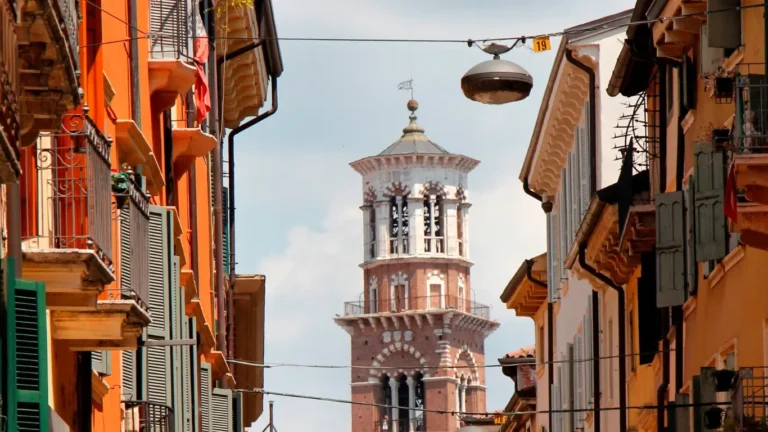
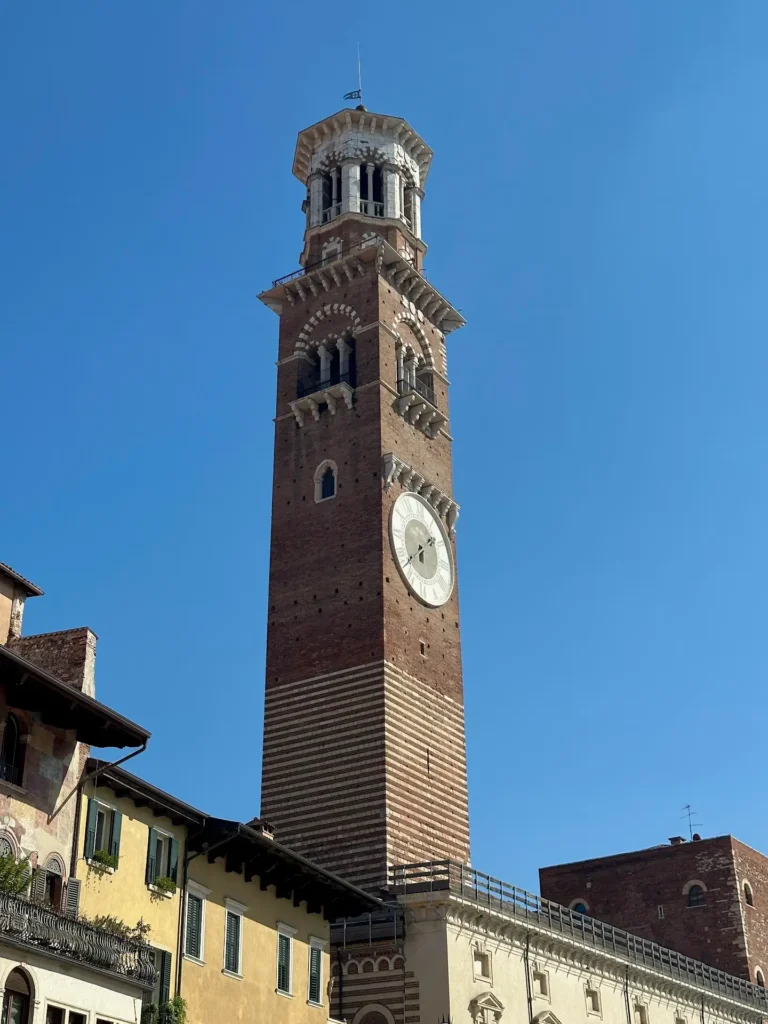
Torre dei Lamberti felt quick. You go up, look around, take a few photos, then head back down. The view is good, but there is a metal barrier at the top. I noticed it immediately. It gets in the way, especially if you care about photos.
Castel San Pietro felt completely different. We walked up, took our time, and then found a spot on the old brick walls and just stayed there. No one is rushing us. No barriers. Just a clear, open view of the city.
That alone made a difference.
But what stood out more was everything around it.
Getting to Torre dei Lamberti is just stairs or an elevator. Getting to Castel San Pietro felt like part of the experience. Walking through Veronetta, seeing the quieter side of the city, watching the view slowly open up as we climbed. It made the top feel earned.
And once you are up there, you can actually stay. Sit. Move around. Find your own space. It never felt crowded the way the tower did.
Plus, it is also FREE! You can come at any time, stay as long as you want, and not feel like you have to make the most of a ticket.
That said, Torre dei Lamberti still makes sense depending on your situation. If you want to learn more about our tower experience you can read my full review of Torre dei Lamberti here.
But if you are choosing based on the overall experience, not just checking off a viewpoint, Castel San Pietro wins. Torre dei Lamberti was nice. I am glad I went. But it did not stay with me in the same way. Castel San Pietro did.
Maybe it has something to do with the overall aura and vibe of the place. It gives a certain sense of calm. The structure itself brings out feelings you have never felt before. Therefore, I would say it offers the best view in Verona.
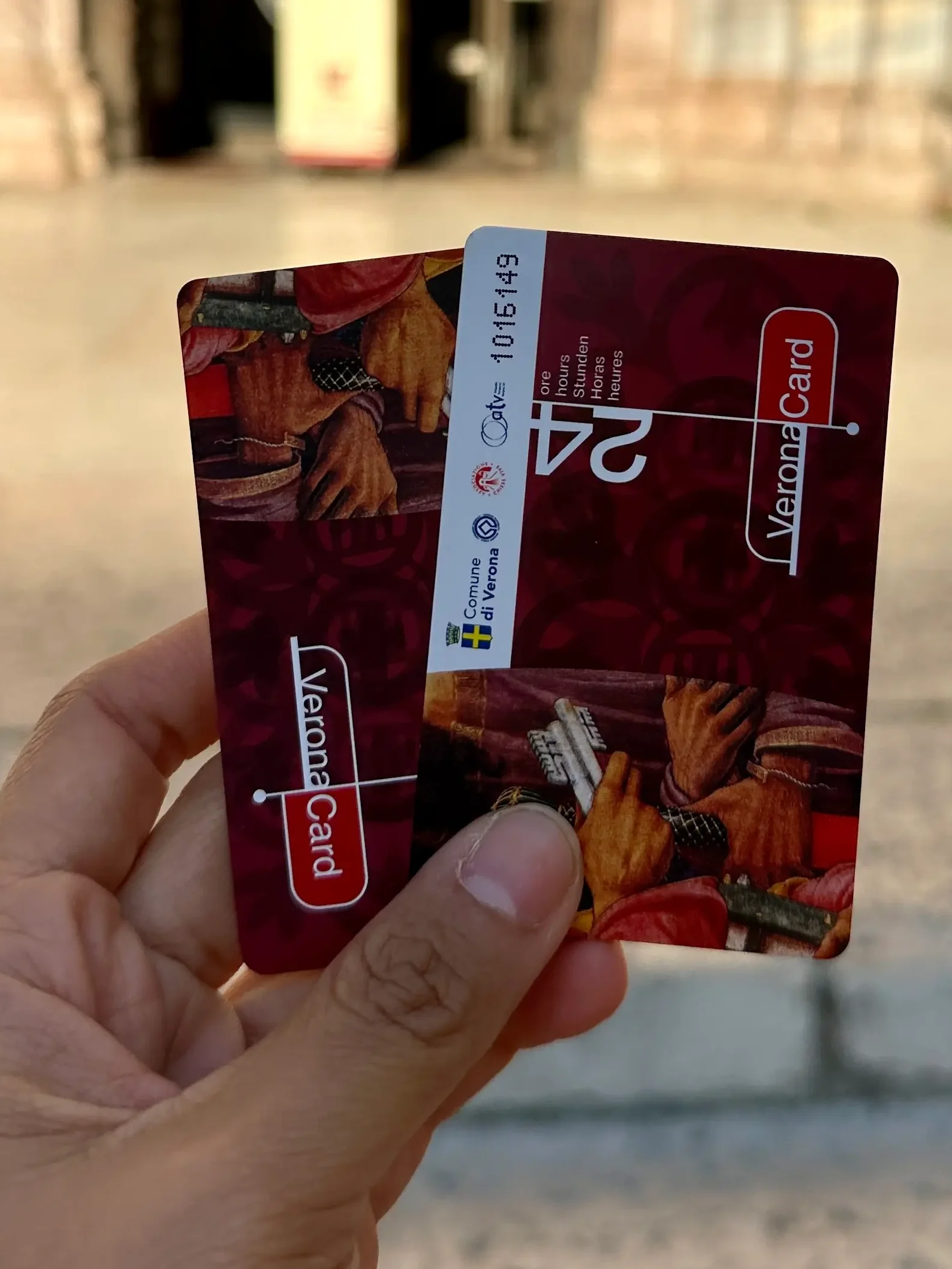
verona card
If you’re planning to visit multiple attractions, I highly recommend getting the Verona Card.
It gives you free or priority access to major sites like the Arena di Verona and Juliet’s House, and it can save you both time and money.
I saved $20 during my visit to Verona just on the attractions I really wanted to see!
When to Visit Castel San Pietro
Timing changes the experience here.
I went late in the day after a full day of walking around Verona, and it ended up being the right call. We sat there taking everything in, the rooftops, the river, the soft light, and it felt like the perfect, slow ending to the day.
Best time: Sunset
- Warm light across the rooftops
- City looks softer, more layered
- Plan to arrive 30 to 45 minutes early so you can find a good spot and settle in
Late afternoon
- This is when I went
- Good light, fewer people than peak sunset
- You get that same relaxed end-of-day feel without the crowd
Morning
- Much quieter
- Clean light on the city
- Better if you want photos without people
Avoid midday, especially in summer, as it is very exposed with little shade, the light is harsh, and it is not a place you will want to stay long; I visited in March which felt ideal with cooler weather and fewer people, while summer evenings are the busiest, especially around sunset.
Pro Tip: If you go up for the Castel San Pietro sunset in summer, you can take the funicular up, then walk down through Veronetta after. The light lingers, and the walk back feels just as good as the climb up.
What Else Is Nearby (While You’re on This Side of the River)
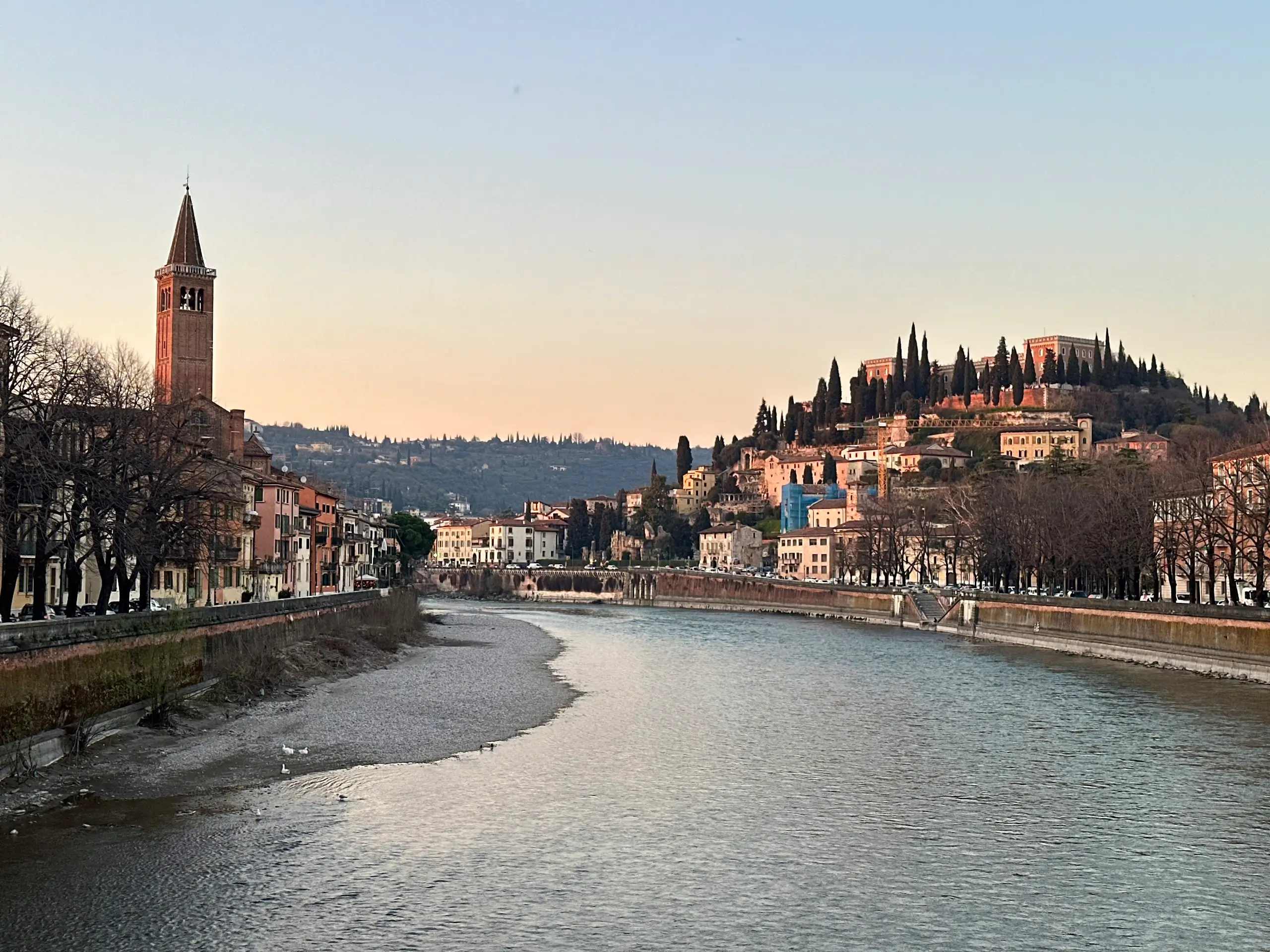
This part of Verona works best as a sequence, not a single stop.
What I loved most about this trip is how naturally everything came together. Once I crossed the Adige River, the city just made sense. One place led to the next without effort, and I never felt like I had to force an itinerary.
Ponte Pietra is where it starts. This ended up being one of my favorite moments in Verona. It is not just a bridge. It feels like a passage between two sides of the city, set right over the river. I found myself slowing down there without even thinking.
From there, I moved into Veronetta and started the climb.
On the way up, I passed the Roman Theatre at the base of the hill, just above the Adige River. We caught it as it was closing, so we only had a quick look, but it still stood out. Smaller than the Arena, quieter, and built into the hillside. It felt like it belonged to the neighborhood, not separated from it.
After the viewpoint, the walk down mattered just as much.
I went back through Veronetta, and it gave me that same quiet, lived in side of the city on the way down. It felt consistent, not like a different route, but part of the same experience.
Then I crossed Ponte Pietra again over the Adige River and headed toward Via Sottoriva. I had noticed it earlier from across the river. Shaded, slightly darker, with that worn, old feel that makes you want to keep walking without a plan.
If you want to keep it simple, follow this loop: Ponte Pietra → Veronetta → Castel San Pietro → Roman Theatre → cross back over the Adige River → Via Sottoriva
This is what made Verona click for me. Castel San Pietro was not just a viewpoint. It became part of a flow that felt complete from start to finish.
If you plan to stay longer at the top, there is also a small café where you can grab a drink and sit with the view. I put together a full guide on things to do in Verona if you want to plan the rest of your time in the city.
Practical Tips for Visiting Castel San Pietro
- Wear comfortable shoes. The path includes stairs and uneven ground
- The piazzale is free and open all day. No ticket needed for the viewpoint
- The funicular is optional. €3 round trip, €2 one way
- There are toilets and a small café at the top
- The castle itself is NOT open to the public
- Bring a camera. The wide view and tree framed angles are the best photo spots
- This is one of the best free things to do in Verona. It pairs well with other nearby attractions included in the Verona Card
- The funicular is wheelchair accessible. The stairs are not suitable if you have mobility limits
- If you have the Verona Card, you can use it at the nearby Roman Theatre and other major sites along this route.
FAQS: About Castel San Pietro
Is Castel San Pietro worth visiting?
Yes. It is free, it has the best view in the city, and the walk up through Veronetta adds to the experience. It is worth it even if you only have one day.
If I think of Verona, this is one of the first images that comes back.
Can you go inside Castel San Pietro?
No. The building is closed to the public due to its condition. What you visit is the piazzale and the terraces around it.
How long do you need at Castel San Pietro?
For me, about 30 to 60 minutes at the top felt right, plus 15 to 20 minutes to walk up and around 15 minutes to walk down. If you go through Veronetta, plan around 1.5 to 2 hours total.
Is the funicular to Castel San Pietro worth it?
Yes. At €3 round trip, it is affordable and convenient, especially if you want to avoid the climb or are visiting on a hot day. But the walk up through Veronetta is part of the experience. A good option is to take the funicular up, then walk down.
Plan Your Visit to Verona
Now that you know Castel San Pietro is worth it, the next step is fitting it into your day.
The best way to do it is simple. Save it for late afternoon or sunset. Let it be your final stop. It works best as the slow ending after a full day in the historic center.
If you want a clear plan, follow a one day Verona itinerary where Castel San Pietro sits at the end of the route.
If you are still building your trip, start with a full list of things to do in Verona, then map your day around what matters most to you.
READ MORE
- One Day in Verona: A Perfect Itinerary for First-Timers
- 14 Best Things to Do in Verona for First-Timers
- 11 Free Things to Do in Verona on Foot
- 10 Hidden Gems in Verona Most Visitors Miss
- 12 Easy Day Trips from Verona First-Time Visitors Will Love
- Juliet’s House, Verona: Worth It or Tourist Trap?
- Torre dei Lamberti Review: Nice Views, But Here’s the Catch
- Is the Arena di Verona Worth Visiting? An Honest Experience