Veronetta, Verona: The Side of the City Most Visitors Never Cross To
If you’ve read my other posts, you’ll know that I base myself in Citta Antica when we visit Verona. What truly amazed me was how the atmosphere can transform within a matter of minutes. Simply cross the river, and Verona undergoes a remarkable change—but more importantly, so does your entire experience.
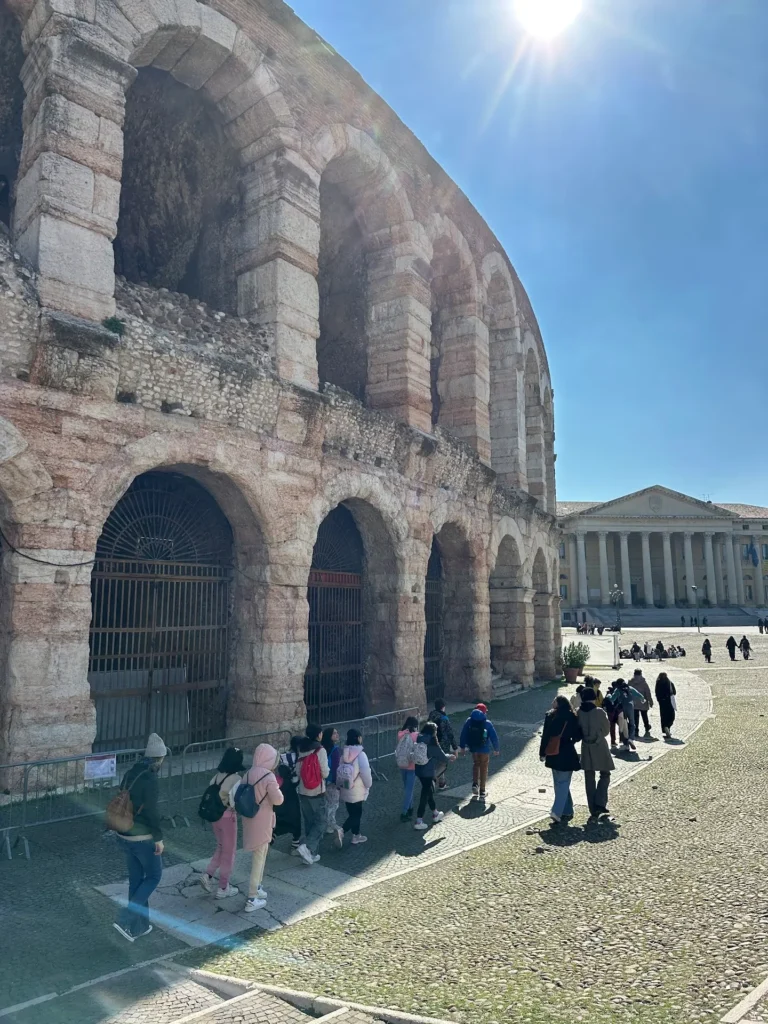
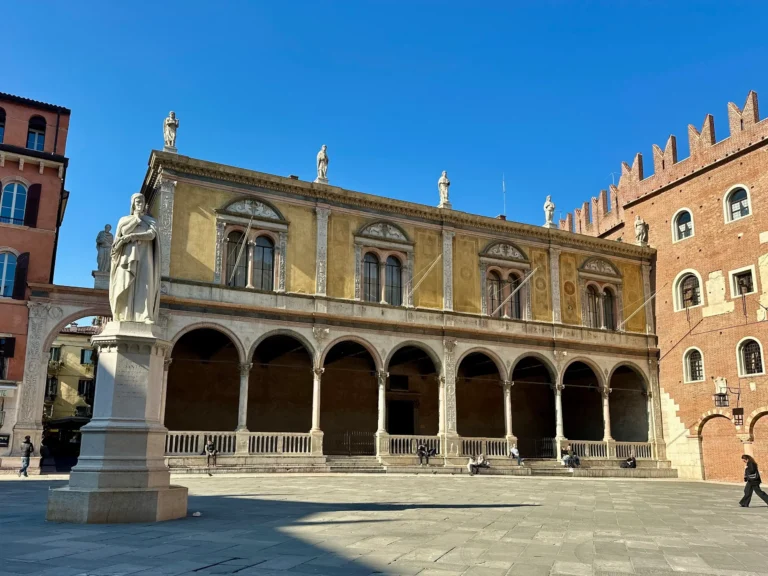
Most visitors stay near the Arena. To be honest, I cannot blame them; it’s convenient, busy, and exactly what you expect. But when I stayed in Veronetta, Verona just across the river, and that’s what I can say I had actually lived in Verona, not just visited it.
It was quieter. Slower. More local. And at the end of each day, crossing back over the bridge felt like leaving the crowds behind.
If you’re deciding where to stay in Verona, this guide will help you figure out if Veronetta is the right choice for you — who it’s perfect for, who should skip it, and what it’s actually like to stay here.
Because Veronetta isn’t for everyone. But if it’s right for you, it might be the best part of your trip.
This site uses affiliate links. If you purchase through them, I may earn a commission at no extra cost to you. Thank you for your support!
What and Where Is Veronetta, Verona

Veronetta is a small neighborhood on the east bank of the Adige River, directly across from Verona’s historic center. Cross Ponte Pietra, and you’re there — but it feels like stepping into a different version of the city.
Geographically, it sits opposite Citta Antica, which is where most visitors stay. (If you’re considering that area instead, I break it down in my Città Antica neighborhood guide.) But while the distance between the two is only a few minutes on foot, the atmosphere shifts almost immediately.
The name “Veronetta” dates back to the Napoleonic era, when the city was divided between French and Austrian forces. The French referred to this side as “Veronette”—Little Verona—meant as a slight. Today, it gives the neighborhood a bit of character, even if the tone has long since changed.
In terms of size, the Veronetta neighborhood in Verona is compact. You can walk through its core in about 20 to 30 minutes. It’s not a district you need to plan around — it’s one you naturally move through.
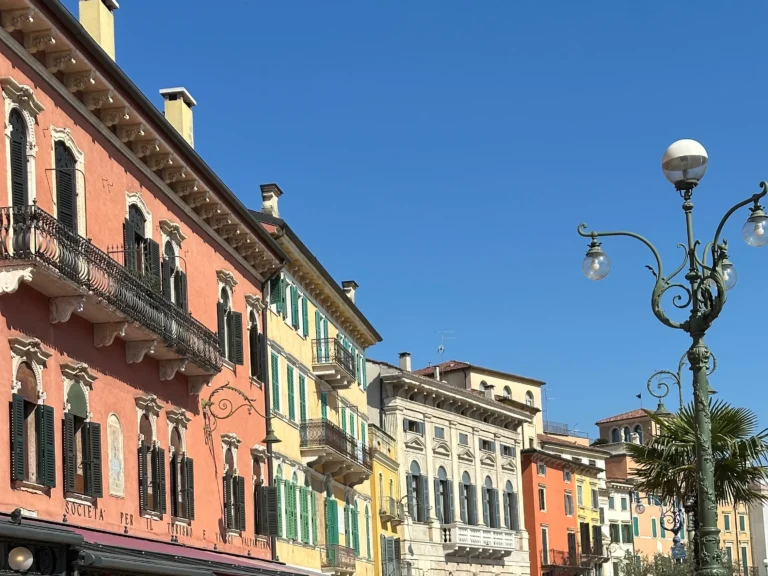
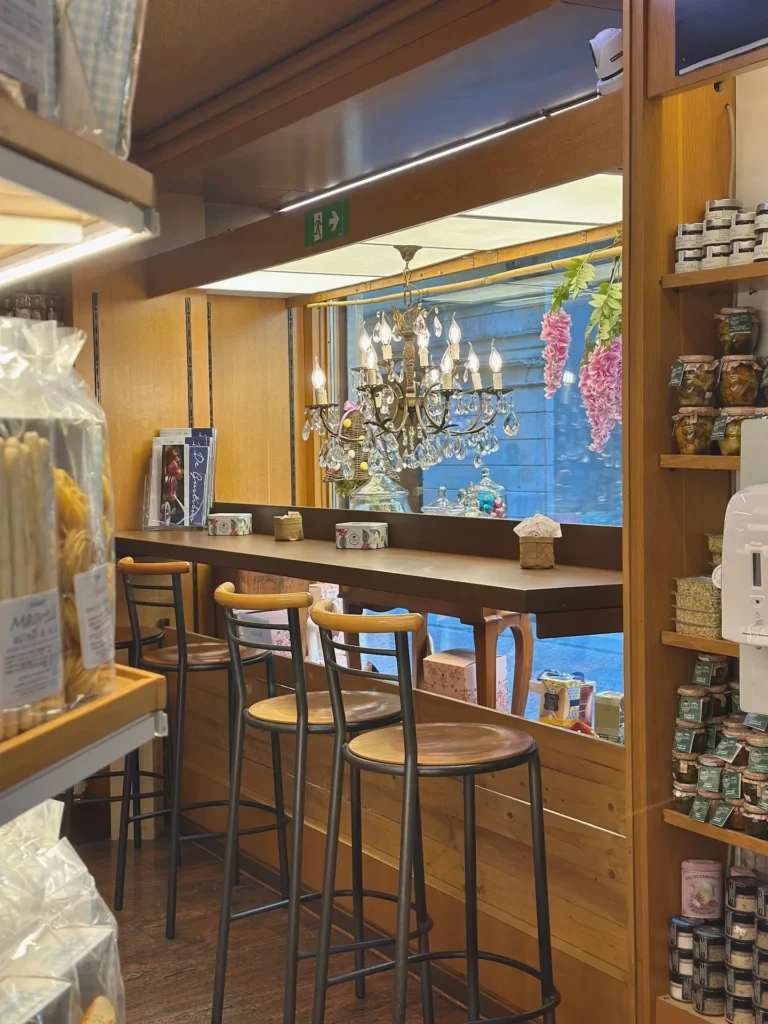
What stood out to me was how different it felt from the other side of the river. Veronetta felt like Italy frozen in time. Far from the crowds around the Arena. Less polished, more lived-in. Faded colors, little ornaments, worn beauty. It’s also small, but here you can see old Italian houses that were preserved—not restored for visitors, just still there.
There are fewer tourists here, aside from those heading up to Castel San Pietro. Most of the people you pass are students, locals, or simply going about their day. The university brings some energy, but it never feels like a party area. If you’re curious about the walk up, what to expect, and whether it’s worth it, I’ve written a full guide: Castel San Pietro: Is It Worth the Climb?
Quick Tip: Don’t plan your time in Veronetta around landmarks. There aren’t major sights or big piazzas — the best way to experience it is to slow down and just walk.
What It’s Like to Be in Veronetta
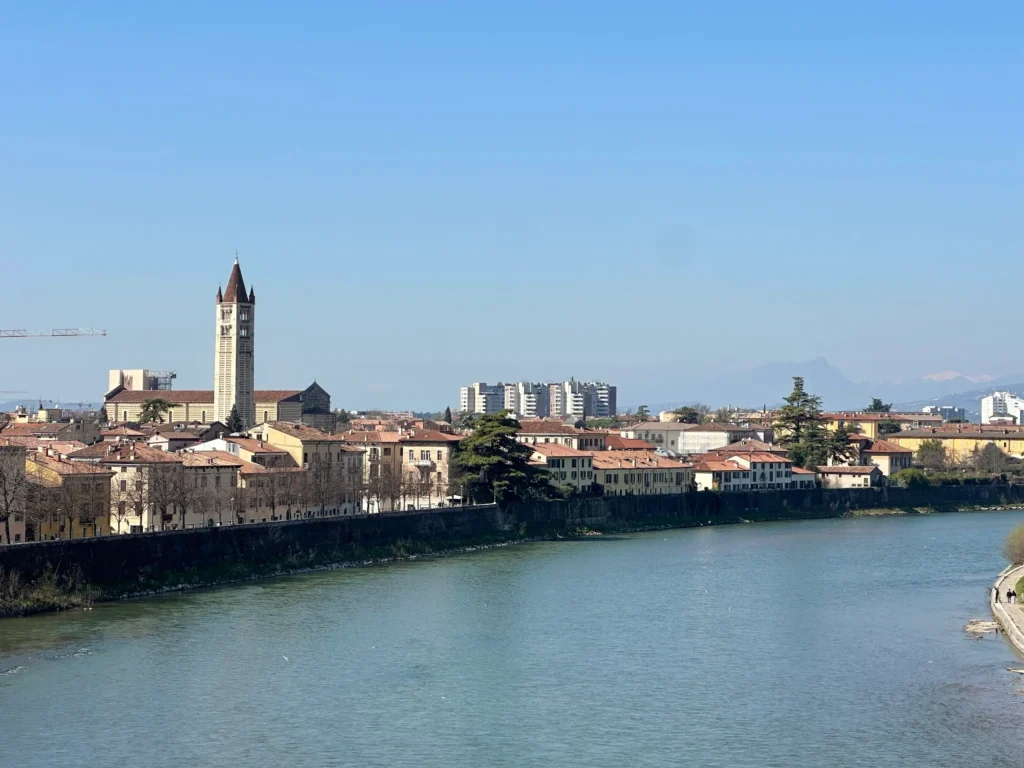
The shift starts at Ponte Pietra.
It doesn’t feel like a bridge you cross to get somewhere. It feels like a transition. On one side, the busy historic center. On the other, something quieter — Veronetta.
The change is immediate. It feels like you’ve stepped out of the version of Verona made for visitors.
Via Sottoriva stood out right away. Shaded, slightly worn, and quiet even during the day. It’s the kind of street that makes you slow down without thinking, just to see what’s further ahead.
One of the things that amazed me most is how the structures and buildings are detailed. Verona exuded an aura of timelessness, a contrast to the bustling crowds that we can see at the center.
Its charm lay in its unpolished, lived-in ambiance. As I strolled through its streets, I felt as though I had truly visited Verona, not merely observed it from afar.
At one point, I noticed old furniture left outside. Mat pointed out that in Germany, that would be removed quickly. Here, it just felt like part of the street — like the neighborhood wasn’t trying to present itself, just continuing as it is.
You don’t need a plan in Veronetta. Walking is enough.
Experience the best of Verona with the Verona Card. Enjoy free entry to top attractions, discounts on other attractions, and convenient transportation to explore the city without any stress.
You Might Have Already Passed Through It
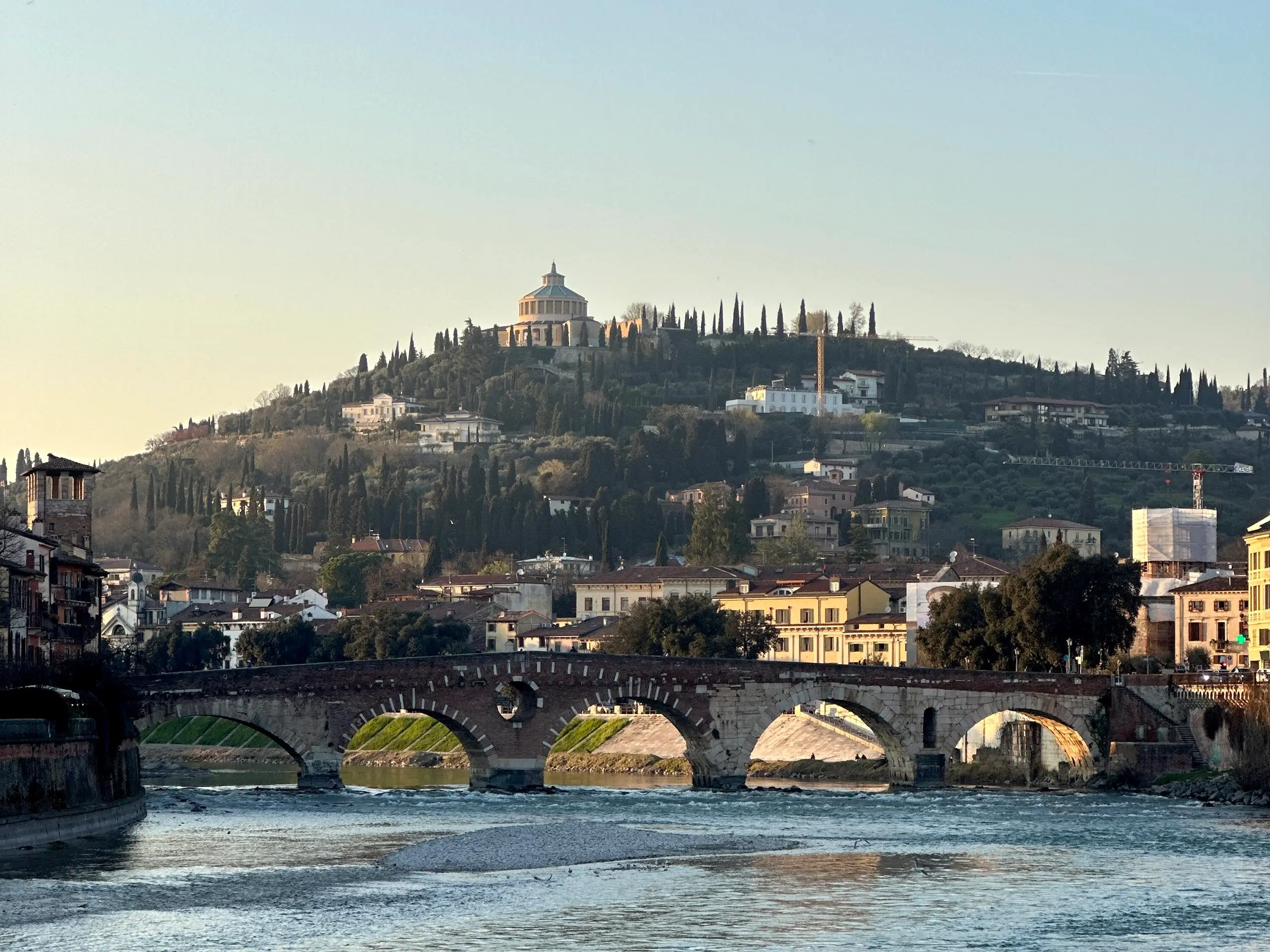
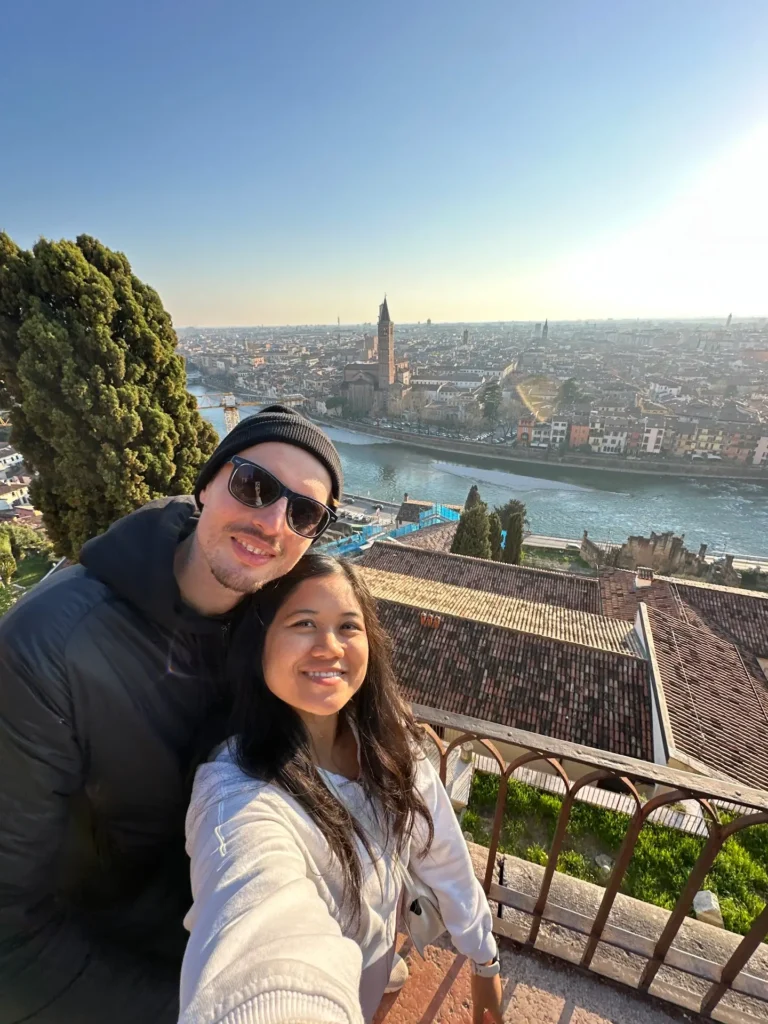
If you walked up to Castel San Pietro, you were already in Veronetta — even if you didn’t realize it.
The route starts naturally from this side of the river. From Ponte Pietra, the streets slowly give way to a hillside path. It doesn’t feel like a separate trip or a hike — just a gradual transition upward.
The walk is pretty short and easy to handle. It’s about 10 to 15 minutes from the bridge, depending on how fast you’re going. Try going in the late afternoon, around 90 minutes before sunset.
At the top, you can see the whole city—roofs, the curve of the Adige River, and gentle light over everything. To me, it was the best view in Verona. We found a quiet place by the old brick walls and sat there for a while, enjoying it all.
I’ve put together this guide, including the reasons why it offers such a magical view. And guess what? We also found the best pizza by accident!
On the way back down, you pass the Roman Theatre. I only caught a quick look before it closed, but even that stood out—smaller and quieter than the Arena, built right into the hillside.
And this is where Veronetta makes sense as a place to stay.
This walk is easy to fit into your day. It becomes a natural part of your routine—perhaps after a long day or when the light is just right. By staying here, you’re turning one of Verona’s best views into a regular part of your life, not just a special trip.
The Giardino Giusti, a beautiful Renaissance garden nestled in Veronetta, is a frequent mention in guidebooks. I didn’t get to see it on my recent visit, but it’s often recommended as a peaceful escape in the city if you’re looking for a break.
Who Should Stay in Veronetta (and Who Shouldn’t)
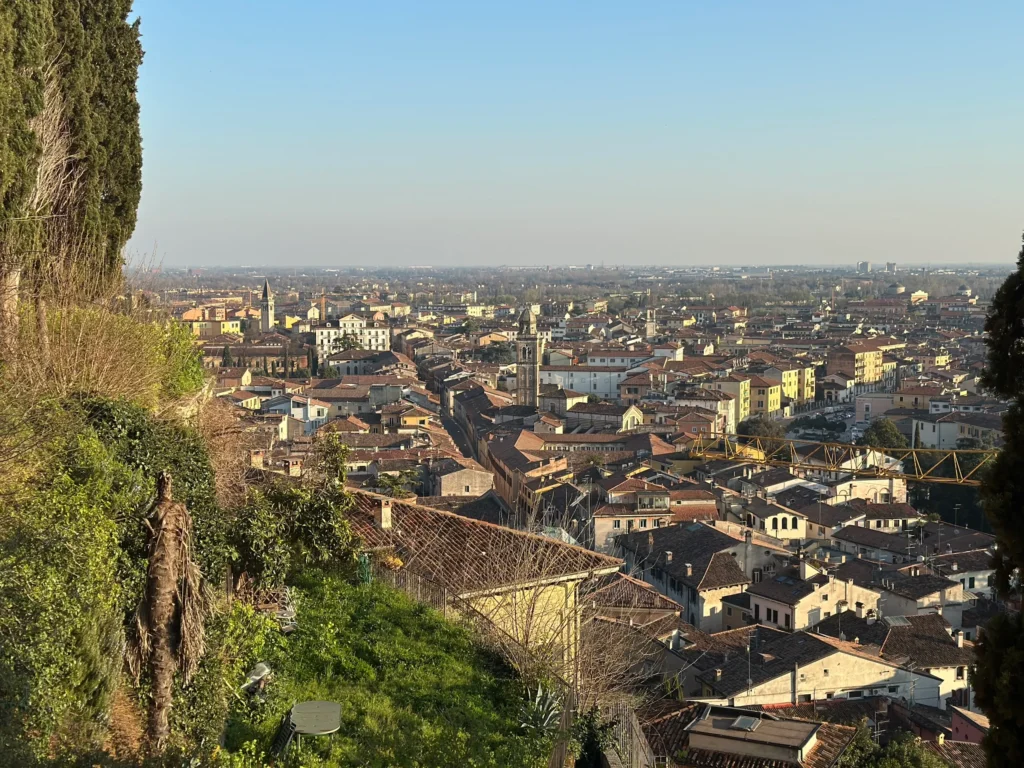
Veronetta works best if you travel a certain way.
Stay here if you want to feel like you’ve actually lived in Verona, not just seen it. When I walked here, that was the difference. It felt slower, more local, more real.
It’s a good fit for slow travelers, couples, and anyone who values atmosphere over being in the middle of everything. It also works well if you’ve been to Verona before and don’t need to be steps from every major sight.
If you’re up for a walk, the distance is no big deal! The historic center is just a 10 to 15-minute stroll away. Just a heads-up, though, you’ll need to cross a bridge, so if you’re bringing luggage or planning to do a lot of walking, that might be something to keep in mind.
Where Veronetta doesn’t work as well is for convenience-first travel.
If you’re new to Verona and want to be right by Juliet’s House or the Arena right away, this might not be the best place to start. Also, if you’re on a tight schedule, carrying a lot of bags, or just want everything you need—like restaurants, shops, and main attractions—close by, this might not be the ideal spot.
It’s also NOT a nightlife area. Even with the university nearby, it feels residential, not energetic.
The tradeoff is simple.
Veronetta offers a quieter, less crowded vibe with a sense of history that invites exploration. However, you’ll have to trade in the speed and ease of getting around.
If you’re looking for everything close by, the historic center is definitely the way to go! I’ve put together a Città Antica guide that breaks it all down, so you can compare and maybe even help you decide where to stay.
Where to Stay in Veronetta
From my time exploring Veronetta, I’ve noticed that the vibe of where you stay is more important than just how close you are. It’s a neighborhood where you’d want a place that feels like it’s part of the scene, easy to walk to, and right on the streets you’ve just been enjoying.
Here are three spots that capture that feel, all depending on how much you’re willing to spend:
Budget Pick — The Hostello
If you’re looking to save money while traveling, The Hostello is a top pick in Veronetta. They have both dorms and private rooms, but the vibe is really social—perfect for solo travelers or anyone who enjoys a bit of shared energy.
Plus, its spot makes it super easy to stroll into the main square of Veronetta, all while staying close to the bridge that leads into the historic center.
Mid-Range Pick — Veronetta House
Veronetta House is a charming, intimate spot with just a few rooms, perfectly matching the neighborhood’s laid-back, local feel. The wood-beamed ceilings and private outdoor spaces give it a real sense of place, making it stand out from regular hotels.
And since it’s close to the river, you can easily get from Veronetta to the city center, all while soaking in that peaceful, quieter vibe.
Splurge Pick — Relais Colle San Pietro
For a truly special experience, Relais Colle San Pietro is conveniently located near the path leading to Castel San Pietro. This spot alone sets it apart—you’re not just in Veronetta; you’re right next to one of the city’s most breathtaking views.
The rooms are thoughtfully designed to make the most of this location, making it a fantastic choice if you’re looking for something more memorable than just a place to rest.
If you’re interested in exploring more options in different neighborhoods and price ranges, the Best Hotels in Verona guide provides a detailed overview.
Find the right place for you
By this point, you already know if Veronetta feels right for you.
If you’re picturing quiet streets, slower mornings, and that short walk back across the river at the end of the day—then this is probably your place.
But if you’re still deciding or want to see how it compares to staying in the historic center, the full Where to Stay in Verona guide breaks it all down clearly.
It’s the difference between just picking a place to sleep and choosing the kind of experience you’ll have in the city.
If you’re ready to book, the Best Hotels in Verona guide has a curated list of stays across every budget to help you find the right fit.
READ MORE
- One Day in Verona: A Perfect Itinerary for First-Timers
- 14 Best Things to Do in Verona for First-Timers
- 11 Free Things to Do in Verona on Foot
- 10 Hidden Gems in Verona Most Visitors Miss
- 12 Easy Day Trips from Verona First-Time Visitors Will Love
- Juliet’s House, Verona: Worth It or Tourist Trap?
- Torre dei Lamberti Review: Nice Views, But Here’s the Catch
- Is the Arena di Verona Worth Visiting? An Honest Experience
- Castel San Pietro: Is It Worth the Climb?
- I Ranked the Best Views in Verona
- Best Churches in Verona (And the One You Shouldn’t Miss)
- Here’s What Each Verona Piazza Actually Feels Like
- What to Eat in Verona: The Dishes Worth Slowing Down For
- Where to Stay in Verona (Honest Neighborhood Breakdown)
- Day Trips from Verona by Train (What’s Actually Easy)
- Where to Eat in Verona: Local Spots, Pizza, and Gelato
- The Best Hotels in Verona for Every Budget
- 5 Best Pizzas in Verona (What We Loved and What We Missed)
- 2 Days in Verona: The Itinerary I’d Follow If I Could Go Back
- Why Castelvecchio Verona Surprised Me More Than the Arena
- Best Time to Visit Verona (and When to Skip the Crowds)
- Città Antica, Verona: Is It the Right Base for Your Trip?